Smart manufacturing may sound like something that only concerns semiconductor fabs or large machinery plants, but for traditional packaging mills, it usually starts with much simpler questions: where is an order in the production process, what's the current status of a machine, how much electricity was used this month—and can these answers be found without flipping through paper records? Once these questions can be answered, there's a stable data foundation for the quality traceability, process transparency and audit documentation that buyers require.
This article starts from definitions used by government and international bodies to explain what smart manufacturing is, then looks at Chia Huang Paper's publicly disclosed practice—implementing ERP, IoT machine networking and smart meter carbon inventory since 2019—to discuss how traditional packaging plants can put this into practice, how the three systems divide responsibilities, and what questions procurement and audit teams can ask. Chia Huang's official website does not disclose any percentage results after implementation, and this article will not fabricate any performance figures.
What is Smart Manufacturing? Here's What the Official Definition Says
On the page for its Smart Manufacturing Operations Planning and Control Program, the U.S. National Institute of Standards and Technology (NIST) describes smart manufacturing systems as fully integrated, collaborative systems that respond in real time to changing conditions within the factory, the supply network and customer needs (see NIST Smart Manufacturing Operations Planning and Control Program, a program that concluded in 2018 but whose page is still accessible). This description highlights three key words: integration, collaboration and real-time response.
Taiwan's policy language is more tailored to SMEs. Materials from the Ministry of Economic Affairs reposted by the Executive Yuan (2020) state that the government is promoting smart machinery to keep pace with global trends toward low-volume, high-mix production and smart manufacturing driven by real-time big data analytics (see Executive Yuan, "Accelerating the Smart Machinery Industry"). The introduction page for the Industrial Development Administration's "Smart Manufacturing Solutions Promotion Program," in its sub-programs for the textile and machinery equipment industries, uses terms like visualization, transparency, predictability and self-adaptation to describe the direction of smart upgrading (see Industrial Development Administration program introduction page).
| Terminology | Plain Language Interpretation for This Article | Packaging Factory Context (Examples) |
|---|---|---|
| Visualization | Converting orders, equipment, and production data into visible displays | Managers can see whether machines are running without having to visit the floor and review documents |
| Transparency | Data can be traced back to reveal the source of any situation | When quality issues are discovered, you can trace back to the corresponding batch and process records |
| Predictability | Using accumulated data to estimate what might happen next | Scheduling equipment maintenance or assessing delivery timelines based on historical records |
| Self-Adaptation | The system adjusts automatically based on real-time conditions | Automatically adjusting parameters based on real-time data |
The table above is a plain-language interpretation created for explanatory purposes in this article; it is not an official definition, nor does it mean Chia Huang has reached every stage. A reasonable sequence runs from top to bottom: first achieve visibility, then traceability, and only afterward consider prediction and automatic adjustment.
Why Traditional Packaging Factories Should Adopt Smart Manufacturing
Chia Huang's official website answers this question directly: modern buyers now expect suppliers not just to make good products, but also to provide traceable quality, transparent process data and complete audit documentation—requirements that are difficult to meet consistently through traditional manual management. That's why Chia Huang launched a full digital transformation in 2019, implementing an ERP system, real-time IoT machine networking monitoring, and smart meter carbon inventory to turn every link in production into data.
Policy documents reflect the same observation. The Ministry of Economic Affairs materials mentioned above note that helping SMEs install Smart Machine Boxes connected to equipment, displaying production status on screen, is meant to improve on paper-based record-keeping, making it easier for managers to understand what's happening on the floor and to spot process anomalies. In other words, policy documents treat the shift from paper to data as the starting point for SMEs adopting smart manufacturing—this isn't a challenge unique to any single factory.
From a manufacturing standpoint, heavy-duty paper sacks are packaging for industrial raw materials, used by customers in industries like cement, chemicals, fertilizer and animal feed. They receive entire batches of goods, and when something goes wrong, it's the entire batch that needs to be traced. Whether a supplier can produce the corresponding records is often more convincing than verbal assurances. That's why, for packaging plants, smart manufacturing starts with record-keeping and traceability—not robots.
How ERP, IoT, and Smart Meters Divide the Work
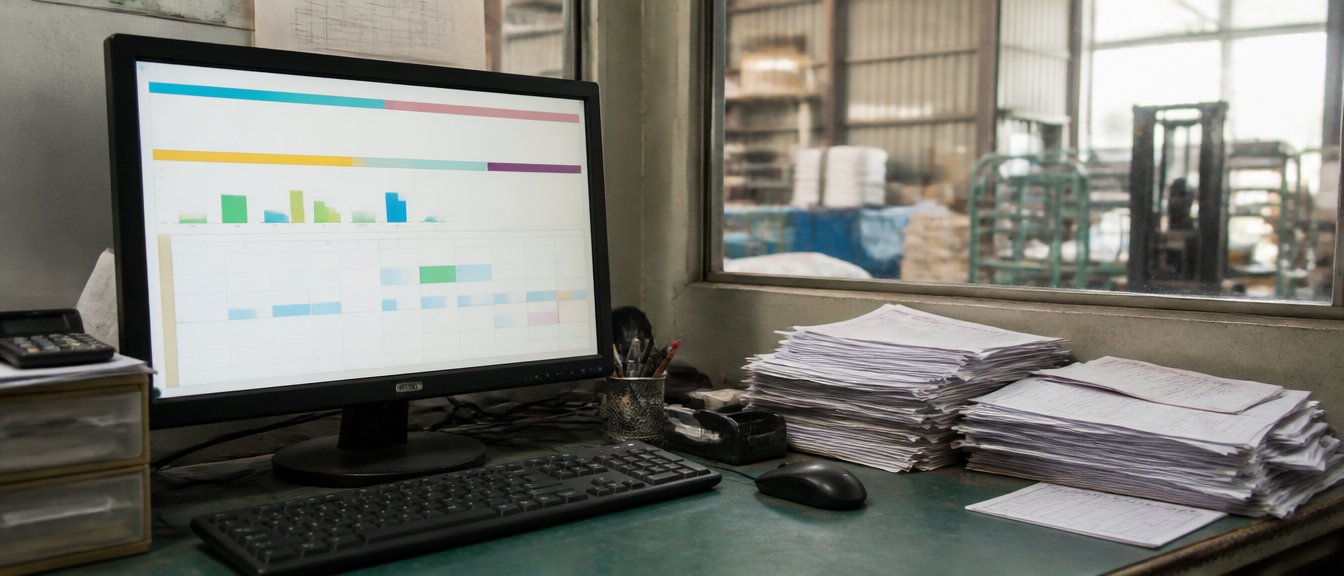
The three systems listed on Chia Huang's website each handle a different area. ERP manages orders, production, inventory and shipping, emphasizing uninterrupted information flow and reduced manual errors. IoT machine networking connects production equipment so that line status and production data can be monitored in real time, shifting quality control from after-the-fact inspection to real-time monitoring. Smart meters collect energy consumption data used for carbon inventory, responding to international buyers' demands for transparency in supply chain carbon footprints.
| System | Primary Data Managed | Questions It Can Answer | Corresponding Benefits Listed on the Official Website |
|---|---|---|---|
| ERP Enterprise Resource Planning | Orders, production, inventory, shipments | Where orders stand, how much inventory remains, when shipment is possible | Foundation for complete audit documentation and traceable quality records |
| IoT Machine Connectivity | Equipment status and production data | Whether the production line is currently running, whether abnormalities can be detected in real time | Process transparency and traceable quality |
| Smart Meter | Energy consumption data | How much electricity was used, whether it can support carbon accounting | Clear carbon data |
The official website lists four benefits: traceable quality, transparent processes, complete audit documentation and clear carbon data. The mapping in the table above is this article's summary based on each system's functions, not a point-by-point breakdown from the official website. Each category of data is managed separately, but the timelines can be aligned: looking at orders, equipment operation and electricity use from the same period together makes it possible to answer questions about the process and energy consumption behind a specific batch of orders. Whether this kind of integration has actually been achieved should be confirmed directly with the supplier, as the official website does not address it.
Implementation Sequence: Diagnose First, Then Select a Point for Verification
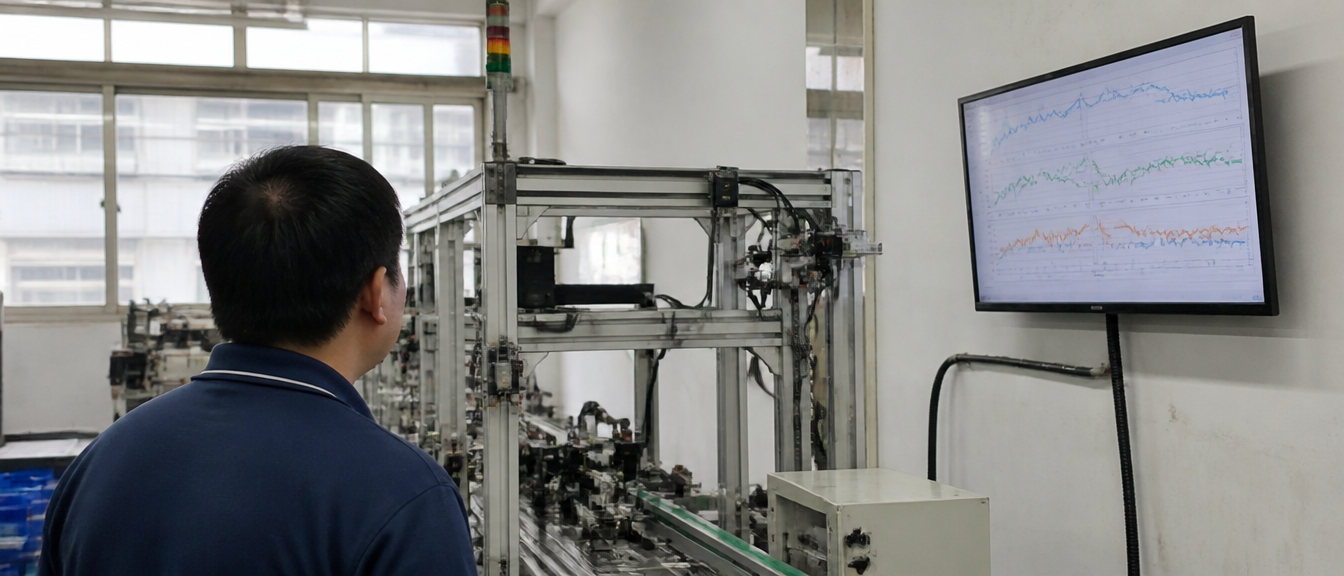
The "Smart Manufacturing Upgrade Program for the Electromechanical Industry," introduced by the Industrial Development Administration, explains that legal entities and professional technical service providers first help businesses with needs consultation and on-site assessment, then select key processes for proof-of-concept testing to confirm feasibility. Materials from the Ministry of Economic Affairs reposted by the Executive Yuan also mention that the Ministry formed a smart manufacturing support team starting in 2018, which at the time offered free consultation and technical services to SMEs; current measures should be checked against the Ministry's latest announcements. Both sources mention this consultation and assessment step; based on this, the principle summarized in this article is: don't implement everything at once—diagnose first, then validate on a small scale.
| Stage | Objective | Common Sticking Points (Universal) |
|---|---|---|
| Needs Assessment | Clarify pain points: difficulty finding order progress, unclear machine status, or scattered audit documents | Too many pain points with no clear priority ranking |
| Select a Point for Verification | Conduct a proof of concept on one or two key processes to confirm feasibility | Verification scope is too broad, evaluation criteria not established in advance |
| System Integration | Connect feasible solutions with existing systems, such as ERP | Data formats are inconsistent, and field staff continue to use paper-based methods |
| Continuous Application | Incorporate data into daily management and audit processes | Only collecting data, with no one actually using it |
The table above outlines a general implementation logic; the diagnosis and proof-of-concept steps come from the Ministry of Economic Affairs program description, while the sticking points are this article's own summary, not Chia Huang's implementation record. Generally speaking, sequence matters more than tools: first decide what question you need to answer, then decide which system and sensing method to use—otherwise, you risk buying equipment that no one ends up monitoring.
Smart Manufacturing Cases and Trends: Jiahhuang's Timeline and Four Policy Directions
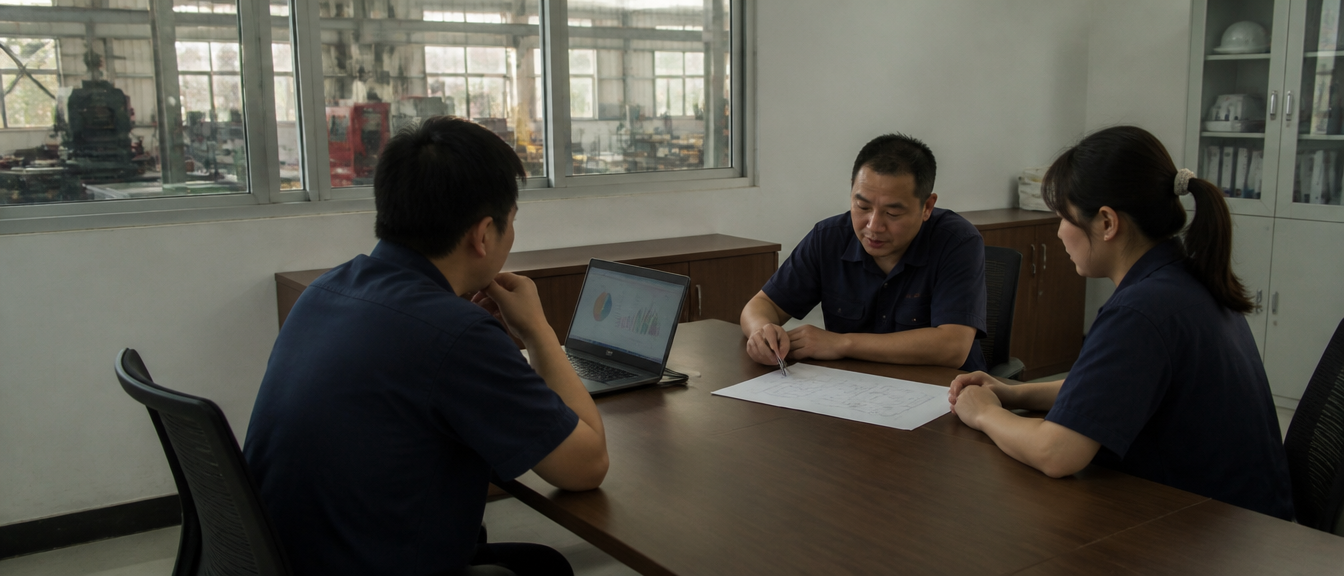
When discussing smart manufacturing cases, what Chia Huang's official website can publicly verify is the timeline. In 2019, it launched a full digital transformation, implementing ERP, IoT machine networking and smart meter carbon inventory; in 2025, Chia Huang was recognized in the Legacy & Transformation category of the 14th Women Entrepreneur Awards for its smart manufacturing transformation and circular economy efforts. For the award and company history, see About Chia Huang; details of the transformation are summarized in Smart Manufacturing Transformation. The official website does not list percentage benefits after implementation, so this article describes only what was done, without providing performance figures.
As for smart manufacturing trends, official government documents (2020 and 2026) outline several directions, summarized below. These materials are explanations of policy and programs, not predictions of implementation results for any specific company, and include no percentage figures of any kind.
| Trend | Description | Source | Significance for Packaging Factories (Summary in This Article) |
|---|---|---|---|
| Small-Batch, High-Mix Production | Manufacturing moving toward multiple product types and specifications running in parallel | Ministry of Economic Affairs Data (Republished by Executive Yuan, 2020) | More Frequent Job Changes and Scheduling Require Greater Production Visibility |
| Real-Time Big Data Analysis | Using Real-Time Data to Support Decision-Making | Ministry of Economic Affairs Data (Republished by Executive Yuan, 2020) | Machine and Quality Data Must Be Collected First |
| AI and System Integration | The announcement mentions AI applications, and some industry sub-projects also reference ERP and MES integration | Ministry of Economic Affairs Industrial Development Administration Announcement | AI can only be discussed after foundational data is stabilized |
| Energy Efficiency and Carbon Reduction | The announcement mentions energy efficiency and carbon reduction, and the textile industry sub-project references process and energy consumption data, as well as intelligent energy management platforms | Ministry of Economic Affairs Industrial Development Administration Announcement | Energy consumption data can be linked with carbon accounting |
The common message across these four directions for traditional packaging plants is that foundational data needs to be in place first. As product variety and specifications increase, order changes and scheduling become more frequent, and without real-time production data, managers are left relying on experience alone. AI and prediction need to be built on stable, reliable historical records—fragmented data makes this difficult. Energy consumption data, once accumulated over time, can become a valuable source for carbon inventory. These are all judgments derived from manufacturing logic; actual benefits still depend on the conditions of each individual factory.
How Procurement and Auditing Can Assess Suppliers' Smart Manufacturing Capabilities
If you're a procurement or quality assurance contact evaluating a supplier's level of digitalization, the focus shouldn't be on system names, but on what the data can actually answer. Useful questions include: what data is recorded by the system; when a quality issue arises, to what level can it be traced; what documentation can be provided during an audit; whether energy and carbon data can be provided, and in what format; and what the notification and response process is when equipment malfunctions.
Taking Chia Huang as an example, the benefits for buyers listed on the official website are traceable quality, transparent processes, complete audit documentation and clear carbon data, along with a note that carbon inventory reports can be provided—please confirm the exact scope with the sales team. When requesting quotes or setting up supplier records, we recommend specifying the audit items you need, such as which documents are required and which report the data will be used for, so the sales team can confirm what can be provided.
Smart Manufacturing FAQs
What is Smart Manufacturing?
According to NIST's description, a smart manufacturing system is fully integrated, collaborative, and able to respond in real time to changes in the factory, the supply network and customer demand. In Taiwan's policy documents, this is often mentioned alongside low-volume, high-mix production, real-time big data analytics, equipment networking and visualized production management.
Can traditional factories without large automated equipment implement smart manufacturing?
You can start small. Ministry of Economic Affairs policy documents mention helping SMEs adopt Smart Machine Boxes, improving reliance on paper-based operations through equipment networking and visualized production management. What to prioritize depends on existing equipment and pain points—it's advisable to diagnose first, then validate with a pilot area.
What's the difference between ERP, MES, and IoT?
The typical division of labor is: ERP manages enterprise resources like orders and inventory, MES manages on-site production execution, and IoT machine networking connects equipment and sends back data. The systems listed on Chia Huang's official website are ERP, IoT machine networking and smart meter carbon inventory.
When did Chia Huang start implementing smart manufacturing?
Chia Huang launched a full digital transformation in 2019, implementing ERP, IoT machine networking and smart meter carbon inventory, and in 2025 was recognized in the Legacy & Transformation category of the 14th Women Entrepreneur Awards. For more details, see Smart Manufacturing Transformation.
What are the results after implementing smart manufacturing?
Chia Huang's official website does not disclose percentage results after implementation, so this article does not provide any. Actual results depend on a factory's existing management foundation, the scope of implementation and how it's used—we recommend asking suppliers what records and documentation they can provide, rather than focusing only on numbers.
Conclusion: Smart Manufacturing is About Letting Data Speak, Not Just Buying Equipment
Returning to the initial question, putting smart manufacturing into practice at a traditional packaging plant isn't about achieving full automation in one step—it's about first making order, equipment and energy data visible and traceable, then gradually moving toward prediction and integration. Chia Huang Paper has implemented ERP, IoT machine networking and smart meter carbon inventory since 2019, aiming to give customers greater peace of mind when purchasing. As for specific results, the official website does not disclose figures, and this article does not provide any. If you're gathering information for supplier audits or vendor records, feel free to visit Contact Us to describe the audit items and data you need—Chia Huang's sales team will respond within one business day.