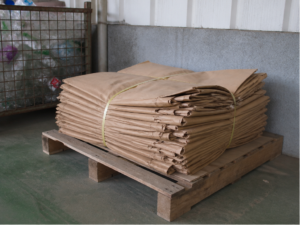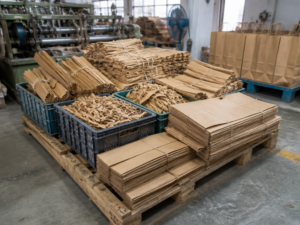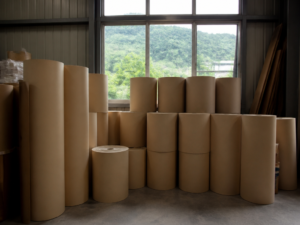
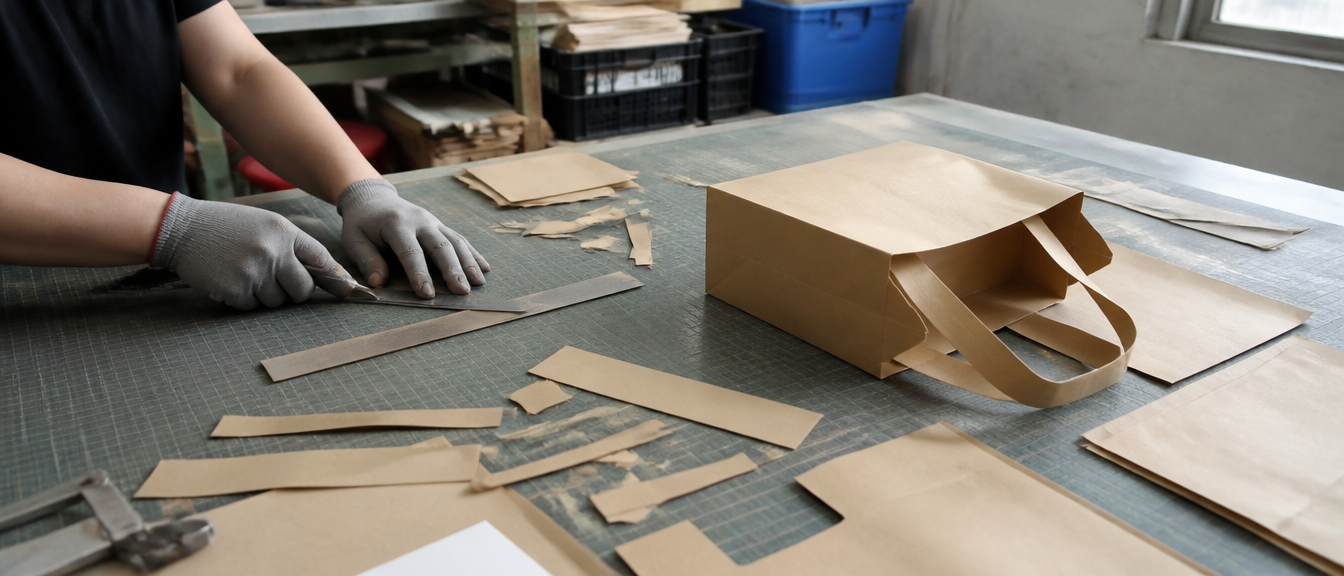
When people hear cultural and creative products, they usually think of design knick-knacks, stationery or canvas tote bags. But in our Chia Huang Paper factory, this term points to a different path: redesigning leftover materials from bag-making and printing, along with bag materials that didn't meet print specifications, into eco-friendly paper products that are both usable and giftable. Chia Huang was founded in 1973 in Shanhua, Tainan, and has spent more than fifty years making industrial paper bags. Leftover materials and off-spec bag stock are a natural by-product of the bag-making and printing process.
This article isn't here to repeat the overused line that "reusing leftover materials is eco-friendly." Instead, we want to answer a few practical questions from a factory's point of view: what actually qualifies as a cultural and creative product, where leftover materials really stand within the circular economy, how to judge whether an eco-friendly bag is truly eco-friendly, and—when a business wants to tell its sustainability story through these products—what can be said, and what's better left unsaid.
How to Judge Creative Products: It's Not Just About Turning Scraps Into Things
According to Article 3 of the Act for Development of the Cultural and Creative Industries, as recorded in the National Laws & Regulations Database, cultural and creative industries are those that originate from creativity or cultural accumulation, generate wealth and employment opportunities through the formation and application of intellectual property, and help improve the public's aesthetic literacy and overall quality of life. The article lists sixteen categories, including the crafts industry, product design industry, and creative lifestyle industry (see National Laws & Regulations Database). It's worth noting that this law defines the scope of the industry—it does not define what a "cultural and creative product" is as a commodity. The law's focus is on creativity or cultural accumulation, not on where the materials come from. Based on this, our view is that value should come from creativity and design, not merely from the origin of the material.
Applying this standard to the context of repurposing leftover materials makes the point very clear. A paper product made from leftover materials only truly holds up if, even without the "recycled and remade" story, people still find it useful and appealing enough to keep. On the other hand, if a product only relies on its story to carry it, people may use it once and throw it away—which simply means creating more waste for the environment. The table below compares these two approaches side by side.
| Comparison Factors | Paper Products That Rely Only on Recycling Stories | Upcycled Creative Products Designed With Design at the Core |
|---|---|---|
| Source of Value | Material origin—once the story ends, there's nothing else to sell | Form, function and brand identity—material sourcing is a bonus |
| Will Users Keep It? | Likely to be discarded after one use | Repeatedly used because it's practical and attractive |
| Risk When Companies Communicate Externally | Easily challenged as merely appearing sustainable, or what's commonly called greenwashing | When the relationship between design and materials is clearly explained, it can better withstand scrutiny |
| What the Factory Needs to Confirm First | Whether there are enough scraps and whether quality is consistent | Whether scrap conditions, design feasibility and brand direction align |
Where Do Paper Bag Factory Scraps Come From?
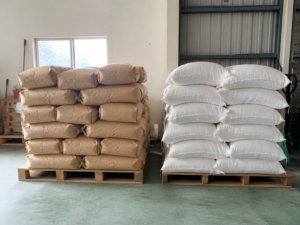
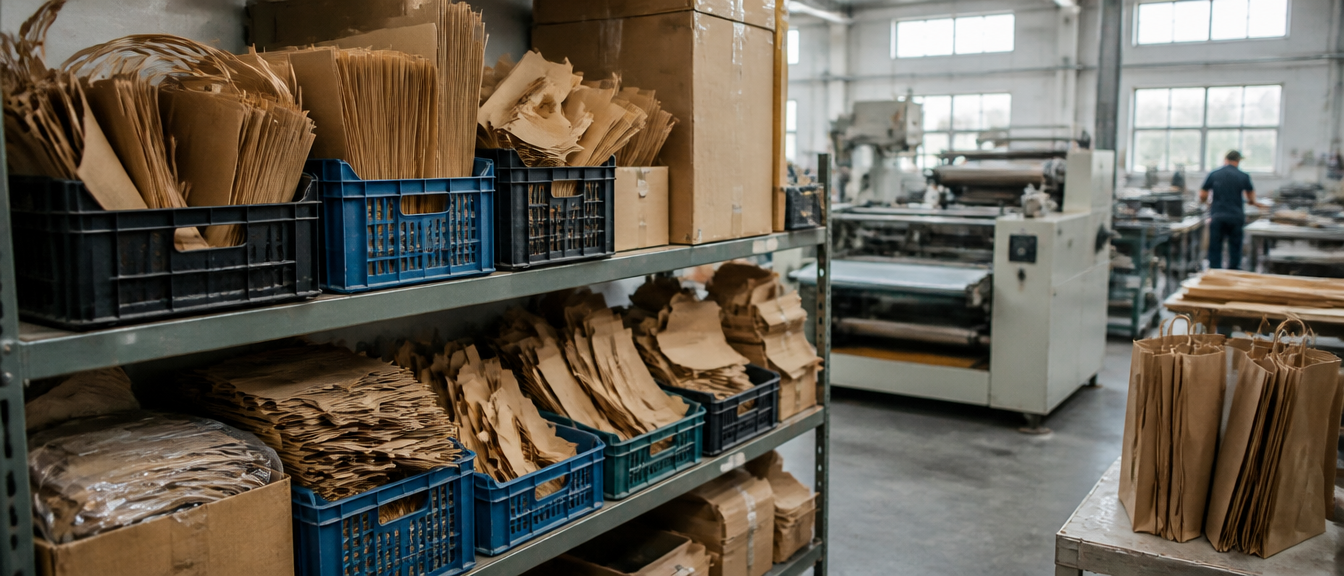
Chia Huang produces industrial heavy-duty packaging paper bags, built on long-fiber kraft paper with structures ranging from 1 to 5 layers, and capable of four-color printing. The bag-making and printing process naturally generates leftover materials, as well as bag stock that doesn't meet print specifications after printing. These materials were originally produced as kraft paper meant for load-bearing packaging—throwing them away would be a waste, but not every type can be directly reused.
On its sustainability and circular economy page, Chia Huang breaks the circular economy down into three levels: source, process, and end-use. At the source level, customers can specify FSC-certified raw materials and receive certification documentation. At the process level, leftover materials generated during bag-making are recycled and reused to reduce waste. At the end-use level, leftover materials that cannot be directly reprocessed, along with off-spec bag stock, are transformed into circular cultural and creative products. The relationship between these three levels is summarized in the table below.
| Stage | Jiahuang's Approach | How Procurement Can Make Use of It |
|---|---|---|
| Source | Can specify the use of FSC-certified materials and provide certification documents | When sustainable procurement needs auditing, there's documentation to review |
| Production Process | Scraps generated during production are recovered and reused to reduce waste | You can ask suppliers to explain how they handle scrap materials |
| End of Line | Scraps that cannot be directly remanufactured and off-spec bag materials are upcycled into circular creative products | Giving scraps a second life while also becoming a vehicle for brands to communicate sustainability |
From a process standpoint, turning leftover materials into products generally involves four steps: leftover materials are generated during production; recyclable materials are selected instead of being discarded; new uses are assigned through design; and finally, the materials are put to a second use. There's an easy-to-overlook premise here: cultural and creative products are not the destination for all leftover materials. Leftover materials from the production process are first recycled and reused, and only the portion that cannot be directly reprocessed enters the design stage. So this is more like the final stop in the cycle, not a case of "all leftover materials becoming gifts."
The Circular Economy Context: Where Scrap Redesign Fits
The "Circular Economy Promotion Plan" published on the Executive Yuan's official website (page dated January 30, 2019) notes that the Executive Yuan approved this plan on December 20, 2018, aiming to transform industry from a linear economy of "extraction, manufacturing, use, disposal" into a circular economy focused on "resource sustainability," extending or continuously cycling the life of resources through reuse of energy and materials (see Executive Yuan official website). For a paper bag manufacturer, translating this direction down to the product level means giving materials that would otherwise be discarded one more use.
That said, we also need to be honest about scale. This plan lists four major strategies: innovation in circular technologies and materials, new circular demonstration parks, green consumption and trading, and integration of energy/resources with industrial symbiosis—all of which address industry- and park-level direction. Repurposing leftover materials is just a small piece of this picture. It gives materials one extra use, but it cannot be used as proof of overall reduction results. When communicating externally, businesses are advised to only state what they can actually back up—such as which category of leftover material was used, how it was reprocessed, and whether documentation is available. Reduction figures without supporting data should not be included in marketing copy.
How to Judge Eco-Friendly Tote Bags: Reusability Matters More Than Material Labels
Eco-friendly bags are one category among circular cultural and creative products. The relevant page on Chia Huang's website positions recycled eco-friendly bags as products made from kraft paper and leftover materials that balance practicality with sustainability. There are also paper products customized to a brand's identity, as well as circular design pieces suited to carrying an ESG story. Whether such products can truly be called "eco-friendly bags" doesn't depend on what slogan is printed on them—it depends on whether people are willing to use them again and again.
This is exactly what life-cycle assessment research reminds us. A 2018 report published by the Danish Environmental Protection Agency evaluated various types of shopping bags sold in local supermarkets in autumn 2017, comparing sixteen environmental parameters, and converted the results into "how many times a given type of bag needs to be reused before its environmental performance catches up with a standard plastic shopping bag" (see the report page on DTU Orbit). This study focused on supermarket shopping bags—not industrial packaging bags or cultural and creative products—so its figures can't be directly applied here. But the way of thinking it offers is worth borrowing: when judging an eco-friendly bag, don't just look at the material—ask how likely it is to be reused.
Translated into procurement terms, this means looking at durability, design identity, and use case all together. The table below summarizes a few things businesses can check item by item when choosing eco-friendly bags or similar products.
| Inspection Items | Why It Matters | What to Ask When Getting a Quote |
|---|---|---|
| Use Scenario | Gift-giving, event distribution and retail use have different durability requirements | Explain how you plan to use it and for how long |
| Durability | The more durable, the more likely it will be reused | Ask the supplier to explain materials and structure, and request a sample for confirmation |
| Design Identity | Users need to like it in order to keep using it | Provide brand colors and the direction you want to communicate |
| Material Source Description | External communication needs to be backed by facts | Ask what category the scraps belong to and what information can be provided |
From a manufacturing standpoint, we'd suggest a conservative approach: rather than chasing a large batch of very special products, first confirm how long this product will stay in the user's hands. Only products that stay in use for a long time create a second layer of value beyond simply reusing leftover materials.
Telling Sustainability Stories With Creative Products: What You Can Say and What You Shouldn't
For brands focused on ESG, circular cultural and creative products are a way to make sustainability commitments tangible—this is also how Chia Huang's website positions its brand collaborations. But the more a topic lends itself to promotion, the more restraint it calls for. The safer approach is to describe only verifiable facts: that the product is made from leftover materials generated during bag-making and printing, as well as off-spec bag stock, redesigned and reprocessed. Absolute terms like "zero waste" or "100% eco-friendly" have no supporting basis and tend to invite scrutiny.
Chia Huang's background can serve as a reference point when evaluating a supplier: founded in 1973, ISO 9001 certified, and awarded the Manager Today 100 MVP Product Innovation Award in 2021 for its circular cultural and creative product initiative. This award recognizes product innovation and the practice of repurposing leftover materials—it is not third-party verification of environmental benefit, and the two should be read separately. What truly supports a sustainability claim is still the source of materials, the reprocessing method, and the documentation that can be provided.
Materials to Prepare Before Inquiring About Custom Creative Products
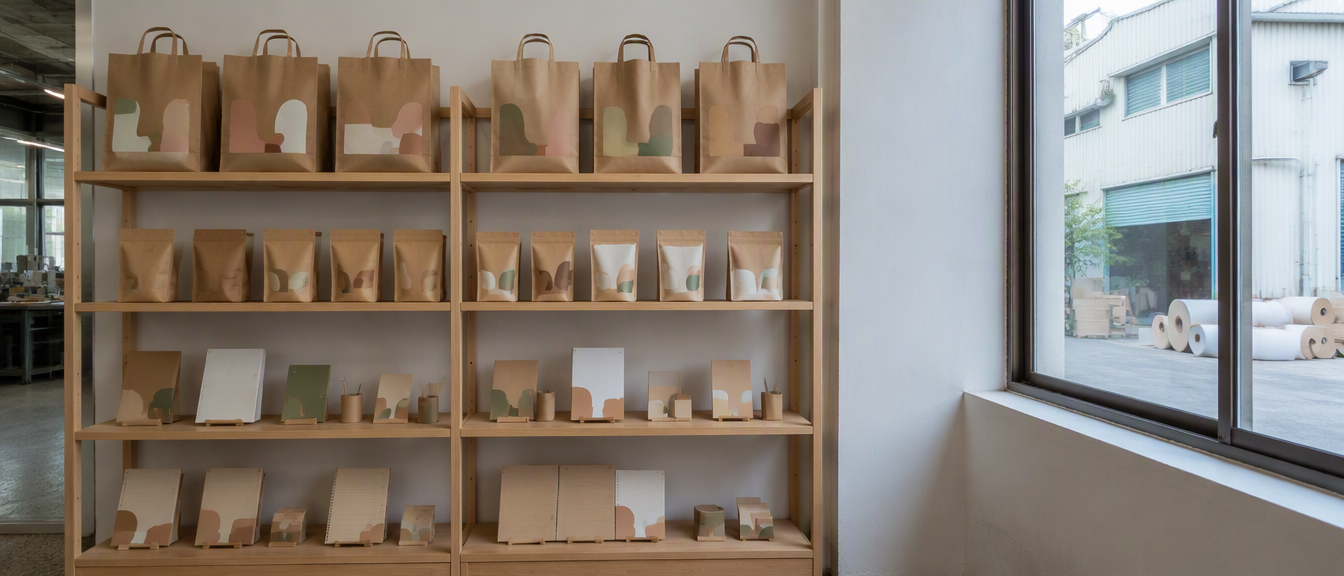
Chia Huang can design eco-friendly paper bag cultural and creative products tailored to each client's needs and brand identity, suitable for corporate gifts, event souvenirs, and branded products meant to convey an ESG commitment. To help the first conversation get off on the right track, it helps to prepare a few details in advance: the product's purpose and intended audience, expected quantity and timeline, the brand's colors and the story to be conveyed, budget range, and whether brand graphics need to be printed.
Two things are worth clarifying here. First, the type and quantity of leftover materials vary with production conditions, so the available materials, colors, and quantities need to be assessed by our sales team based on actual conditions—not every design request can be fully accommodated. Second, if the design includes printed graphics, printing colors will affect pricing: the number of colors, print area, number of plates, and production quantity all influence plate-making and printing costs. Chia Huang can recommend a printing setup based on your budget and needs, balancing brand presentation with cost.
It's also worth asking yourself in advance whether this project is a good fit for using leftover materials as the primary material. If your need has a clear purpose and you want to share the story of circular manufacturing with gift recipients, the conditions for repurposing leftover materials usually line up well. But if every unit needs to be identical in spec and color, or must be delivered within a very tight timeframe, it's best to discuss feasibility with our sales team first, since the type and quantity of leftover materials depend on production conditions and aren't available in unlimited supply. Setting expectations based on actual conditions will make the whole process go much more smoothly.
Common Questions About Creative Products
What materials are used to make scrap-based creative products?
Mainly leftover materials generated during Chia Huang's bag-making and printing process, as well as bag stock that doesn't meet print specifications, which are then redesigned and reprocessed. The actual materials and quantities available depend on production conditions, and our sales team will assess them based on conditions at the time of inquiry.
Can creative products be customized for our brand?
Yes. Chia Huang can provide custom designs based on client needs and brand identity, suitable for corporate gifts, event souvenirs, or ESG-themed products. Simply let us know the intended use and brand direction when inquiring. You can first check out our circular cultural and creative products line.
Are eco-friendly tote bags always more environmentally friendly than plastic bags?
Not necessarily. Life-cycle assessment results vary depending on the number of reuses and the evaluation criteria used, so the safer approach is to choose a durable eco-friendly bag that will actually be reused repeatedly, rather than judging it by material name alone.
Can we claim how much waste reduction our scrap-made creative products achieved?
We recommend only stating what can be backed up, such as the category of material source and the reprocessing method. Reduction figures without supporting data or third-party verification should not be included in marketing copy, to avoid accusations of greenwashing.
Does the print color of creative products affect the price?
Yes. The number of print colors, print area, number of plates, and production quantity all affect plate-making and printing costs. Chia Huang can recommend a printing setup based on your budget and needs, balancing brand presentation with cost.
Conclusion: Good Creative Products Are First Useful, Then About Scraps
Back to the original question: can leftover materials be made into cultural and creative products? Yes—but only if the product itself has design and purpose that make people want to keep it. Only then does repurposing leftover materials become a true second life. From our perspective, the circular economy isn't just a slogan—it runs all the way from raw material sourcing, to recycling leftover materials in production, to redesign at the final stage. If your brand is planning gifts or event products with a sustainability story, feel free to start by learning about sustainability and the circular economy, then head to Contact Us and tell us about your intended use, quantity, brand direction, and budget. Chia Huang will respond with a custom proposal within one business day.