What exactly is a carbon inventory? The Ministry of Environment uses a fitting analogy in its Greenhouse Gas Emissions Inventory Guidelines: an inventory is like a health check-up. You first collect a year's worth of activity data, such as electricity, oil and fuel use, to calculate an organization's direct and indirect greenhouse gas emissions and identify emission hotspots, so you know where to start cutting carbon. For manufacturers, this is no longer just a matter for the environmental department. Customer supply chain questionnaires, the sustainability reports of listed parent companies, and even carbon fees all come back to the same question for the factory: have you calculated your emissions?
This article covers the definition of carbon inventories, Scopes 1, 2 and 3, who needs to conduct one, and how to get started, before looking at how smart meters can serve as a data source for inventories. The definitions and timelines are drawn from public information published by the Ministry of Environment and the Climate Change Administration; the section on Chia Huang Paper is limited to what is already disclosed on our official website. Regulations and announcements are subject to updates, so please refer to the competent authority's latest announcements for actual applicability.
What is Carbon Inventory? Organizational Carbon Inventory vs. Product Carbon Footprint
Under the Ministry of Environment's 2024 edition of the Greenhouse Gas Emissions Inventory Guidelines, the inventory covers seven greenhouse gases: carbon dioxide, methane, nitrous oxide, hydrofluorocarbons, perfluorocarbons, sulfur hexafluoride and nitrogen trifluoride, all converted into a standard carbon dioxide equivalent (CO2e) for reporting (see the Ministry of Environment's Greenhouse Gas Emissions Inventory Guidelines). Under the management regulations referenced in the guidelines, the inventory boundary for regulated entities is based on the scope stated on the factory registration certificate or business registration; all emission sources within that boundary must be accounted for. For voluntary inventories, the boundary needs to be determined separately according to the purpose of the inventory. This type of inventory, conducted at the level of a single organization, is what's generally referred to as an organizational carbon inventory.
An organizational carbon inventory answers the question of how much a given organization emitted in a year, which is different from what a product carbon footprint addresses. Under the Ministry of Environment's Guidelines for Promoting Product Carbon Footprint Management (amended January 9, 2025), a product carbon footprint refers to the greenhouse gas emissions generated across a product's life cycle stages, including raw material acquisition, manufacturing, distribution, use and disposal, converted into carbon dioxide equivalent and calculated in accordance with ISO 14067:2018 and related Ministry of Environment regulations (see the Ministry of Environment's Guidelines for Promoting Product Carbon Footprint Management). Put simply, one looks at the factory, the other looks at the product.
| Comparison Factors | Organizational Carbon Inventory | Product Carbon Footprint |
|---|---|---|
| Calculation Subject | Annual emissions from one organization or factory | Emissions from a single product across its entire lifecycle from raw materials to disposal |
| Scope Boundaries | For regulated entities, based on the scope of factory registration or business registration; for voluntary inventories, determined according to purpose | All stages of product lifecycle: raw materials, manufacturing, distribution, use, disposal |
| Common Standards | ISO 14064-1, CNS 14064-1, GHG Protocol (standards referenced in the guidelines) | ISO 14067:2018 |
| Questions Answered | What is the total factory emissions, where are the hotspots, and where should emission reduction start | What is the carbon footprint of this product |
| Common Scenarios | Regulatory disclosure, listed company reporting, supply chain questionnaires | Carbon emission information disclosure for individual products |
In practice, these two terms are often used interchangeably. When a customer asks about a "carbon footprint," they might mean the emissions data for the entire factory, or they might mean a specific product. Clarifying which one they need upfront can save a lot of back-and-forth. The rest of this article focuses on organizational-level inventories.
What are Scope 1, 2, and 3? Emission Sources in Manufacturing Facilities
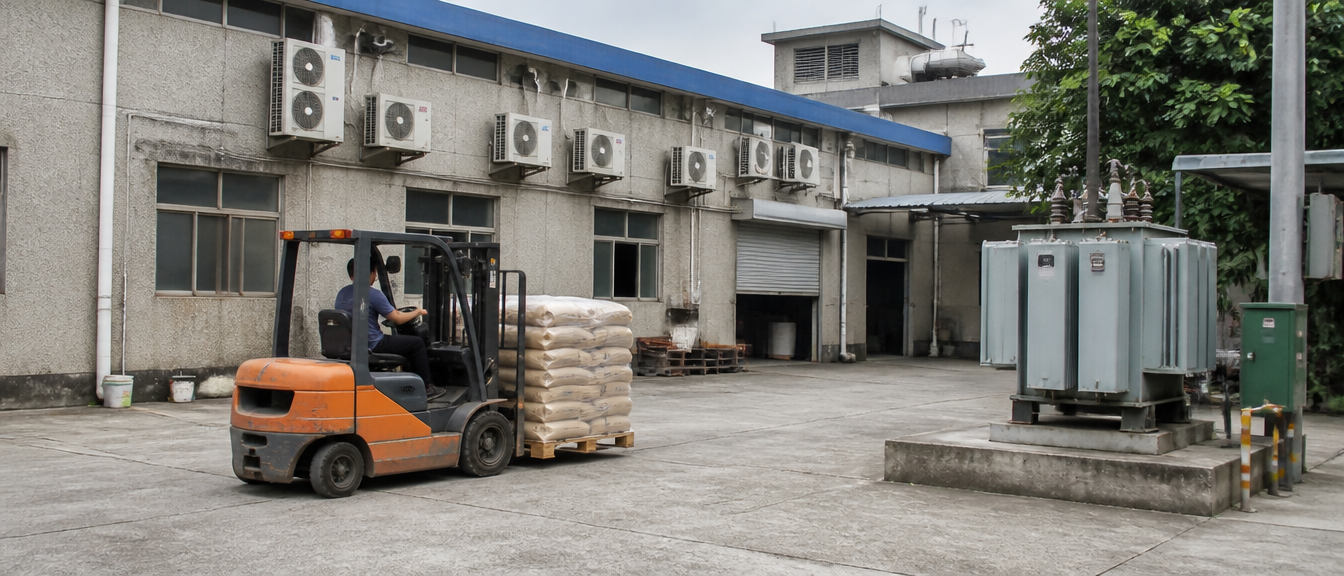
Greenhouse gas inventories divide emissions into three scopes: Scope 1 covers direct emissions, Scope 2 covers energy indirect emissions, and Scope 3 covers other indirect emissions. Taking a manufacturing plant as an example, the emission source types listed in the guidelines include stationary combustion (such as boilers, furnaces and emergency generators), process emissions, mobile combustion (such as trucks and forklifts), fugitive emissions (such as refrigerants), and purchased electricity (such as air conditioning and lighting).
| Scope | Description | Common Emission Sources in Manufacturing Facilities (Examples) |
|---|---|---|
| Scope 1 | Direct emissions from emission sources owned or controlled by the business itself | Boilers and heating furnaces, emergency generators, on-site trucks and forklifts, refrigerant leakage |
| Scope 2 | Energy indirect emissions from purchased energy | Purchased electricity: production equipment, air conditioning, lighting |
| Scope 3 | Other indirect emissions occurring in the supply chain upstream and downstream | Purchased raw materials, outsourced transportation, etc. |
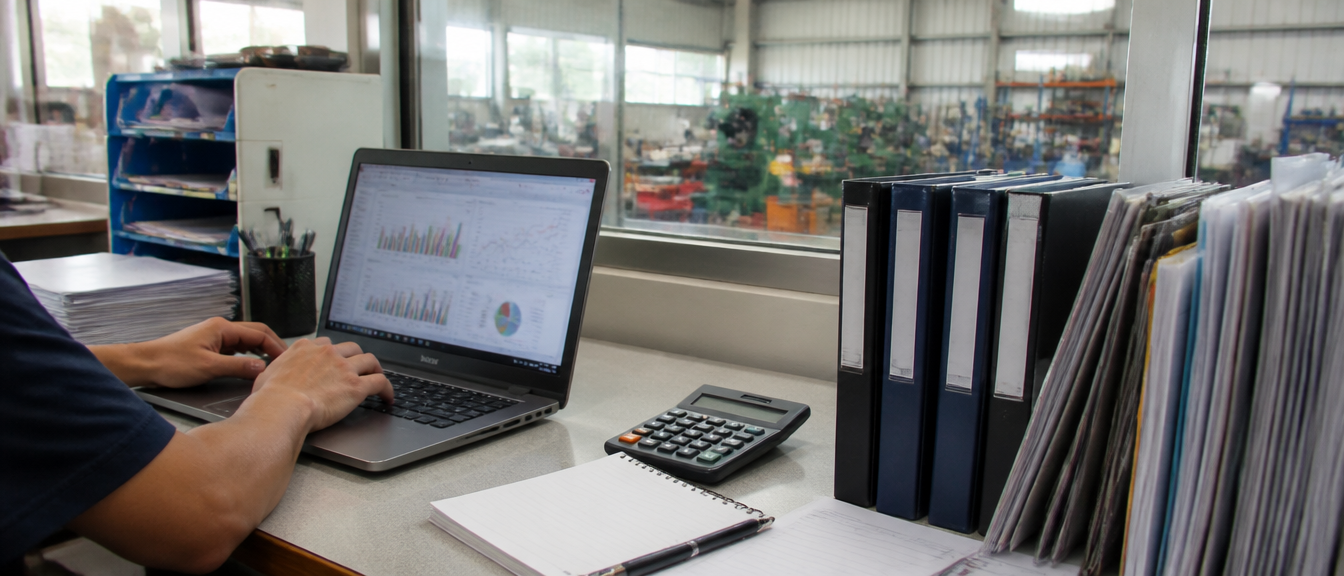
Purchased electricity falls under Scope 2, and since electricity usage can be reconciled against meter readings and electricity bills, it's one of the easier activity data points to obtain records for. So for a first-time inventory, sorting out electricity usage data first is a reasonable starting point.
Who Needs to Conduct Carbon Inventory? Three Drivers: Regulations, Listed Companies, and Supply Chain
According to the guidelines, entities that need to conduct a carbon inventory generally fall into three categories: those designated by Ministry of Environment announcements, listed companies required to disclose under the FSC's Sustainable Development Roadmap for Listed Companies, and companies conducting inventories voluntarily or at the request of their supply chain. The guidelines also note that client companies may require their suppliers to provide emissions data, which in turn gives suppliers an incentive to carry out inventories in order to win orders.
| Driver | Basis | Scope 1 & 2 | Scope 3 |
|---|---|---|---|
| Ministry of Environment Designated Entities | On February 22, 2024, the "Emission Sources Requiring Enterprises to Register and Verify Greenhouse Gas Emissions" was announced, setting a threshold for manufacturers of a combined annual total of 25,000 metric tons CO2e from plant-wide direct fossil fuel emissions plus indirect emissions from electricity use. A separate announcement on March 4, 2025 expanded the scope of registration requirements: manufacturers whose plant-wide annual purchased electricity reaches 20 million kWh or meets other specified conditions must register (verification not required) starting in 2026. | Required | Not Required |
| Listed Companies | The FSC's Sustainable Development Roadmap for Listed Companies (published March 3, 2022, subject to subsequent amendment), with phased disclosure requirements | Required | Depends on Purpose |
| Voluntary or Supply Chain Required | Customer requirements, ESG reporting, or internal management needs | Depends on Purpose | Depends on Purpose |
Carbon fees are a separate matter. According to the Ministry of Environment's Climate Change Administration carbon fee section, carbon fees apply to electricity and gas suppliers and manufacturers with annual emissions of 25,000 metric tons CO2e or more, with the fee calculated as chargeable emissions multiplied by the levy rate. The rate took effect on January 1, 2025, with 2025 serving as a trial filing year requiring no payment; starting in 2026, fees are payable based on the previous year's emissions, with the first payment deadline set for May 31, 2026, and payments due by May 31 each year thereafter. The three related sub-regulations were published on August 29, 2024 (see the Ministry of Environment's Climate Change Administration carbon fee section).
Whether a business falls under these requirements depends on its own emissions level and the competent authority's latest announcements. This article only outlines the general framework and does not make a determination on applicability for any specific company.
How to Start Carbon Inventory? Six Steps and Electricity Calculation Methods
The guidelines break the inventory process down into six steps: boundary setting, emission source identification, emissions calculation, data quality management, record retention, and preparation of the emissions inventory list and report. Entities subject to the announcement must also complete registration afterward, and those meeting the verification threshold must undergo verification as well. Given the nature of these steps, factories doing this for the first time will likely find that most of the workload falls on emission source identification and data collection, since all the equipment, vehicles, refrigerants and electricity use need to be identified one by one, each with reliable supporting records.
The basic formula for calculating emissions is activity data multiplied by the emission factor, with a global warming potential (GWP) multiplier applied when different greenhouse gases are involved. Taking purchased electricity as an example, the activity data is the electricity usage recorded on the meter or electricity bill, and the emission factor is the electricity carbon emission factor published by the Ministry of Economic Affairs (kg CO2e per kWh; from 2025 onward, a separate industry-specific electricity emission factor is also available for corporate inventories). Multiplying the two together gives the emissions figure for this item. For items such as fuel, the guidelines recommend using data from calibrated measuring instruments as the preferred source when both measured and non-measured data are available.
The most practical first step in an initial inventory is matching each emission source category to activity data you can actually obtain. The table below maps common emission sources to typical data sources; these records are general examples only, as actual conditions vary by facility.
| Emission Source | Activity Data to Collect | Common Record Sources |
|---|---|---|
| Stationary Combustion (Boilers, Heating Furnaces, Emergency Generators) | Fuel consumption by equipment | Fuel purchase invoices, receiving records |
| Mobile Combustion (Trucks, Forklifts) | Vehicle and equipment fuel consumption | Fuel receipts, fuel card statements |
| Fugitive Emissions (Refrigerants) | Equipment refrigerant refill or top-up amounts | Equipment maintenance and service records |
| Purchased Electricity (Equipment, Air Conditioning, Lighting) | Electricity consumption in kWh | Meter readings, electricity bills |
Regarding the timeline, under the 2024 version of the guidelines, designated entities must register the previous year's emissions by April 30 each year, while those subject to verification must upload verification results by October 31. These dates may be adjusted as regulations are revised, so this article should only be used as a reference for understanding the process—please check the Ministry of Environment's latest announcements before actual reporting.
How Smart Meters Support Carbon Inventory
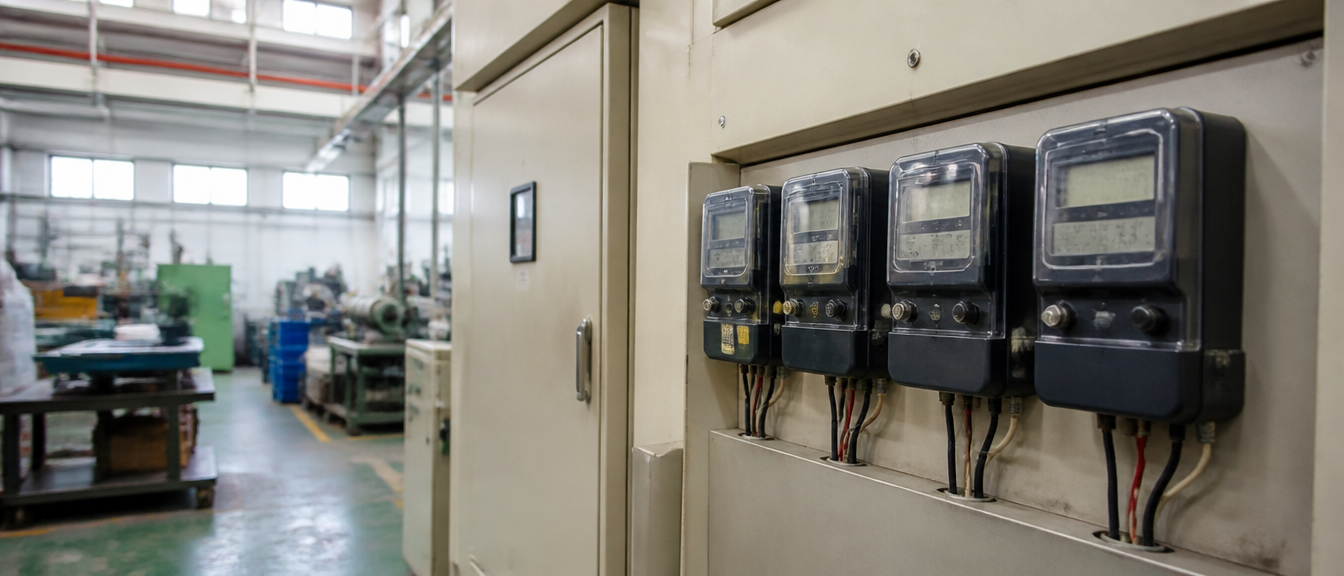
Chia Huang Paper has used smart meters for carbon inventory purposes since 2019. As stated on our official website, we collect energy consumption data via smart meters to conduct carbon inventories and can provide carbon inventory reports; please confirm the actual scope of content available with our sales team. For a fuller picture of this transformation, see Smart Manufacturing Transformation.
Why is the electricity meter a good starting point for an inventory? There are two methodological reasons. Electricity is a common activity data point in factories and one that's easy to obtain records for, since meter readings can be reconciled against electricity bills; the guidelines also list meter records (electricity bills) as the activity data source for purchased electricity. Keeping a continuous log of energy consumption data means you won't need to dig through scattered records when the annual inventory comes around.
It's worth noting that meters only cover the electricity portion. Emission sources such as stationary combustion, mobile combustion and refrigerant leakage usually need to be filled in using other records. The above are general principles of inventory methodology; please check directly with our sales team regarding the specific content of the carbon inventory reports Chia Huang can provide.
How purchasing departments can request carbon inventory data from suppliers
If you're a procurement or sustainability contact requesting carbon inventory data from a supplier, it's worth asking a few things all at once: which standard the inventory follows, such as ISO 14064-1:2018, CNS 14064-1:2021 or the GHG Protocol mentioned in the guidelines; the organizational boundary of the inventory; the year and scopes covered; which year's electricity emission factor was used; and whether third-party verification was conducted. These questions aren't meant to put suppliers on the spot—they simply let you compare data from different suppliers on the same basis.
For Chia Huang, what we can currently confirm externally is that we collect energy consumption data via smart meters to conduct carbon inventories and can provide carbon inventory reports. When requesting a quote, please explain what you need the data for—for example, responding to a customer's supply chain questionnaire, supplementing an ESG report, or internal assessment—so our sales team can help confirm what content is available. If what you need is the carbon footprint of a single product, that involves a different calculation method, which falls outside the scope of the organizational inventory discussed in this article and outside what Chia Huang currently discloses publicly. For more on our other practices around materials, processes and circularity, see Sustainability & Circular Economy.
Frequently Asked Questions About Carbon Inventory
What does carbon inventory mean?
A carbon inventory involves collecting a year's worth of an organization's activity data, calculating direct and indirect greenhouse gas emissions, and identifying emission hotspots. The Ministry of Environment's inventory guidelines describe it as being like a health check-up—the goal is to get a clear picture of the current situation before planning reduction measures.
Is organizational carbon inventory the same as product carbon footprint?
No, they're different. An organizational carbon inventory is conducted at the level of a factory or business and calculates a year's worth of emissions; a product carbon footprint, on the other hand, focuses on a single product and calculates life cycle emissions from raw material acquisition through disposal, following a different standard. When a customer makes an inquiry, it's best to first confirm which one they actually need.
Do small and medium-sized manufacturers have to conduct carbon inventory?
Not necessarily. On the regulatory side, it depends on whether you're an entity designated by the Ministry of Environment: manufacturers with a combined annual total of 25,000 metric tons CO2e from plant-wide direct fossil fuel emissions plus indirect emissions from electricity use must register and undergo verification; starting in 2026, those meeting conditions such as plant-wide annual purchased electricity of 20 million kWh must also register the previous year's emissions by April 30 each year (verification not required). It also depends on whether you're a listed company; beyond that, most inventories are driven by customer requirements or conducted voluntarily. Please refer to the competent authority's latest announcements for actual applicability.
Are carbon inventory and carbon fees the same thing?
No. A carbon inventory is the process of calculating emissions; a carbon fee is a charge applied to electricity and gas suppliers and manufacturers with annual emissions of 25,000 metric tons CO2e or more, calculated as chargeable emissions multiplied by the levy rate. Emissions need to be calculated clearly first before any fee calculation can follow.
Can Chia Huang provide carbon inventory reports?
Yes. Chia Huang collects energy consumption data via smart meters to conduct carbon inventories and can provide carbon inventory reports; please confirm the actual scope of content available with our sales team. Feel free to visit Contact Us to explain what you need the data for.
Conclusion: Get your electricity data sorted first, then move forward with the next steps in carbon inventory
To return to the original question, a carbon inventory is essentially a health check-up for a factory's emissions—getting a clear picture of your emission hotspots is the first step before any reduction effort can begin, and it's also what gives you the data to respond to customer, regulatory and carbon fee requirements. For a first-time inventory, it helps to start by sorting out your boundary and electricity data, since that's easier to obtain records for, before gradually filling in other emission sources like fuel and refrigerants; entities designated under the regulations must still complete a full inventory as required. If your customers are requesting emissions data from their supply chain, feel free to visit Contact Us to let us know what the data will be used for and what format you need—our sales team will respond within one business day and help confirm what carbon inventory report content we can provide.