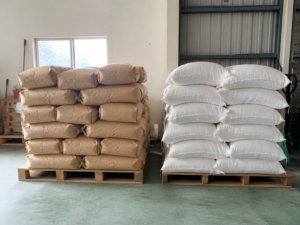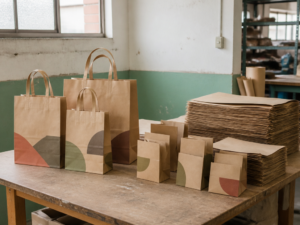
Paper bag recycling sounds simple—just toss used paper bags into the waste paper category. But industrial paper bags are far more complex than shopping bags: they're often removed at a factory or construction site and, by definition, mostly count as waste generated from business operations; they may have a layer of PE or PP lamination; the seal may involve stitching or OverTape, and the bag interior may still contain cement, powder, or chemical residue. At Kai Huang Paper, we've been making industrial paper bags since 1973. We're not an environmental authority, but we understand clearly how these design choices affect how bags are handled downstream—so we want to address this issue from the manufacturing side.
Let's start with the conclusion: this article summarizes what official public pages say, not a ruling for any particular city or county. The Ministry of Environment's recycling list focuses on household waste, while empty bags from factories mostly fall, by definition, under a separate business-waste management framework; paper containers with plastic film are also handled separately from regular waste paper. How laminated industrial paper bags are actually classified may vary by location, so the final answer should come from your local environmental protection bureau or waste collection operator.
Paper Bag Recycling Basics: First, Distinguish Between Household Waste and Industrial Waste
According to the Ministry of Environment's Resource Circulation Administration, Article 2 of the Waste Disposal Act divides waste into two categories: general waste and business waste. Business waste is waste generated by business activities, excluding waste from employees' daily living, and is further divided into hazardous business waste and general business waste; general waste refers to all waste other than business waste (see Resource Circulation Administration's explanation of business waste). Per this page, "business" includes agricultural, industrial and mining plants, construction businesses, medical institutions, and more.
Applied to paper bags, this means: a shopping paper bag you throw away at home or the office counts as general waste, while an empty bag removed on-site at a cement plant, feed mill, chemical plant, or construction site mostly falls under business waste by this definition. This is our inference based on the official definition, not an explicit classification of industrial paper bags by the authorities—please confirm the actual classification with your local environmental protection bureau. Storage, removal and treatment of business waste each have corresponding methods and facility standards, and incompatible waste types may not be mixed during removal. So for which disposal route empty factory bags should take, we recommend confirming with your environmental protection bureau or a licensed business-waste disposal operator first, rather than applying household recycling practices directly.
If chemical residue remains inside the bag, an additional assessment is needed. Hazardous business waste is waste that is toxic or dangerous, at a concentration or quantity sufficient to affect human health or pollute the environment, and classification follows, in order, listed items, hazardous characteristics, and announcements from the competent authority. As the bag manufacturer, we're not in a position to determine whether a residue is hazardous—that depends on the relevant standards and authorities.
| Comparison Item | Household Waste (General Waste) | Industrial Waste |
|---|---|---|
| Definition | Waste other than industrial waste | Waste generated from business activities and not produced by employees' daily life, divided into general and hazardous categories |
| Possible Sources of Paper Bags | Shopping bags and other paper bags used in households and offices | Empty bags removed from factory floors, construction sites and other work sites (inferred from definition) |
| Key Points from Official Information | The Environmental Ministry announces items for recovery by enforcement agencies; disposal methods follow local enforcement agency regulations | Storage, removal, and treatment must comply with facility standards based on whether items are hazardous; incompatible materials must not be mixed for removal |
Paper bag recycling actually follows two paths: households follow the general waste recycling list, while factories follow business-waste management regulations. The next section looks at the official list for households first, since it's the starting point for how most people understand paper bag recycling—worth reading closely to see what it covers and what it doesn't.
How to Read the Official Recycling List: Paper Bags Are in the Waste Paper Category, but Conditions Are Quite Specific
Pursuant to Article 5, Paragraph 6 of the Waste Disposal Act, the Ministry of Environment has announced the "Items of General Waste Required for Recycling by Enforcement Agencies," and municipal and county/city authorities may add further recycling items as needed for their jurisdictions. The Ministry of Environment's page, "General Waste Recycling Items and Disposal Methods," is dated 2024/11/22 and notes that actual disposal methods are still subject to the rules of the enforcement agency (environmental protection bureau or township/city office) (see Ministry of Environment: General Waste Recycling Items and Disposal Methods).
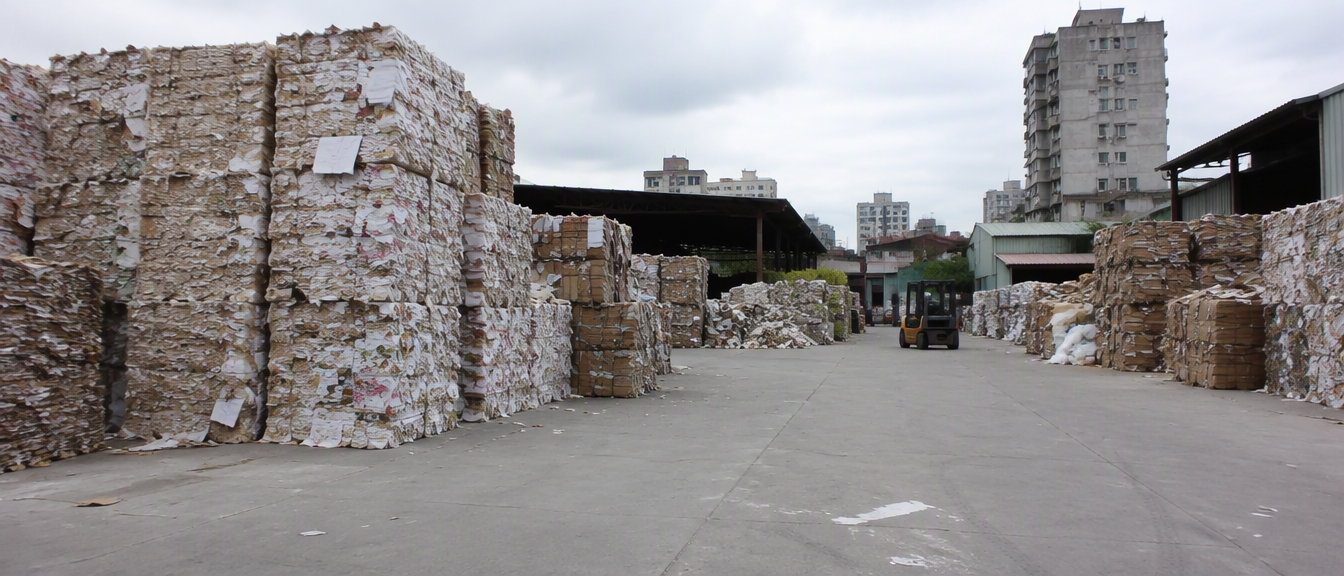
Among the recyclable items under waste paper, the "cultural paper" category lists paper bags and shopping bags, with an additional item at the end of the list for "other pure pulp products"; there's also a "paper container" category, which includes milk cartons, plant-fiber containers, and boxes, lids, plates, trays, fast-food containers and disposable tableware made from flat paper sheet processing. The requirements for disposal are also specific: waste paper should be collected and bundled separately from paper containers and foil pouches as much as possible, with plastic covers, tape, wire coils, staples and other non-paper items removed beforehand.
The same list is equally clear about non-recyclable items: composite-material paper should be treated as general waste because its recyclable reuse ratio is low and it affects the quality of recycled products—examples include glossy plastic-coated waste paper, thermal paper, and label stickers. It's worth noting that this list is aimed at household waste, and the paper bags it covers are general paper bags such as shopping bags; whether 25 kg or 40 kg industrial heavy-duty bags are directly covered is not stated on the page, and we won't fill in that gap on the authorities' behalf. The table below maps the list's statements onto industrial paper bags and flags areas that still need confirmation.
| Official Page States | Our Interpretation | Still Need to Confirm |
|---|---|---|
| Paper bags are listed in the waste paper category, with an additional item "other pure pulp products" at the end of the list | Uncoated kraft paper bags without bonding to other materials best match this description | Whether industrial empty bags qualify under this list |
| Paper containers and waste paper should be collected and bundled separately as much as possible | Whether coated bags should follow the same treatment as paper containers is not specified on the page | How the local environmental protection bureau classifies industrial coated bags |
| First remove tape, wire coils, staples and other non-paper items | Whether the material of the stitching thread and heat-sealed OverTape counts as non-paper should be confirmed with Kai Huang; whether it needs to be removed should be confirmed with your environmental protection bureau | Removal Requirements and Procedures at the Industrial End |
| Composite material paper should be disposed of as general waste | Composite bags made of kraft paper bonded with woven fabric contain plastic textile and should not be considered pure paper | Processing Channels for Composite Bag Materials |
The questions in the second and fourth rows of the table are exactly the focus of the next section: why paper with a plastic film must be treated separately from regular waste paper.
Paper Container Recycling and Coating: Why Paper Containing Plastic Film Must Be Discussed Separately
A notice from the New Taipei City Resource Recycling Information Network dated September 27, 2022 uses paper cups and paper food containers as examples: because these containers have a layer of plastic lamination on the surface, they must be classified as paper containers and recycled separately from regular paper, since the reuse process after recycling is completely different (see New Taipei City Resource Recycling Information Network). The notice explains that regular paper is divided into four categories—white paper, mixed paper, newspaper, and kraft paper—which are sent to paper mills to be made into recycled paper.
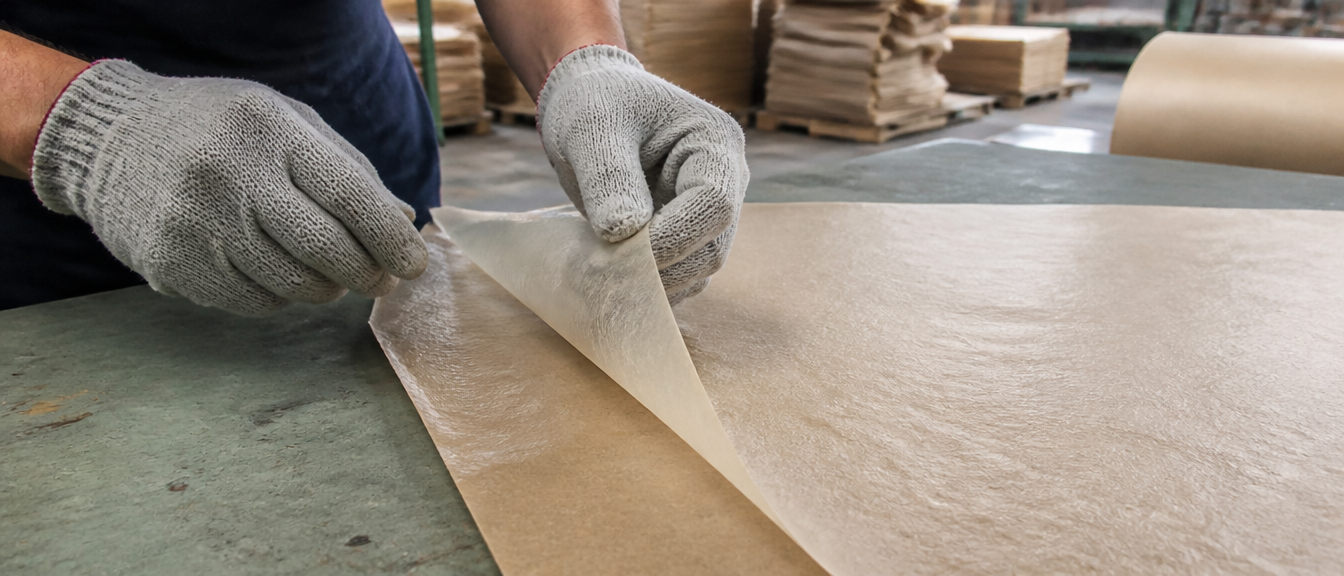
Paper containers are harder to process because their surface is coated with polyethylene (PE plastic film) for water- and oil-resistance. After collection, they must be sent to a specialized paper-container processing plant where the plastic film is first separated from the paper; the plastic film can then be reprocessed into plastic pellets, with the pellets and pulp used separately. The notice cites Ministry of Environment statistics showing that, as of the time of the notice (2022), there were 3 waste paper-container processing plants in Taiwan (Lien Tai Paper, Cheng Loong Chukou Plant, and Chung Hwa Pulp Taitung Plant), with a total designed processing capacity of 249,600 metric tons per year—enough to recycle all of the country's paper containers.
This notice is about single-use tableware, not industrial bags, but it illustrates a principle well known to manufacturers: once plastic film is laminated onto paper, an extra separation step is added downstream. Kai Huang's lamination process uses PE or PP, applied to base materials such as kraft paper, white kraft paper, and recycled kraft paper; the notice specifically addresses PE, and whether PP-laminated paper is handled the same way isn't stated—this needs to be confirmed with the processing facility.
Lamination is an optional single-layer process chosen for moisture and leak resistance. When contents are hygroscopic, storage conditions are humid, or leak resistance is required, it's a necessary function—but choosing this function also means factoring in downstream handling. To understand the differences between PE and PP lamination, see Kai Huang's lamination services. The table below compares three common bag types from a recycling perspective, based on our assessment.
| Bag Type | Material Composition | Recycling Direction Assessment (Including Our Analysis) | Key Points to Confirm with the Environmental Protection Bureau |
|---|---|---|---|
| Pure Kraft Paper Bag | Long-fiber kraft paper, 1 to 5 layers, uncoated | Material composition best matches the official list's "pure pulp products," but whether sealing components and residual materials affect recycling still needs confirmation | Whether industrial empty bags can be processed as waste paper for recycling |
| Coated Kraft Paper Bag | Kraft paper with PE or PP coating, single-layer coating process | Contains plastic film; official guidelines state paper containers with PE film must be separated from general paper, but it is unclear whether industrial bags follow the same rule | Whether to treat as a paper container and whether to send to professional processing facilities |
| Composite Bag Materials | Kraft paper coated with PE or PP woven fabric | Contains plastic textile and is not a pure pulp product; the household list classifies composite material paper as non-recyclable | Alternative processing channels require consultation with the environmental protection bureau or waste management service |
From a Manufacturing Perspective: Which Design Choices Affect End-of-Life Processing
The following assessments are based on our manufacturing logic and are neither official regulations nor guarantees of recycling outcomes.
Using lamination only when needed is the most direct approach. If the contents aren't moisture-sensitive, storage is dry, and turnover is quick, an unlaminated kraft paper bag may be worth considering; if the contents are hygroscopic, exposed to the rainy season, or leak resistance is required, the functional value of lamination usually outweighs the recycling complexity it adds. This is a trade-off, not a right-or-wrong matter—please share your contents and storage conditions when requesting a quote.
Whether seal components need to be removed before recycling should be confirmed with your environmental protection bureau first. Kai Huang only uses two sealing methods—stitching and heat-sealed OverTape—used alone or in combination; feel free to ask Kai Huang whether the thread and sealing tape materials count as paper. Since official pages require removing tape, wire coils, staples and other non-paper items before recycling waste paper, our recommendation—if the thread and tape are non-paper—is to follow the same approach and remove them from the bag before disposal. This is an inference based on the spirit of the official pages, not an explicit regulation for industrial bags.
Residual contents are the most practical source of contamination. The official list requires metal, aluminum, glass and plastic containers to be emptied of residue first; the paper category also requires flat containers like paper food boxes to have leftover food removed and be lightly wiped or rinsed; bags with cement powder or chemical residue are likewise not clean waste paper. Emptying bags as thoroughly as possible during filling and unpacking is a prerequisite for whether a bag can enter the recycling stream—this step happens on the user's end.
As for offcuts and out-of-spec bag materials generated during production, Kai Huang recycles and reuses them; portions that can't be directly remade are turned into recycled cultural and creative products—see the Sustainability & Circular Economy page for details. This doesn't mean that customers' used empty bags have the same outlet; recycling after use still comes back to the classification and local regulations discussed above.
Before Contacting the Environmental Protection Bureau or Waste Management Service, Have This Information Ready
To get a useful answer from an environmental protection bureau or waste disposal operator, your question needs to be specific. We suggest preparing the following details in advance: the bag's structure—whether it's laminated, whether with PE or PP, and whether it's bonded with woven fabric; the sealing method—stitching, OverTape, or both combined; what the bag originally contained and how much residue remains after use; where the empty bags are generated—factory, construction site, or warehouse—and in what quantity; and which city or county you're in.
Feel free to ask Kai Huang about the bag's structure and material composition; whether the residue is hazardous and which disposal route the empty bag should take are questions for your environmental protection bureau and waste disposal operator.
Frequently Asked Questions About Paper Bag Recycling
Can industrial paper bags be recycled together with general waste paper?
It can't be generalized. The recycling list announced by the Ministry of Environment is aimed at general waste handled by enforcement agencies. Empty bags generated at factories or construction sites mostly count as business waste by definition and are subject to a separate set of management rules—please confirm with your local environmental protection bureau or a licensed business-waste disposal operator.
Are coated paper bags considered paper containers?
The paper containers listed in the official list include examples like milk cartons, plant-fiber containers, and boxes, lids, plates, trays, fast-food containers and disposable tableware—industrial bags aren't mentioned. The New Taipei City Resource Recycling Information Network states that paper containers with PE plastic film should be recycled separately from regular paper; whether laminated industrial paper bags follow the same rule needs to be confirmed with your local environmental protection bureau.
Do stitching or OverTape need to be removed?
The official list requires removing tape, wire coils, staples and other non-paper items before recycling waste paper. If stitching thread and OverTape count as non-paper, we recommend following the same approach and removing them from the empty bag beforehand—though this is an inference, and local regulations still take precedence.
What should I do if cement, powder, or chemical materials remain inside the bag?
Empty it as thoroughly as possible first. If the residue is hazardous, it must be classified according to the hazardous business-waste identification standards—this isn't something a packaging supplier can determine on your behalf; please leave it to your environmental protection bureau and licensed business-waste disposal operator. An empty bag that hasn't been properly cleaned also isn't suitable to be recycled as clean waste paper.
Are paper bag recycling rules the same in every county and city?
Not necessarily. The Ministry of Environment's page states that municipal and county/city authorities may add further recycling items as needed for their jurisdictions, and actual disposal methods are still subject to the enforcement agency's rules. So the same type of paper bag may be handled differently in different cities or counties—please check first before taking action.
Conclusion: Paper bag recycling—ask first, then act
The answer to paper bag recycling isn't a simple yes or no. The official list places general paper bags under waste paper, while also requiring non-paper items to be removed first, paper containers to be separated from waste paper, and composite-material paper to be classified as non-recyclable; for factory-generated empty bags, you first need to determine whether they count as business waste. Whether the bag is laminated, the sealing components, residual contents, and detailed regulations in each city or county can all change the answer. If you'd like to factor in downstream handling right from the bag-selection stage, feel free to check out Sustainability & Circular Economy first, then head to Contact Us and tell us your bag type, lamination needs, and contents—Kai Huang's sales team will respond with bag recommendations within one business day, while recycling classification should be confirmed with your local environmental protection bureau.