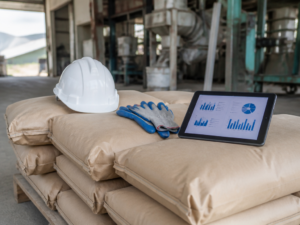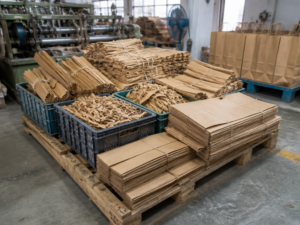
Though both are called "feed bags," the 25kg bulk bags used in aquaculture and the small retail bags on pet store shelves are actually two very different products: the former is all about load-bearing capacity and moisture protection, while the latter also has to carry brand printing and shelf recognition. At Chia Huang Paper, we've been making industrial kraft paper bags since 1973. This article explains, from a manufacturer's perspective, how to choose feed bags, covering moisture protection, printing and strength together with the principles of feed storage.
Let's start with the conclusion: when it comes to feed bags, thicker isn't always better. Different feed types, distribution channels, storage environments and handling methods all call for different paper layers, coating and printing configurations. That's why, before quoting, we always ask about the feed type, packaging weight and storage conditions first, then decide on the structure—rather than simply handing over a generic spec sheet.
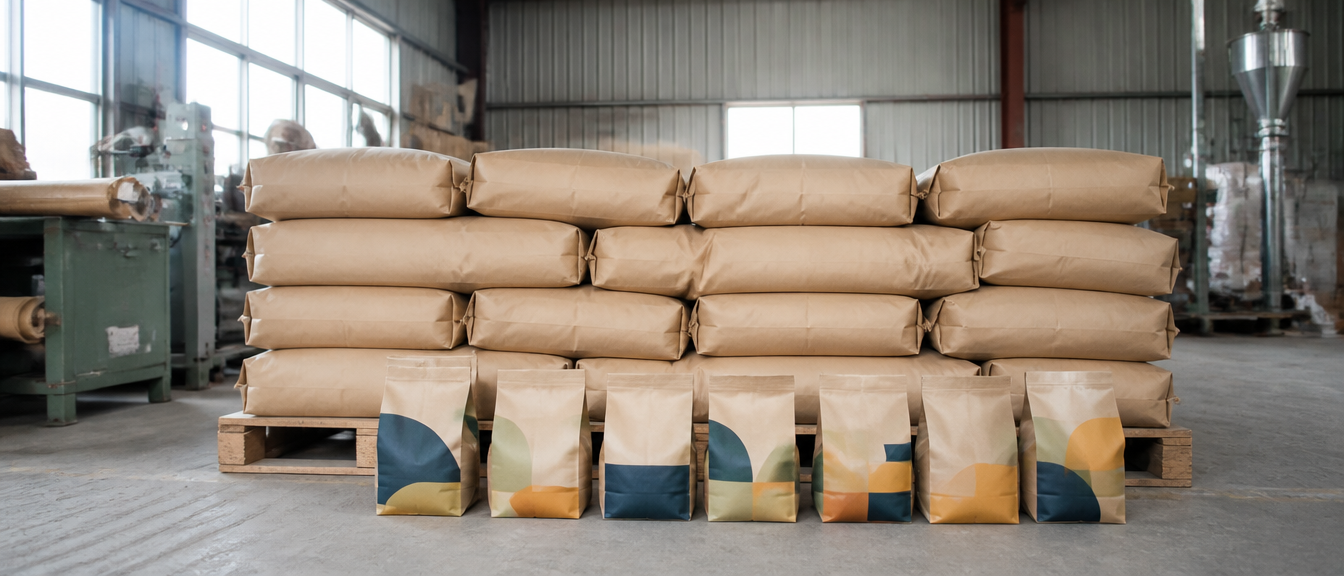
Feed Bags: Distinguish Between Bulk and Retail Packaging—They're Not the Same
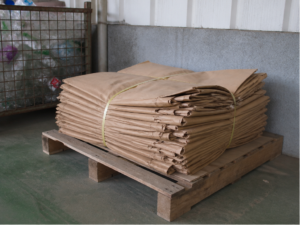
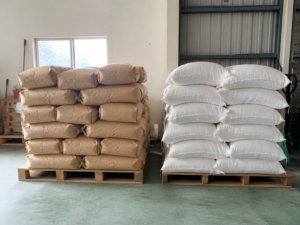
Chia Huang's feed bags belong to our heavy-duty industrial paper bag product line, suitable for contents such as aquaculture feed, pet dry food and feed additives. The paper structure consists of multiple layers of kraft paper laminated together, customized based on weight and freshness requirements. Moisture protection primarily relies on PE or PP coating, with an optional PE plastic inner layer. Sealing is done by stitching, and printing is 4-color. These form the common foundation, but the priorities differ significantly between bulk bags and small retail bags—the table below compares the two side by side.
| Comparison Factors | Bulk Packaging (e.g., Aquaculture Feed 25 kg) | Retail Small Packaging (e.g., Pet Food) |
|---|---|---|
| Design Priority | Load-Bearing Capacity and Moisture Protection | Brand Printing and Shelf Presentation |
| Primary Challenge | Risk of Bag Rupture During Stacking, Handling, and Transportation | First Impression of the Brand When Consumers See It on the Shelf |
| Material Selection Considerations | Determine the Number of Kraft Paper Layers Based on Weight, Then Decide Whether Lamination Is Needed | Paper Selection (e.g., White Kraft Paper) Must Be Confirmed with Sales Staff for Feasibility, Then Matched with Moisture Protection Requirements |
| The Role of Printing | Determine How Much to Print Based on Distribution Channel Requirements | Displaying Logo, Product Image, and Ingredient Information—One of the Main Selling Points |
The differences in the table stem from two different questions. Bulk bags need to answer: "Will this 25kg bag hold up after being stacked on a pallet and transported over distance?" Retail packaging needs to answer: "Will consumers recognize this brand within seconds of standing in front of the shelf?" When these two questions get mixed together, budget easily gets misallocated: bulk bags end up with printing they don't need, while retail packaging sacrifices moisture protection for appearance. This is something we like to clarify right from the quoting stage.
Why Feed Storage Starts with Moisture Protection: What Bags Can and Cannot Do
Moisture is the biggest enemy of feed. "Management of Mycotoxins in Grain" (translated from Pig International, 2006), featured in the Ministry of Agriculture's knowledge base, notes that environmental temperature and humidity affect mold infection, growth rate and toxin production. For grain, moisture content must be maintained at 11–12% for safe storage and transport; once equilibrium moisture content exceeds 13%, mold begins to grow. Temperature drops during shipping can also cause condensation, making grain damp and promoting mold growth. The article also notes that mold growth and caking in grain are clear signs of mold growth and contamination (see Ministry of Agriculture Knowledge Base, "Management of Mycotoxins in Grain").
"Staying Away from Invisible Toxins: Understanding Aflatoxin and Prevention Methods" (published August 14, 2025), issued by the Food Safety Office on the Executive Yuan website, points out that Taiwan's subtropical climate—warm and humid—readily promotes mold growth. For general food storage, the article recommends avoiding direct sunlight and humid environments, storing in a dry, cool place, and avoiding long-term stockpiling. It also notes that if feed becomes contaminated, aflatoxin can potentially enter milk and dairy products via dairy cows—a lower risk, but still worth monitoring (see Executive Yuan Food Safety Office).
One of these sources discusses grain, the other general food—neither is specific to feed bags—so we take only the principle they share: mold needs humidity and warmth, which is why the first rule of feed storage is keeping moisture out. The bag's role here is to reduce moisture exchange between the feed and its environment, not to dry out already-damp feed. In other words, if feed already has a high moisture content when it leaves the factory, even the best bag can only trap that moisture inside. What a bag can do is help feed that starts out in good condition stay that way throughout storage and transport.
Moisture-protection configurations can be ranked from basic to advanced. How much protection to add depends on warehouse humidity, turnover time and the feed's sensitivity to moisture absorption.
| Moisture Protection Configuration | Function | Situations Where This Is More Suitable to Consider | Points to Consider |
|---|---|---|---|
| Multi-Layer Kraft Paper Without Moisture Protection Layer | Relies on Paper Layer Structure for Load-Bearing and General Protection | Dry Indoor Warehouse Storage, Short Turnover Period | During the Rainy Season or Outdoor Stacking, Paper Surface Will Absorb Moisture |
| PE Lamination or PP Lamination | Forms a Physical Water-Resistant Barrier Layer on the Paper Surface | High Storage Humidity, Long-Term Cross-Season Storage | Lamination Is a Single-Layer Process, Separate from the Number of Bag Layers |
| Inner Layer Paired with PE Plastic Layer | Adds Another Barrier Layer Inside the Bag | High Moisture Sensitivity, Longer Storage Period | Thickness and Size Must Be Planned Together with the Bag Structure |
Coating thickness and inner-layer configuration can both be adjusted based on storage environment and freshness requirements—thicker isn't always better, and over-protecting only drives up costs unnecessarily. One thing to note: coating is a single-layer process, distinct from the 1-to-5-layer paper structure of the bag itself. Layer count mainly affects load-bearing capacity and tear resistance, while coating is mainly responsible for moisture protection. The two can work together, but they can't replace each other.
Feed Bag Strength: How Many Layers for 25 kg and How to Reduce the Risk of Rupture
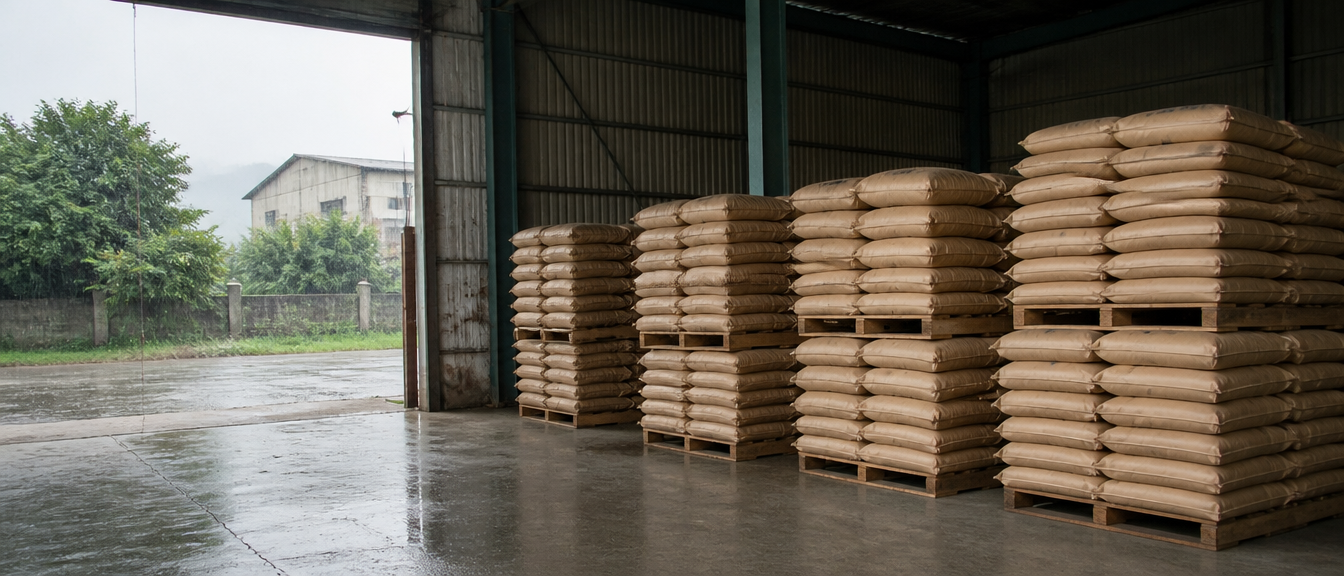
A common weight for bulk bags such as aquaculture feed is 25kg. Chia Huang's paper bag structures range from 1 to 5 layers, using long-fiber kraft paper. Generally speaking, 25kg bags made of pure kraft paper mostly use 3 layers, while three-ply composite kraft paper materials usually only need 2 layers to meet most requirements. This is just a starting point, not a definitive answer—the actual number of layers needed for a feed bag still depends on packaging weight, transport method and stacking requirements.
Reducing the risk of bag failure isn't just about adding more layers. Handling, transshipment and stacking can all cause bags to fail, so three factors need to be considered together: whether the bag type and material configuration match the weight, whether the seal can withstand drop impact, and whether the bag surface will slip when stacked on a pallet. Chia Huang's feed bags use stitched seals, which are sturdy and easy to open. For high stacking or long-distance transport, an anti-slip coating can be added to the bag surface to increase friction between bags and reduce the risk of pallet collapse. These finishing options can be combined based on your needs—please contact our sales team for detailed options. The basic configurations for feed bags are outlined on our Feed & Pet Food Packaging page.
Feed Bag Printing: Brand Presentation, Cost, and Liability for Copy
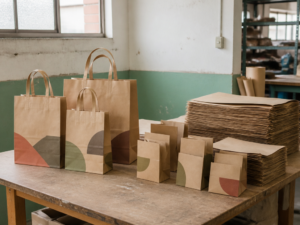
Pet food is sold at retail, so the packaging is the brand's face on the shelf. Chia Huang uses 4-color printing to display brand logos, product imagery and ingredient labeling, following a "print first, then process" workflow that protects the printed surface during subsequent bag-making and coating processes, keeping it resistant to wear. Once you provide your brand design files and color specifications, we can provide a digital proof of the print layout along with a similar bag style as a sample reference. Only after confirmation do we move into formal printing, catching any layout or color issues before mass production begins. For process details, see Printing Technology.
Let's be clear about budget upfront: printing colors affect price. The number of colors, print area, number of plates and production quantity all affect plate-making and printing costs. Chia Huang can recommend a suitable printing configuration based on your budget and needs, balancing brand presentation with cost. Brand-new designs require plate-making; if cumulative orders reach 50,000 units within a year, the plate cost can be deducted from the order amount. The minimum order quantity for custom production is about 5,000 units.

| Factors Affecting Cost | Why It Affects Cost | Please Provide When Requesting a Quote |
|---|---|---|
| Number of Print Colors | As the Number of Colors Increases, Plate-Making and Printing Costs Usually Increase | Brand Essential Colors and Colors That Can Be Eliminated |
| Printing Area | The Larger the Printing Area, the Higher the Printing Cost | Which Sides to Print, Whether Full Coverage or Partial |
| Number of Plates | Different Styles Require Separate Plate-Making | Number of Styles or Specifications |
| Production Quantity | Different Manufacturing Quantities Result in Different Plate-Making and Printing Costs | Estimate Single Order and Annual Usage |
Another matter is the bag's text and copy, which is the brand owner's responsibility—and comes with regulatory boundaries. Under the Ministry of Agriculture's "Principles for Determining False, Exaggerated, or Misleading Labeling and Advertising of Pet Food" (issued April 11, 2023, amended December 15 of the same year), which applies to dog and cat pet food, including labeling and promotion on containers, outer packaging or instructions—whether content is false, exaggerated or misleading is judged comprehensively based on overall presentation, including product name, text descriptions and images. "False" refers to claims that don't match the facts or lack sufficient evidence; "exaggerated or misleading" includes claims involving medical efficacy, or claims about altering an animal's organs, tissues, body structure, physiology or appearance (see Ministry of Agriculture Regulations System).
We are a packaging manufacturer—we do not assess whether copy is compliant, nor do we provide any food-grade or direct food-contact guarantee for any bag. Copy should be finalized and confirmed by the brand owner before printing. If your contents involve food-contact regulations, you should separately confirm the relevant regulatory and certification requirements.
Five Things to Prepare Before Requesting a Quote
The more complete the information, the more accurate our feed bag recommendations. We suggest preparing five things in advance: first, the feed type and weight per bag—aquaculture feed, pet dry food or additives, 25kg or another spec; second, storage conditions—indoor or outdoor, whether it will go through the rainy season, and how long it will be stored; third, distribution channel and handling method—direct to farms, or through distributors and retail, and how many layers high on pallets; fourth, printing requirements, including number of colors, which sides to print, and whether the design file is finalized; fifth, estimated quantity. Once these five points are clear, we can provide meaningful recommendations on structure and printing configuration.
Frequently Asked Questions About Feed Bags
How Can I Prevent Feed from Getting Damp and Moldy in Feed Bags?
This mainly relies on multiple layers of kraft paper combined with coating, or an added PE plastic inner layer, to block environmental moisture. However, a bag cannot dry out feed that is already damp, so the feed's own moisture content and the storage environment are equally important. Coating thickness and inner-layer configuration can be adjusted based on the storage environment—please specify the feed type and storage conditions when requesting a quote.
Can We Print Our Brand Design on Pet Food Bags? Does Printing Color Affect the Price?
Yes, Chia Huang uses 4-color printing to display brand logos, product imagery and ingredient labeling. Mass production only begins after confirming the digital print layout and sample reference. Printing colors affect price, as the number of colors, print area, number of plates and production quantity all affect plate-making and printing costs. Chia Huang can recommend a printing configuration based on your budget and needs, balancing brand presentation with cost.
Is There a Difference Between Bulk and Small Packaging Feed Bags?
Yes. Aquaculture feed is mostly packaged in bulk (e.g., 25kg), emphasizing load-bearing capacity and moisture protection; pet food retail packaging is smaller, emphasizing brand printing and shelf presentation. Chia Huang can accommodate both, planning specifications based on distribution channel and use case.
How Many Layers Should a 25 kg Feed Bag Have?
There's no fixed answer. A common approach is to use 3 layers for 25kg bags made of pure kraft paper, while three-ply composite kraft paper materials usually only need 2 layers to meet most requirements. The actual number of layers still needs to be adjusted based on packaging weight, transport method and stacking requirements.
Besides the Bag, What Else Should I Pay Attention to When Storing Feed?
The general principle is to avoid humidity and direct sunlight, store in a dry, cool place, and avoid long-term stockpiling. This is the Executive Yuan Food Safety Office's storage recommendation for general food—feed can follow the same general direction, but the actual standard should follow the feed manufacturer's storage labeling.
Can Feed Bags Be Guaranteed to Be Food-Grade?
We do not provide this type of guarantee. Chia Huang provides the paper bag's structure, moisture protection, printing and sealing configuration. If your contents involve food-contact regulations, you should separately confirm the relevant regulatory and certification requirements.
Conclusion: Choosing the Right Feed Bag Starts with Understanding Your Use Case
Choosing a feed bag ultimately comes down to answering a few questions: what feed is being packed, how much per bag, where it will be stored, how high it will be stacked, and whether it needs to stand out on the shelf. Once these conditions are clear, the paper layers, coating, anti-slip treatment and 4-color printing configuration can be determined accordingly. To see the basic feed bag configurations first, visit our Feed & Pet Food Packaging page. Once you've prepared your feed type, packaging weight, storage conditions and printing requirements, feel free to reach out via Contact Us—our sales team will respond within one business day.