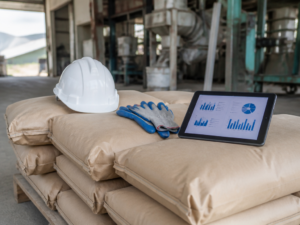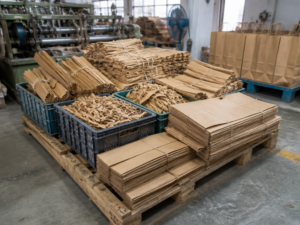
Pet food packaging may look like just a bag, but it actually carries two tasks that pull in different directions: outwardly, it's the brand face consumers see on the shelf; inwardly, it has to keep dry food dry from the factory through warehousing until the bag is opened. The richer the printing, the higher the cost tends to be; the more conservative the moisture protection, the more coating or inner-layer configuration is needed — both sides require trade-offs.
Founded in 1973 in Shanhua, Tainan, Chia Huang Paper specializes in industrial kraft paper bags, with pet feed bags being one item within our heavy-duty packaging product line; related content is also covered on our Pet Feed Packaging page. This article discusses how to think about pet feed packaging from a manufacturing perspective: how to balance brand printing with cost, what moisture-barrier options are available, what to watch out for regarding labeling and advertising regulations, and finally, what information to prepare before requesting a quote. One thing should be clarified first: whether the bag's labeling is compliant and whether its claims are substantiated is primarily the responsibility of the brand or manufacturer; what a bag manufacturer can do is get the layout and structure right — we cannot vouch for claims about the contents. The requirement that packaging itself must not be harmful to health is a separate matter.
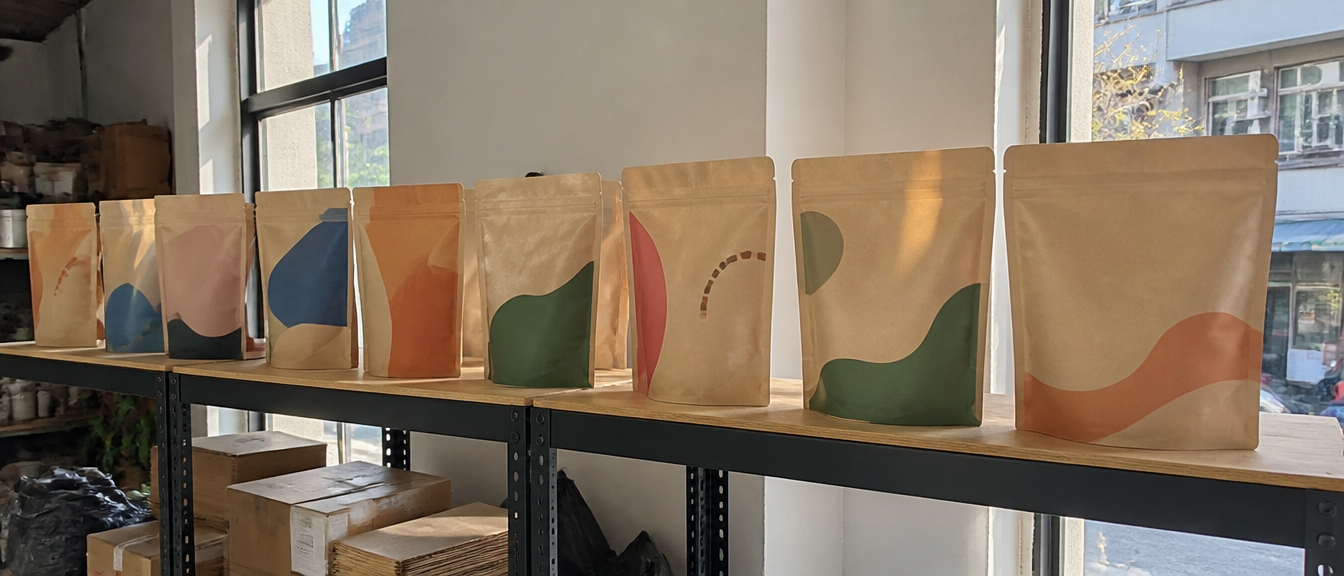
Two missions for pet food packaging: being seen and staying protected
It's clearer when you separate the two tasks. On the brand side, pet food sold through retail channels needs packaging that accommodates the logo, product imagery, and ingredient labeling so it's instantly recognizable on the shelf. On the contents side, dry food is moisture-sensitive — moisture getting into the bag affects quality — so the bag needs a barrier design and must also withstand handling and stacking. The table below brings together common requirements, packaging-side solutions, and the trade-offs involved.
| Requirements | Common practices on the packaging end | Trade-offs to consider |
|---|---|---|
| Brand identity | Four-color printing showcases brand logo, product imagery and ingredient information | Number of colors, print area, number of plates and quantity all affect costs |
| Moisture protection and freshness | Multi-ply kraft paper combined with coating or PE inner layer creates a moisture barrier | Coating or inner layer configuration depends on storage environment and shelf life; over-specification increases costs |
| Handling strength | Adjust kraft paper ply and sealing based on package weight, transportation and stacking methods | Find a balance between ply, strength and cost |
| Information labeling | Reserve space on the bag for regulatory required labeling | Label requirements should be confirmed by the brand based on current regulations; layout planning is essential |
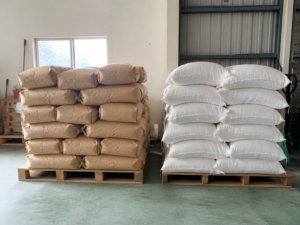
Bag type and size also vary by sales channel. For feed in general, aquaculture feed tends to come in large packaging (such as 25 kg), emphasizing load capacity and moisture protection; retail packaging for pet feed is smaller and focuses more on brand printing and shelf presentation. Chia Huang can accommodate both approaches — the actual bag type and size should be evaluated together with your sales channel and intended use when requesting a quote. In other words, even within pet food packaging, large-format packaging focuses on structure and moisture protection, while retail packaging focuses on printing and layout. Deciding which category you fall into before designing will make the subsequent choices much simpler.
Brand printing: how to do four-color printing and cost considerations
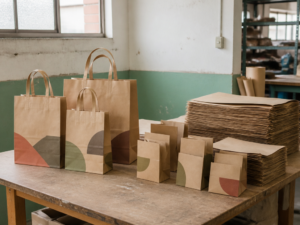
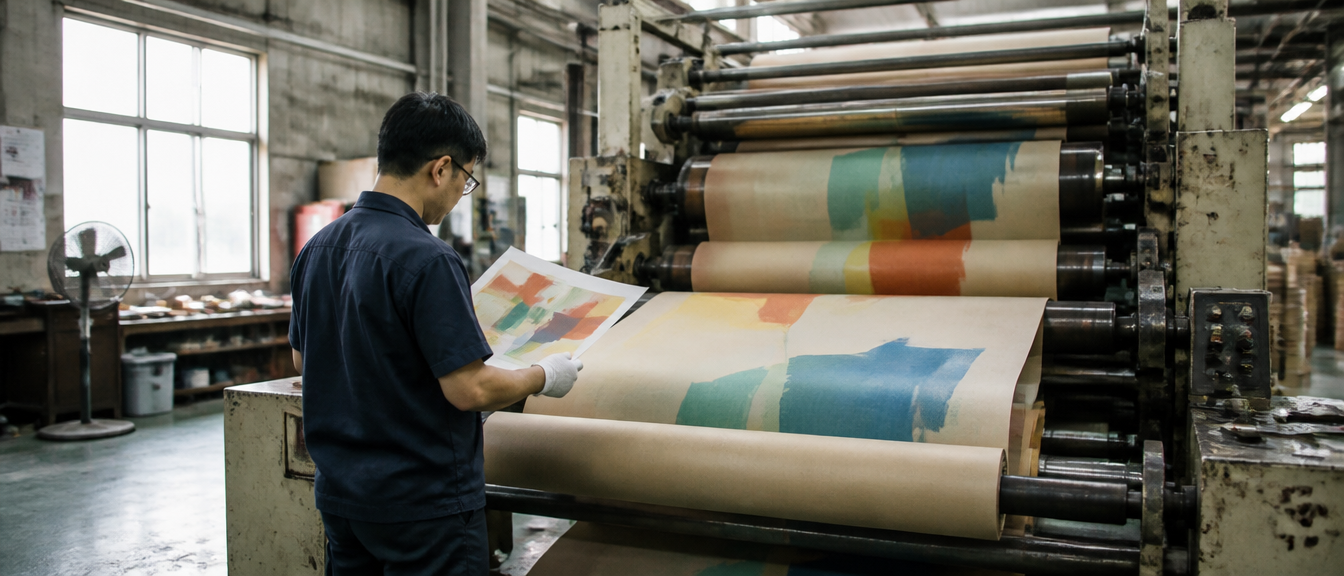
Chia Huang uses 4-color printing, which faithfully reproduces brand logo and imagery colors with stable registration accuracy. Our process prints first, then processes the bag, so the printed surface is protected during subsequent bag-making and coating processes and is less prone to abrasion or scratching. In practice, you provide your brand design files and color specifications, and we can provide an electronic proof of the print layout along with a similar bag style as a sample reference. Once confirmed, we move into formal printing and bag production, so you won't discover color discrepancies only after mass production. See Printing Technology for process details.
Print color affects price. The number of colors, printed area, number of plates, and quantity all affect plate-making and printing costs, so a design is not better simply for covering the whole surface. Chia Huang can recommend a print layout based on your budget and product needs, balancing brand presentation against cost — which panels should be full-coverage and which should carry only the key visual and essential labeling can all be discussed before the layout is finalized.
| Influencing factors | Impact on cost | Practices during design and procurement |
|---|---|---|
| Number of colors | More colors increase platemaking and printing costs | First decide the core colors for brand identity, minimize other colors where possible |
| Printing Area | Different areas result in different printing costs | Assess whether the main visual and label area truly need full coverage |
| Number of Plates | Different number of plates also means different plate-making costs | When you have multiple designs in the same series, estimate the total number of designs first, then discuss how many plates each design needs |
| Quantity | Production quantity is also a pricing factor; custom minimum order is approximately 5,000 units | Cumulative annual orders of 50,000 units or more qualify for plate fee credits applied to the order total |
Whether photos or fine gradients can be printed well depends on the design content and the paper surface, so it's best to send the design file to our sales team for confirmation. As for paper, white kraft paper has a clean white surface suited to high-quality printing, and is worth considering when brand printing demands fine detail; if you'd like to preserve the natural kraft paper tone, let us know when requesting a quote so our sales team can evaluate it.
Labeling and advertising: what to put on the bag and what claims to avoid
The surface of pet food packaging isn't just about design — it also involves regulatory requirements. Under Article 22-5 of the Animal Protection Act as recorded in the National Laws & Regulations Database, pet food must be prominently labeled in Chinese and standard symbols on the container, packaging, or instructions with nine categories of information: product name; net weight, volume, quantity, or measurement; names of main raw materials and additives; nutritional content and amounts; name, address, and phone number of the manufacturer/processor; expiration date or manufacturing date; shelf life, storage method, and conditions; applicable pet species, usage method, and other precautions; and any other items designated by the competent authority. Importers must additionally mark the name, address, phone number, and country of origin of the importing company and the responsible domestic firm.
The same article also stipulates that labeling, promotion, or advertising of pet food must not be false, exaggerated, or misleading. Article 22-4 further provides that pet food that is not labeled as required, is unclearly labeled, or is incompletely labeled may not be manufactured, processed, repackaged, wholesaled, sold, imported, exported, gifted, or publicly displayed with intent to sell. As for what counts as false or exaggerated, the Ministry of Agriculture's "Principles for Determining False, Exaggerated, or Misleading Labeling, Promotion, and Advertising of Pet Food" provides further clarification: these principles apply to labeling, promotion, and advertising of dog and cat pet food on containers, outer packaging, or instructions, and are judged based on the overall impression. "False" means inconsistent with fact, unsubstantiated, or insufficiently substantiated; "exaggerated or misleading" includes claims involving medical efficacy or claims involving altering an animal's organs, tissues, body structure, physiology, or appearance. The principles also list commonly acceptable phrases, as well as phrases describing the physiological functions of nutrients or specific ingredients, which are not considered false or exaggerated.
For packaging design, there are two practical takeaways. First, space for labeling fields should be reserved during the layout planning stage rather than squeezed in at the last minute — the text for ingredients and nutritional information takes up considerable space, so printed area and color count planning need to account for this. Second, claims in the key visual copy must be substantiated; if any wording is uncertain, check with the brand's regulatory contact first. Chia Huang is responsible for clearly printing the layout you've confirmed; whether the labeling content is compliant remains the responsibility of the brand or manufacturer, who should consult the competent authority if needed.
Pet food packaging moisture protection and barrier: multi-ply kraft paper, coating and PE inner layer
Dry food's sensitivity to moisture is also mentioned in the US FDA's storage advice for pet owners: dry food and unopened canned food should be stored in a cool, dry place, ideally below 80°F (about 27°C), as excessive heat or moisture may degrade nutritional content. The same guidance also recommends keeping pet food in its original container or bag so that information such as product name, manufacturer, lot number, and best-by date remains traceable (see US FDA's pet food storage guidance).
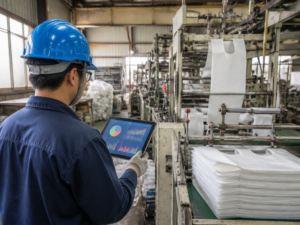
From a packaging standpoint, this implies two things: the bag must keep moisture out, and the labeling on the bag surface must remain legible for a long time even after opening. The former relies on structure, the latter on print quality and protection of the printed surface; our print-first, process-later approach, which reduces abrasion to the printed surface during bag-making and coating, is one part of this.
There are two common approaches to moisture protection: multi-layer kraft paper combined with coating, or adding a PE inner liner to the bag. Coating is a single-layer process — a thin PE or PP film applied to the paper surface — and is independent of the bag's 1-to-5 kraft paper layer count; the number of paper layers determines load capacity and tear resistance, while coating and inner liners handle moisture barrier. Whether to use these and to what extent depends on the warehousing environment and storage duration: for dry indoor storage, fewer layers may suffice; for the rainy season, open-air storage, or overseas export, coating or an inner liner is worth serious consideration. Coating thickness and inner-liner configuration can be adjusted according to warehousing conditions and freshness requirements — more is not always better. We can't make this determination for you in an article; when requesting a quote, clearly describe your feed type and storage conditions, and our sales team will recommend a suitable moisture-protection configuration.
Handling strength and sealing: prevent bags from failing during transport
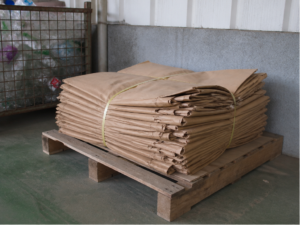
For large-format feed bags, handling and stacking loads are a real practical concern. The number of layers is determined by the content's weight, moisture-protection needs, and transport method; for plain kraft paper, 25 kg bags commonly use 3 layers and 40 kg bags commonly use 4 layers, though actual requirements depend on your specific conditions. Sealing methods include sewing and heat-sealed OverTape, which can also be combined. If pallets are stacked high, adding an anti-slip agent to the bag surface can be considered to reduce the risk of slippage during stacking.
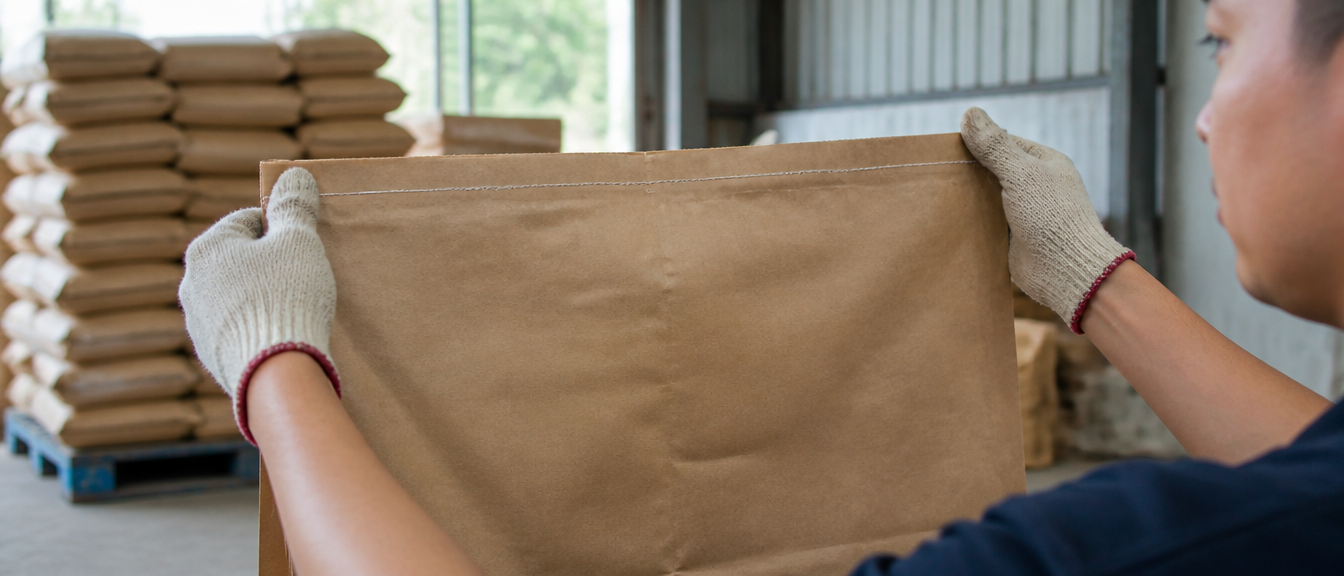
The principle here is the same as with moisture protection — more configuration isn't always better. Instead, clearly communicate the weight, transport distance, stacking height, and warehousing environment, and our sales team will recommend a suitable bag type and material configuration.
What information to prepare before requesting a quote
To speed up quoting and recommendations, it helps to prepare the following in advance: content type and per-bag weight, whether it's large-format or retail packaging, manual or automated filling, warehousing environment and expected storage duration, transport and stacking method, brand design files, and estimated print color count, printed area, number of styles, and quantity. With this information, we can propose a print configuration that balances brand presentation with cost, while also evaluating moisture protection and strength. As for the labeling requirements and claim wording mentioned earlier, please confirm these with your brand team before submission.
Common questions about pet food packaging
Can we print our own brand design on pet food packaging bags?
Yes. Chia Huang uses 4-color printing, which can render brand logos, product imagery, and ingredient labeling. After you provide the design file, we can supply an electronic proof of the print layout along with a similar bag style as a sample reference; formal production begins only after confirmation. See the Printing Technology page for details.
Does the number of printing colors affect the price?
Yes. The number of colors, printed area, number of plates, and quantity all affect plate-making and printing costs. Chia Huang can recommend a print configuration based on your budget and needs, balancing brand presentation with cost. The custom minimum order quantity is about 5,000 bags; once annual orders reach 50,000 bags, plate fees can be deducted from the order amount.
How do we prevent moisture on pet food bags?
A common approach is multi-layer kraft paper combined with coating, or adding a PE inner liner, to form a moisture barrier. Which option to choose and to what extent depends on the warehousing environment and storage duration — please describe your feed type and storage conditions when requesting a quote, and our sales team will recommend a suitable configuration.
What information must be labeled on pet food packaging?
Under Article 22-5 of the Animal Protection Act, pet food must be prominently labeled in Chinese and standard symbols on the container, packaging, or instructions with items such as product name, net weight or volume, main raw materials and additives, nutritional content, company information, expiration date or manufacturing date, storage method, and applicable pet species. Actual requirements are subject to the latest regulations and announcements from the competent authority, and confirmation is the responsibility of the brand.
Does Chia Huang handle both bulk packaging and retail packaging?
We can accommodate both approaches. Large-format packaging (such as 25 kg) emphasizes load capacity and moisture protection, while retail packaging is smaller and focuses more on brand printing and shelf presentation. Please describe your sales channel and intended use when requesting a quote, and our sales team will evaluate the actual bag type and size accordingly.
Conclusion: Pet food packaging trade-offs start with clarifying your requirements
Back to the original question: pet food packaging needs to be noticed, and it needs to hold up. Printing requires balancing brand presentation against the cost of color count, area, plates, and quantity; moisture protection requires balancing coating, inner liners, and storage conditions; and labeling and claims must be grounded in regulations and evidence. There's no single right answer to these trade-offs, but clearly communicating your conditions can save you a lot of trouble. Feel free to visit Contact Us and tell us about your contents, packaging specifications, brand printing needs, and design files — our sales team will respond within one business day with recommendations for a suitable structure, moisture protection, and print configuration.