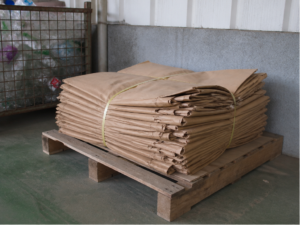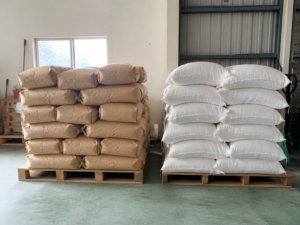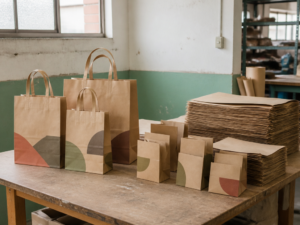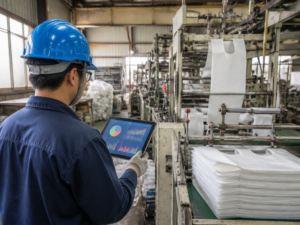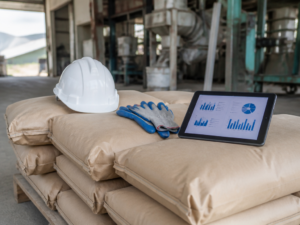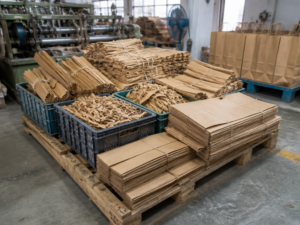
People searching for food packaging bags may have very different images in mind: some think of small snack pouches on convenience store shelves, while others think of full bags of sugar or powder used as factory raw materials. Although both are called food packaging bags, they differ almost completely in size, material, filling method, and the problems they need to solve. This article focuses on the latter — 25 kg-class bulk bags made of kraft paper — using sugar bags as an example to explain real-world issues like moisture protection, caking, and stacking pressure.
Our Chia Huang Paper bulk industrial paper bags product line includes sugar bags, alongside cement bags, chemical bags, feed bags, powder bags, and building material bags. Let's be clear from the start: this article does not claim any bag type is
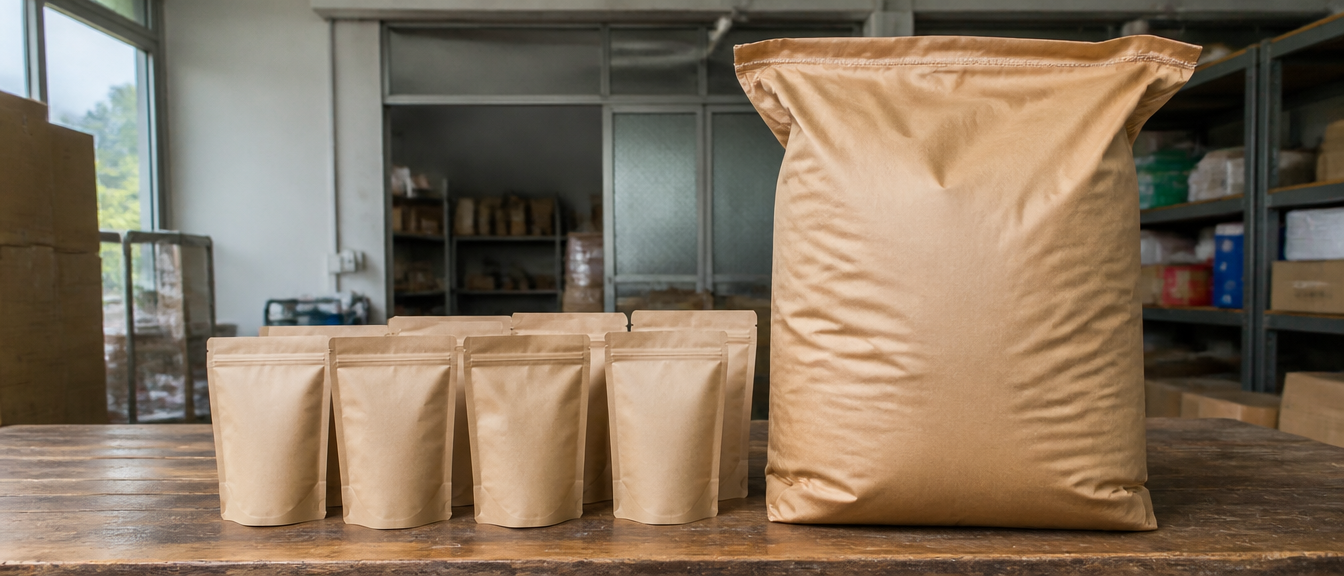
Food packaging bags come in two types: retail small bags and bulk food ingredient packaging
Retail pouches are designed for consumers, focusing on print quality, opening methods, and display appeal. Bulk packaging for food ingredients, on the other hand, is designed for factories and processing operations, focusing on load capacity, moisture protection, stacking, and filling efficiency. These two follow entirely different design logic and should not be confused when purchasing. The table below outlines the differences between the two, as well as the scope of this article.
| Comparison Item | Retail Small Bags | Bulk Food Ingredient Packaging (scope of this article) |
|---|---|---|
| Use Case | Designed for consumers, displayed on retail shelves | Designed for factories and processors for receiving, storage and handling |
| Individual Bag Size | Small packages | 25 kg is the mainstream, other weight capacities can be customized |
| Design Focus | Print quality, opening method and freshness preservation | Load capacity and tear resistance, moisture protection, stacking, filling |
| Common Structure | Depends on distribution channels and contents | Multi-ply kraft paper, optionally combined with coating or inner layer; sealed by stitching or heat seal OverTape |
| Food-Related Requirements | Must be confirmed separately based on contents and purpose | Must also be confirmed separately based on contents and purpose, including food contact regulations and certification requirements |
If you're looking for retail pouches, we recommend specifying the sales channel, size, and contents when requesting a quote, so our sales team can assess feasibility. The rest of this article refers to food packaging bags in the context of bulk food ingredient packaging. Within this scope, start by asking yourself three questions: Are the contents moisture-sensitive? How much stress will storage and handling put on the bag? Have the food-related regulations and certification requirements already been confirmed? The first two questions determine the structure, while the third should be confirmed as early as possible — otherwise, you may finalize the specifications only to find the bag can't be used, requiring you to start over.
Sugar Bags: What to Pay Attention To – Moisture Absorption, Caking and Stacking Pressure
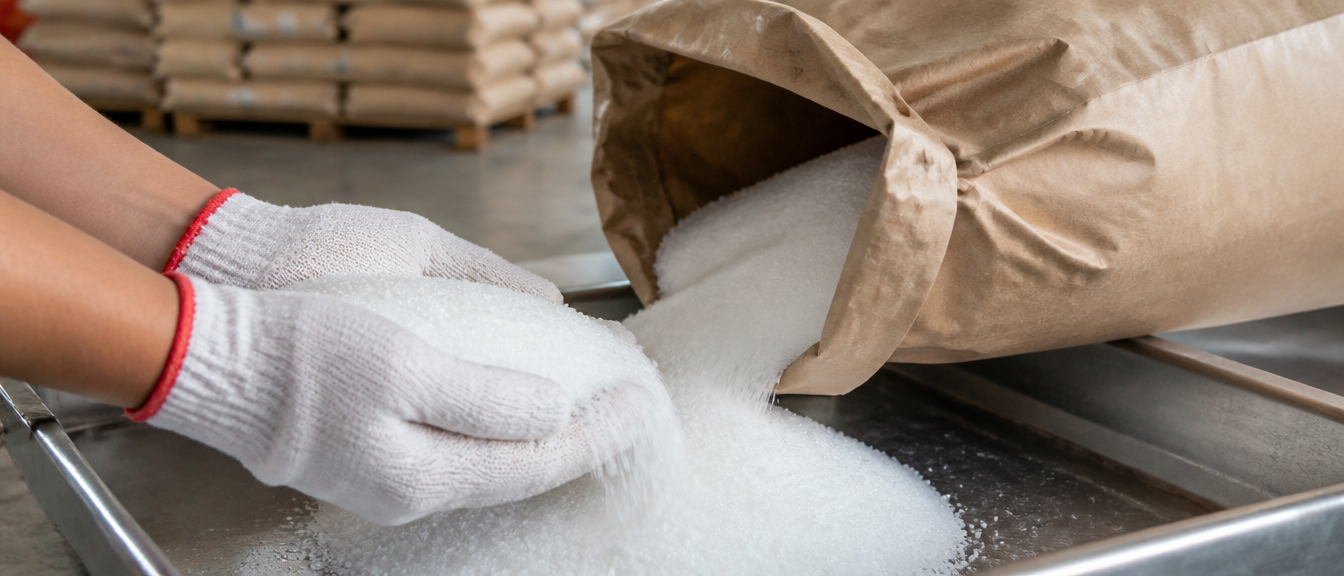
Sugar is a classic example of a moisture-sensitive content. The Cargo Handbook entry on sugar, which focuses on cargo transport, notes that at relative humidity above 70%, sugar can become syrupy and sticky, with mold and yeast growth; below 50%, sugar may harden, cake, and lose its flowability. The same source notes that a relative humidity of 80% to 85% is generally considered the critical humidity for sugar — above this range, sugar absorbs moisture rapidly, and if humidity later drops and the sugar dries out again, it will cake into clumps. The ideal relative humidity range is 55% to 65%.
The same source also discusses packaging issues for bagged sugar. It explains that outer bags for bagged sugar are now commonly made of PP woven fabric, with a plastic inner liner used to block moisture. However, because the inner and outer bags are often sewn together, the sealing effectiveness at the closure isn't always reliable. In addition, the static pressure from the weight of the contents themselves compacts the sugar, with the effect becoming more pronounced the higher the bags are stacked. This source discusses a combination of PP woven outer bags and plastic inner liners; kraft paper bags have a different structure, but the same three issues — moisture protection, sealing, and stacking pressure — need to be addressed just as carefully with paper bags.
| Risk | What Industry Data Says | Directions Packaging Suppliers Can Evaluate |
|---|---|---|
| Moisture Absorption and Stickiness | When relative humidity exceeds 70%, syruping, stickiness and mold/yeast growth may occur | Multi-ply kraft paper combined with coating or inner layer, and confirm warehouse humidity |
| Caking and Hardening | Caking occurs when moisture is absorbed followed by drying; hardening can also occur at humidity below 50% | Moisture protection configuration should be stable, and assess whether the storage environment experiences fluctuating humidity |
| Seal Penetration by Moisture | Inner and outer bags are often stitched together, and seals may not effectively block moisture | Sealing method (stitching, heat seal OverTape, or combination) must be evaluated together with coating and inner layer |
| Compression from Stacking | Static pressure from the product's own weight becomes more pronounced when stacked higher | Assess the number of plies and load capacity based on stacking height; sliding risk during stacking can be separately evaluated with anti-slip agents |
There's no single standard answer for sugar bags — it depends on the moisture content of the contents, storage humidity, turnover speed, and stacking height. If you don't yet have humidity records for your storage environment, we recommend measuring it first before discussing how much protection the bag needs, to avoid over- or under-specifying. For plain kraft paper, 3 layers is common for 25 kg bags and 4 layers for 40 kg bags, though the actual number of layers should be assessed based on specific needs. The filling method also affects the design: high-speed automatic filling should be evaluated for micro-perforated venting, while manual filling is assessed case by case; how venting design and moisture protection requirements work together should be discussed when finalizing specifications. Also note that laminating is a single-layer process, separate from the 1 to 5 layers of kraft paper in the bag: the number of layers determines load capacity and tear resistance, while the laminate and inner layer handle moisture barrier.
Food Packaging Bag Regulations: Who Needs to Confirm What
Regulations related to food packaging materials start with the Act Governing Food Safety and Sanitation. According to the provisions recorded in the National Laws & Regulations Database, Article 3 defines food containers or packaging as containers or wrappers that come into direct contact with food or food additives. Article 16 stipulates that food containers or packaging that are toxic, prone to adverse chemical reactions, sufficient to endanger health, or found through risk assessment to pose a health risk, must not be manufactured, sold, imported, exported, or used. Article 17 stipulates that food sold, along with its containers or packaging, must meet hygiene, safety, and quality standards, which are established by the central competent authority.
One of the standards referenced in Article 17 is the Sanitation Standard for Food Utensils, Containers, and Packaging. Established under Article 17 of the Act Governing Food Safety and Sanitation, Article 3 of this standard requires that food utensils, containers, or packaging must not show abnormal discoloration, odor, or off-flavor, and must not be contaminated, moldy, or contain foreign matter or shedding fibers. Article 6 requires compliance with testing standards, with general provisions listed in Appendix 1, plastic materials additionally subject to Appendix 2, and dairy container and packaging materials additionally subject to Appendix 3. This article has not verified the specific test items in the appendices item by item — please refer to the appendices published in the National Laws & Regulations Database and the latest requirements from the competent authority.
Regulatory provisions set out principles, but in actual purchasing, one common issue is unclear responsibility. The table below clearly separates what each of the three roles needs to confirm. Whether a specific bag type counts as
| Role | What Needs to Be Confirmed | Description |
|---|---|---|
| Food Businesses (brands or factories) | Whether contents and packaging make direct contact, applicable regulations and certifications, bag surface labeling requirements | Article 22 of the Act Governing Food Safety and Sanitation stipulates that containers or outer packaging for food and food ingredients must indicate, in Chinese and standard symbols, the product name, name of contents, net weight, business operator information, country of origin, expiration date, and other required details. |
| Bag Supplier (Jia Huang) | Manufacture bags according to your specifications, and explain the bag's material structure and processing method | We do not claim food grade status, nor do we guarantee compliance for the contents |
| Testing Facilities and Regulatory Authorities | Conduct testing according to standards; for questions on regulatory application, consult the relevant authority | When certification is needed, please contact an accredited testing facility or regulatory authority |
Printing and Bag Surface Labeling: Reserve Space First, Then Discuss Costs
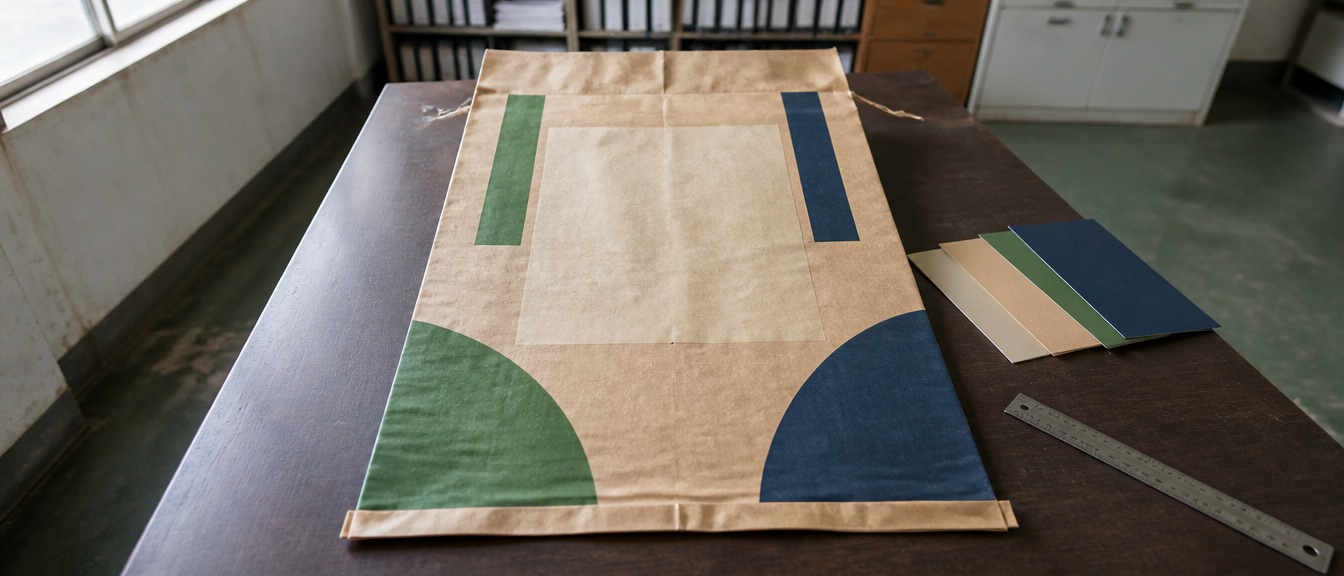
Beyond the brand name or product name, the surface of a food ingredient bag must also accommodate the labeling items that food business operators are required to confirm under regulations. These details are confirmed by the food business operator based on the specific product; the bag manufacturer's job is to reserve the appropriate space and font size during layout planning, then clearly print the layout once you've confirmed it. Chia Huang uses four-color printing with a print-first, process-later workflow, which protects the printed surface during bag manufacturing. After you provide your design file, we can supply an electronic version of the print layout along with similar bag samples for reference.
Print color affects pricing. The number of colors, print area, number of plates, and quantity all affect plate-making and printing costs. Chia Huang can recommend a printing configuration based on your budget and needs, balancing brand presentation with cost — this is also covered in our FAQ. The minimum order for custom bags is about 5,000 units, and once annual cumulative orders reach 50,000 units, plate costs can be deducted from the order amount. As for paper material, white kraft paper has a clean, bright surface suited for high-quality printing; if you need a more refined bag surface finish, this can be considered, though whether to use it depends on cost and application.
What information to prepare before requesting a quote
For bulk packaging of food ingredients, the clearer the specifications, the more accurate our recommendations will be. We suggest preparing the following information in advance: type of contents (sugar, powder, etc.) and weight per bag, manual or automatic filling, storage humidity and expected storage duration, stacking height and transport method, and whether printing is needed along with estimated number of colors, print area, number of designs, and quantity. If your contents require food contact-related documentation or certification, please confirm the specific requirements with the competent authority or an accredited testing institution first, then share those requirements with us so we can assess whether the bag's structure and processing method can accommodate them. Providing all the information at once allows us to give you an accurate quote and recommendation in a single round; if some details aren't finalized yet, such as storage humidity, it's fine to note them as
Frequently Asked Questions About Food Packaging Bags
Can food packaging bags be made from industrial kraft paper bags directly?
It depends — there's no one-size-fits-all answer. Under the Act Governing Food Safety and Sanitation, containers or packaging that come into direct contact with food must meet hygiene, safety, and quality standards; whether this applies depends on the contents, bag structure, and intended use. Chia Huang does not claim food-grade status; if the contents are food ingredients, please separately confirm the relevant food contact regulations and certification requirements.
Why do sugar bags require special attention to moisture protection?
According to the Cargo Handbook, at relative humidity above 70%, sugar becomes syrupy and sticky with mold and yeast growth, and caking occurs if it absorbs moisture and then dries out again. For this reason, sugar bags require careful consideration of moisture protection configuration, sealing method, and storage humidity, with lamination or inner layers assessed based on actual conditions.
What are the common specifications and ply numbers for bulk food ingredient packaging bags?
25 kg is the most common weight class for bulk paper bags, though other load capacities can be customized. For plain kraft paper, 25 kg bags commonly use 3 layers and 40 kg bags use 4 layers; the actual number of layers is assessed based on content weight, moisture protection needs, and transport method — please provide these details when requesting a quote.
Does printing on food packaging bags affect the price?
Yes. The number of colors, print area, number of plates, and quantity all affect plate-making and printing costs. Chia Huang can recommend a printing configuration based on your budget and needs; the minimum order for custom bags is about 5,000 units, and once annual cumulative orders reach 50,000 units, plate costs can be deducted from the order amount.
What information should be provided when requesting a quotation?
Please provide the type of contents and weight per bag, filling method, storage humidity and storage duration, stacking and transport method, as well as printing requirements and design files. Our sales team will respond within one business day and recommend a suitable bag type and material configuration.
Conclusion: Clarify the Purpose of Food Packaging Bags First, Then Discuss Specifications
Back to the original question: how do you choose a food packaging bag? Retail pouches and bulk packaging for food ingredients are two completely different things — the latter is about load capacity, moisture protection, sealing, stacking, and filling, with sugar bags being the classic example. As for food contact-related regulations and certification, our position is clear: we make no claims and do not endorse any specific contents — please confirm with the competent authority or an accredited testing institution based on your contents and intended use. If you're evaluating bulk packaging for food ingredients, feel free to visit Contact Us and tell us about your contents, weight per bag, filling method, storage conditions, and printing needs — our sales team will respond within one business day.