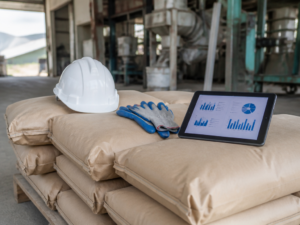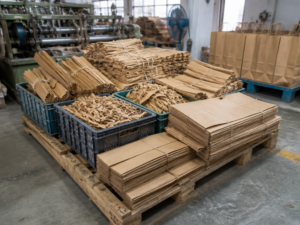
What is lamination? Simply put, it's a plastic film coating applied to the surface of paper, woven fabric or non-woven fabric — in Taiwan, most commonly PE or PP film. When people first hear the term, they usually think of
Lamination is a capability we already have in-house at Chia Huang. We use it on our own heavy-duty paper bags and composite bag materials, and we also offer it as a standalone contract processing service — customers supply the substrate, and we handle the lamination. This article explains, from a manufacturing perspective, the three functions of lamination, how to choose between PE and PP film, which substrates can be laminated, and the recycling considerations after lamination.
What is Lamination? Three Problems Solved by a Single Film Layer
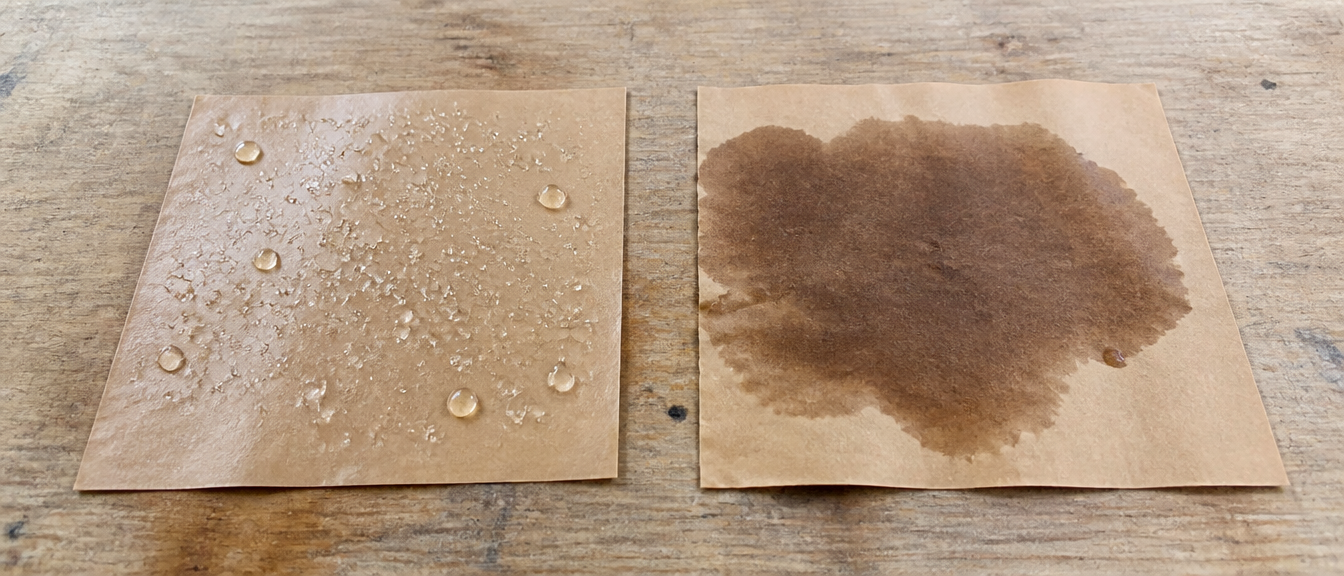
Paper naturally absorbs moisture, and once it does, its strength drops — powdered contents stored inside can also clump together. Lamination works by forming a continuous plastic film on the substrate's surface to keep moisture out. The needs that lamination addresses generally fall into three categories below. These are independent of one another, but often needed at the same time.
| Function | Function | Suitable Applications |
|---|---|---|
| Moisture & Water Resistance | Physical barrier blocks water molecule penetration, protecting product quality until the bag is opened | Contents prone to moisture damage and clumping, such as cement and chemical powders |
| Abrasion Resistance & Reinforcement | Film layer increases bag surface hardness and wear resistance, reducing damage during handling | Packaging requiring long-distance transportation and repeated handling |
| Barrier & Heat Sealing | Enhanced barrier and heat-sealing performance for subsequent lamination and packaging applications | Applications requiring composite lamination with other materials or heat sealing |
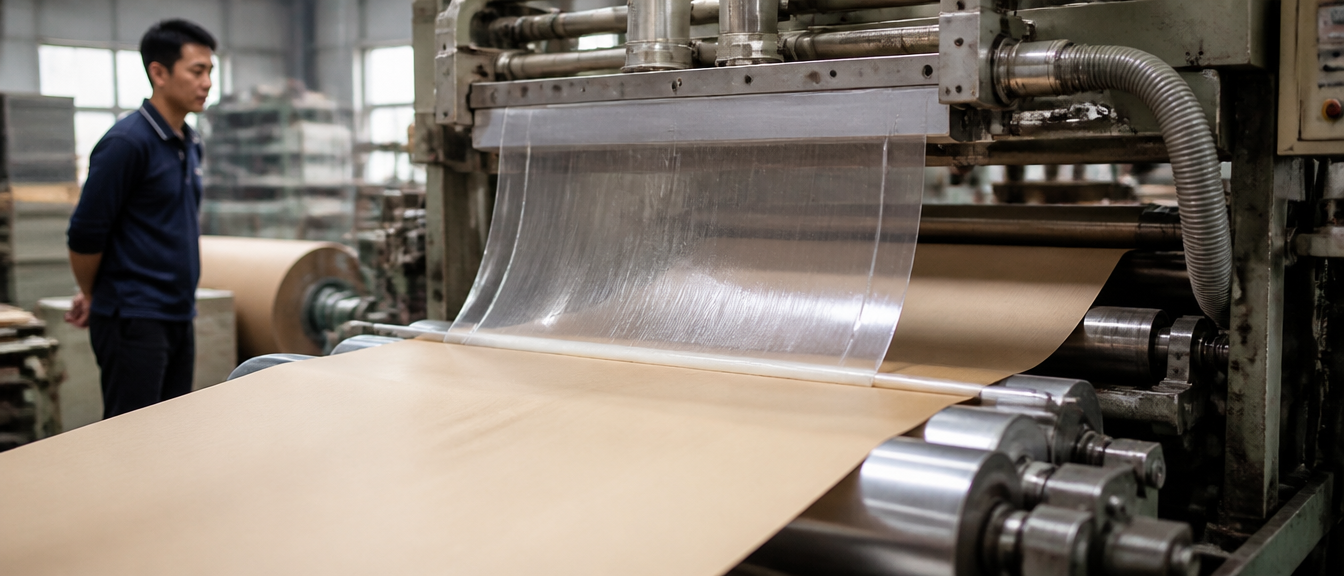
One point worth clarifying: lamination is a single-layer process — a thin film coated onto the substrate's surface — and is separate from a paper bag's multi-ply structure. The number of paper plies in a bag determines load-bearing capacity and tear resistance; lamination determines moisture resistance, abrasion resistance and barrier properties. The two can be combined, but they can't substitute for each other.
What's the Difference Between PE and PP Lamination? How to Choose
According to Greenpeace Taiwan, plastic lamination in Taiwan mainly uses two materials, PE and PP, with PP offering heat resistance and acid/alkali resistance (see Greenpeace, "Are Paper Containers Not Really Paper?"). In other words, choosing between PE and PP film isn't about which one is
| Comparison Factors | PE Lamination | PP Lamination |
|---|---|---|
| Material Properties | One of Taiwan's main lamination materials; select based on actual temperature and contents | One of Taiwan's main lamination materials with heat and acid-alkali resistance |
| Compatible Substrates | Kraft paper, white kraft paper, recycled kraft paper, PE woven fabric, PE nonwoven | Kraft paper, white kraft paper, recycled kraft paper, PP woven fabric, PP nonwoven |
| Common Applications | Chemical packaging, building material packaging, FIBCs and other specialty industrial packaging | Plastic raw material packaging, chemical raw material packaging, feed bags, fertilizer bags, heavy-duty packaging bags |
| Confirm Before Selecting | Storage humidity, transportation intensity, subsequent processing method | Heat or acid-alkali contact, storage humidity, subsequent processing method |
"Should I use PE or PP" is a question we hear all the time, and our approach is to start by asking three things: what's the humidity and temperature in your storage environment, how moisture-sensitive is your product, and how demanding will transport and handling be. These three factors, combined with your downstream processing method, are basically what determine the film material and thickness. Lamination thickness can be adjusted to suit your needs — thicker isn't always better, since excess thickness only drives up costs.
Looking at specific scenarios makes this clearer. For bags holding cement or chemical powders, the main concern is moisture reabsorption during storage, so the focus is on moisture and water resistance — the film material is chosen based on storage temperature, humidity and the nature of the contents, and designed together with the multi-ply paper structure. For feed bags, fertilizer bags and plastic raw material bags, a common approach is PP woven fabric combined with PP film, balancing durability with moisture resistance. Branded or retail packaging often uses white kraft paper for its clean surface, which is well-suited to high-quality printing, with a film layer added for protection as needed. These are common combinations, not fixed formulas — the final choice still depends on your actual usage conditions.
That said, not every package needs lamination. If the contents aren't moisture-sensitive, storage is in a dry indoor environment, and turnover is quick, it may be worth discussing with us whether the multi-ply paper structure alone can provide sufficient protection. On the other hand, for rainy-season storage, outdoor stacking, long-distance ocean export, or highly moisture-sensitive contents, lamination is worth seriously considering.
What Substrates Can Be Laminated? More Than Just Kraft Paper
Many people assume lamination can only be applied to kraft paper, but Chia Huang actually works with a wide range of substrates: beyond kraft paper, white kraft paper and recycled kraft paper, we also process PP and PE woven fabric and non-woven fabric; aluminum foil and BOPP film require equipment feasibility review first. The table below outlines the properties and common applications of each substrate. If your procurement specifications require sustainably sourced materials, let us know when requesting a quote — Chia Huang holds FSC sustainable raw material certification and can supply FSC-certified materials along with certification documents upon request.
| Substrate | Properties After Lamination | Common Applications |
|---|---|---|
| Kraft paper, white kraft paper | Enhanced moisture, water resistance and packaging protection; white kraft paper has a clean surface suitable for high-quality printing | Industrial packaging, food raw material packaging, chemical and building material packaging, brand and retail packaging |
| Recycled Kraft Paper | Can be paired with FSC certification, meeting ESG and sustainable packaging requirements | Eco-friendly packaging, green product packaging |
| PP, PE woven fabric | Enhanced moisture, water resistance and durability | Feed bags, fertilizer bags, heavy-duty packaging bags, FIBCs |
| PP, PE nonwoven | Enhanced surface protection and moisture resistance | Shopping bags, protective materials, specialty industrial packaging materials |
| Aluminum foil, BOPP film | Equipment feasibility must be assessed first; aluminum foil offers excellent barrier and light-blocking performance | High-barrier packaging, plastic and chemical raw material packaging |
Laminating kraft paper and then bonding it to PP or PE woven fabric creates our composite bag material: the outer kraft paper layer provides the printing surface and look, the middle lamination layer provides moisture resistance, and the inner woven fabric layer delivers exceptional tear strength. Three-ply kraft paper follows the same concept. Because lamination is done in-house, we control bonding quality ourselves without outsourcing — to learn more about structures and specifications, see Composite Bag Materials.
Lamination Processing Specifications and Custom Processing Flow
If you already have your own substrate and just need the lamination step done, you can also come to us for contract processing. Chia Huang's lamination processing service handles widths up to 2 meters, with slitting equipment that can split a roll into two simultaneously — minimum processing width is 500 mm — so whether you need large-width material or a narrower specification, we can plan a processing solution to fit your size requirements.
| Item | Details |
|---|---|
| Available Film Materials | PE, PP |
| Maximum Processing Width | 2,000 mm |
| Minimum Processing Width | 500 mm |
| Slitting Equipment | Can simultaneously slit two rolls |
| Lamination Thickness | Adjustable based on requirements |
| Follow-up processing | Can be combined with cutting, slitting, and re-reeling |
| Quality Management | ISO 9001, batch records available upon request |
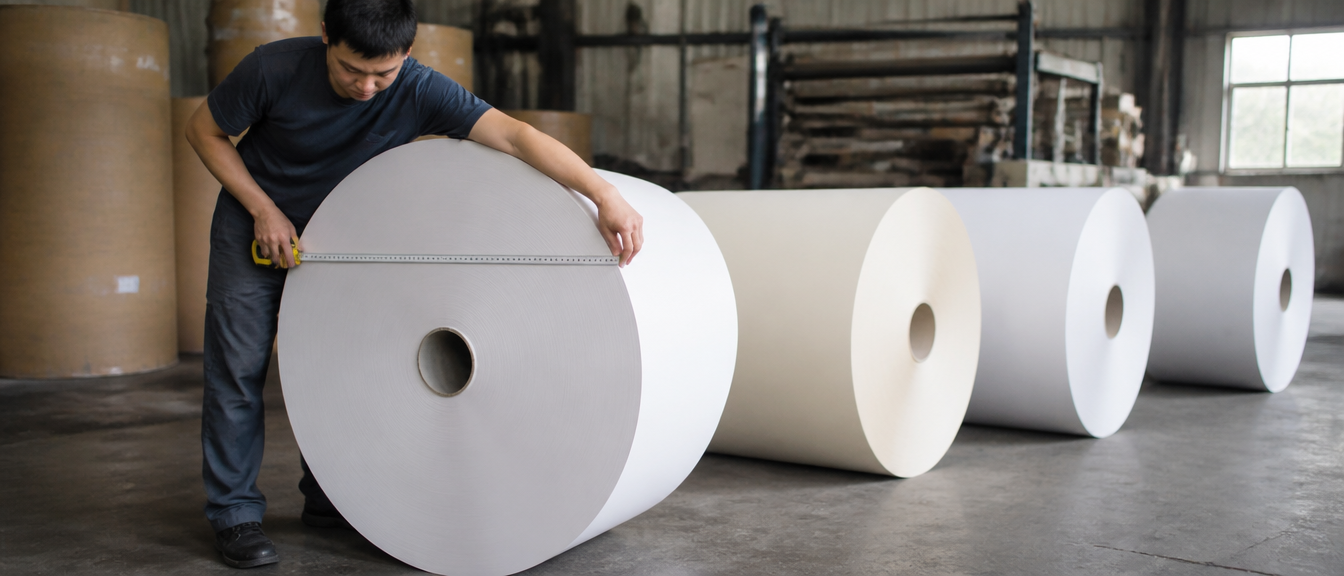
The process of contract manufacturing is straightforward, consisting of approximately four steps:
- Provide base material samples and moisture-proofing requirements as an assessment basis.
- Sales team evaluates equipment feasibility and responds within approximately one business day on whether processing is possible.
- Both parties confirm processing specifications and pricing details.
- After confirmation, proceed to formal lamination processing and delivery scheduling.
Contract processing is especially well-suited to three situations: you already have a substrate on hand, you're looking for a backup supplier, or you want to evaluate whether a specification is feasible. From material assessment and lamination processing to subsequent cutting and final delivery, we provide a complete processing service designed to shorten your supply chain. After lamination, if you also need cutting, slitting or rewinding, these can be completed in-house as well, saving the time and cost of shuttling between different factories — this service is covered in Other Processing.
Where does laminated paper go: Moisture-proofing and recycling should be considered together
While lamination improves paper's moisture resistance, it also changes how the material is recycled. According to the New Taipei City Resource Recycling Information Network, general paper recycling is divided into four categories — white paper, mixed paper, newspaper, and kraft paper — while paper containers with a PE-laminated surface must be sorted separately. The article also cites Ministry of Environment statistics: Taiwan currently has 3 facilities for processing waste paper containers, with a total designed processing capacity of 249,600 metric tons per year (see New Taipei City Resource Recycling Information Network). Greenpeace's article similarly notes that laminated paper containers must be sent to specialized processing facilities to be recycled, and emphasizes that reducing use at the source remains the most important environmental action.
It should be noted that this data concerns paper containers specifically — how industrial paper bags are handled at the end of their lifecycle still depends on local recyclers and each customer's own disposal process. Still, it points to a consistent design principle: don't laminate where moisture resistance isn't needed, and use it only where it is, while keeping film type and thickness within a reasonable range. When we recommend specifications, we weigh this alongside moisture protection needs rather than assuming every package requires lamination.
Common Lamination Questions
What is lamination? Where is it used?
Lamination is a process that coats a layer of PE or PP plastic film onto the surface of substrates such as paper, woven fabric or non-woven fabric. It improves moisture resistance, waterproofing, abrasion resistance, barrier properties and heat-sealability, and is widely used in industrial packaging, food ingredient packaging, building materials, agriculture and various composite materials.
How to choose between PE lamination and PP lamination?
It depends on your usage conditions. PP offers heat resistance and acid/alkali resistance, while PE is evaluated based on actual temperature and the nature of the contents. When requesting a quote, please let us know the humidity and temperature of your storage environment, how moisture-sensitive your contents are, and how demanding your transport and handling will be — we'll recommend a suitable film type and thickness based on these factors and your downstream processing method.
Does coating count as one layer of the paper bag?
Lamination itself is a single-layer process — a thin film coated onto the substrate's surface. A paper bag's load-bearing capacity and tear resistance come from its multi-ply kraft paper structure, while lamination handles moisture resistance and barrier properties. The two can be used together, but they are separate design considerations.
What information do I need to prepare for lamination contract manufacturing?
Please prepare a sample of your substrate along with details of your moisture protection needs and usage scenario. Our sales team will assess equipment feasibility and respond within about one business day on whether it can be processed, before moving on to confirming specifications and pricing. Inquiries about aluminum foil and BOPP film are also welcome for initial evaluation.
When is lamination not necessary?
If the contents aren't moisture-sensitive, storage is in a dry indoor environment, and turnover is quick, it may be worth considering whether the multi-ply paper structure alone can provide sufficient protection — lamination isn't always necessary. For rainy-season storage, outdoor stacking, long-distance ocean export, or highly moisture-sensitive contents, lamination becomes more important. We recommend describing your usage scenario when requesting a quote so we can evaluate it together.
Can laminated paper bags be recycled?
According to the New Taipei City Resource Recycling Information Network, paper containers with PE lamination need to be recycled separately from regular paper. Greenpeace also notes that such containers must be processed at specialized facilities. For industrial paper bags, we recommend confirming the actual recycling method with your local recycler and your own disposal process.
Conclusion: Lamination is a tool, not a default option
Back to the original question: what is lamination? It's a film layer added to solve a specific problem — moisture resistance, abrasion resistance, or to enable heat sealing and composite construction further down the line. Choosing between PE and PP film should be based on your usage environment and downstream processing, not on which number looks bigger on a spec sheet. If you're evaluating a lamination solution — whether for laminating your own products or for contract processing of a substrate you already have — feel free to review our lamination processing service details, then get in touch with us and tell us your substrate type, protection requirements and usage environment. Chia Huang will assess a suitable lamination specification and respond within one business day.