The "number of layers" in multi-wall paper bags is a field that's easy to misread when purchasing. For a 25kg bag, the quote might say 2, 3, or 4 layers—and the intuitive reaction is that more layers means more durable and safer. But from a manufacturing standpoint, the number of layers is just one variable in the structure. Deciding based on this alone often means spending more without actually solving the real problem.
Since 1973, Chia Huang Paper has been manufacturing industrial kraft paper bags in Shanhua, Tainan, with bag walls made of 1 to 5 layers of long-fiber kraft paper. This article separates several things that are often lumped together: what the layer count actually measures, common starting points for 25kg and 40kg bags, what layers versus paper material versus lamination each control, and what information to prepare when requesting a quote—so you don't have to guess at the layer count.
The number of layers in a multi-layer paper bag refers to the number of sheets of paper.
Let's pin down the definition first. In Chia Huang's terms, one layer of a multi-wall paper bag is one sheet of kraft paper laminated onto the bag wall: 1 layer is one sheet, 5 layers means five sheets wrapped in sequence. ISO 6590-1:2025 "Packaging — Vocabulary — Part 1: Paper sacks" is the standard that defines terminology for paper sack manufacturing, covering both single- and multi-ply paper sacks, as well as paper-based sacks combined with other materials—though it excludes retail bags (see official ISO page). It defines the terminology but doesn't tell you how many layers a given content requires, so the layer count still needs to be determined based on the actual use case.
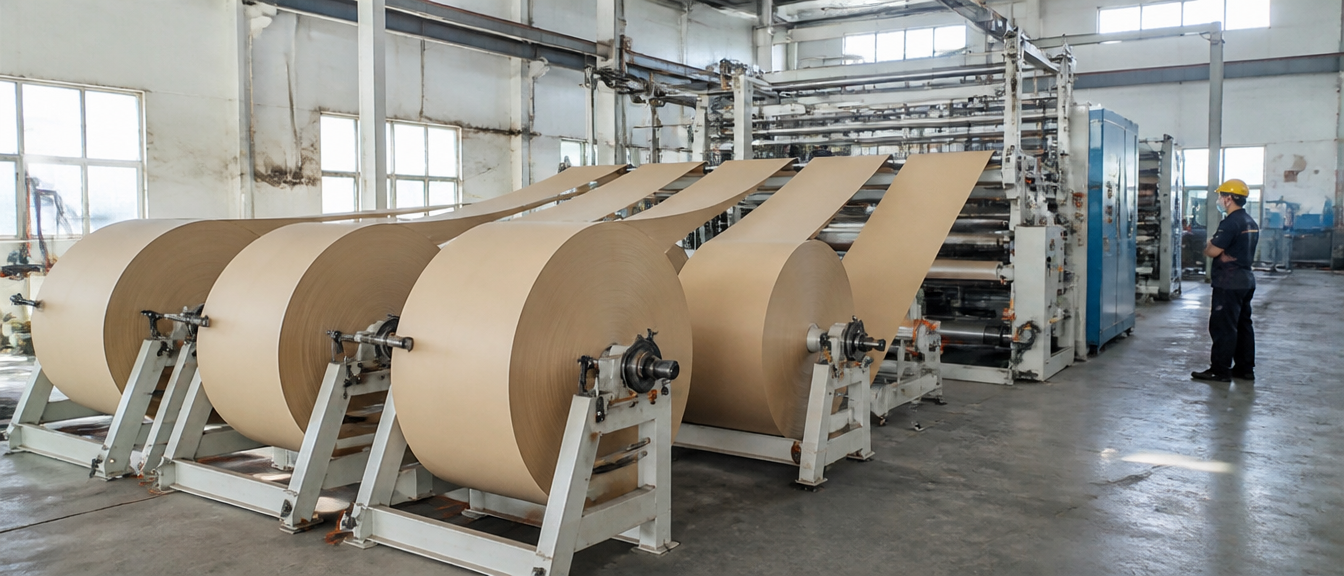
In Chia Huang's calculation method, the layer count only counts kraft paper layers; lamination is an additional single-layer treatment applied to the paper surface and is not included in the 1-to-5-layer count. The table below separates five things that are often confused with one another.
| Item | What It Determines | Options We Offer | Confirm When Inquiring |
|---|---|---|---|
| Number of Layers | How many sheets of kraft paper form the bag wall, distributing external force across multiple sheets | 1 to 5 layers, configured based on contents and requirements | Clarify whether "layers" refers to paper sheets only, or includes barrier layers |
| Paper Material | The load-bearing capacity and tear resistance of each layer of paper | Long-fiber kraft paper; tri-laminate kraft paper composite material | Specify which type of paper to use, not just the number of layers |
| Coating | Moisture-proof and moisture-resistant barrier layer | PE or PP coating, single-layer application, not counted as layers | Moisture sensitivity of contents and storage environment |
| Functional Processing | Performance during high-speed filling and pallet stacking | Micro-perforation venting, anti-slip agents | Filling method and pallet stacking height |
| Closure | Bag mouth strength and sealing during drops and handling | Sewing, heat sealing OverTape, can be used in combination | Whether heavy-duty and whether dust leakage is a concern |
These five factors affect each other but each addresses a different problem. If the issue is moisture damage, check the lamination first, then see whether the moisture absorption level requires additional layers. If the issue is bag wall rupture from drops, layers, paper material, and sealing should all be reviewed together. Categorize the problem first, so you know which dial to adjust.
25 kg, 40 kg, and tri-laminate: known common starting points
Let's start with known baselines before discussing deviations from them. For plain kraft paper, 25kg bags typically use 3 layers, and 40kg bags typically use 4 layers. If switching to a three-ply composite kraft paper material, the material itself has better strength, so 2 layers can usually meet most needs. These three figures are common practices, not a conversion formula for paper bag layers—you can't derive an answer like "30kg means 3.5 layers" from them. Deviations from the baseline need to be determined by the actual use case.
| Use Case | Layer Considerations | Why | Consider Together |
|---|---|---|---|
| Indoor storage, simple handling conditions | Can start with fewer layers | Lower environmental and handling risks; additional layers mainly increase costs | Filling method and pallet stacking height |
| Outdoor storage, ocean export | Tend to increase layers or combine with coating | Environmental and transportation conditions are more demanding than indoors; bag walls must bear more risk | Moisture protection relies primarily on coating; layers mainly handle load-bearing |
| Highly moisture-absorbing contents | Rely primarily on coating; adjust layers based on load-bearing and moisture absorption | The barrier layer directly handles moisture; layers mainly handle load-bearing and provide an additional shield | Storage duration and warehouse humidity |
| Ultra-heavy loads, rough handling | Consider composite bag materials: choose PE/PP woven bags for maximum strength, tri-laminate kraft paper for the next tier | When requirements exceed the suitable range for paper bags, changing the material structure is an alternative approach | Cost and printing appearance requirements |
The word "tends to" in the table is deliberate. The actual layer count still depends on the characteristics of the content, filling method, and transport and stacking conditions—no single cell can be used alone as the answer. For a conceptual illustration of layer structure (the diagram is conceptual only; the layer count is still based on the number of kraft paper sheets), see our Multi-Wall Paper Structure page.
More layers isn't always better: paper strength must also be quantified
One more layer means one more sheet of paper used, and the cost goes up accordingly. Chia Huang's materials state it plainly: durability depends on paper quality and structural design, not just the layer count. At the same layer count, long-fiber kraft paper also performs better in load-bearing capacity and tear resistance. In other words, two quotes might both say 3 layers, but if the paper used is different, the results could differ too.
To understand how "paper strength" can be quantified, we can look at the European approach. According to the Dust-free paper sacks industry guideline published in May 2016 by the European Sack Group—a collaboration between EUROSAC and CEPI Eurokraft—paper strength can be expressed as TEA (Tensile Energy Absorption), calculated from the paper's elongation and tensile strength, representing the paper's ability to absorb the impact energy of a dropped bag. The guideline provides recommended geometric mean TEA ranges based on bag weight and handling conditions, as shown in the table below (see EUROSAC industry guideline).
| Bag Weight | Standard Handling (J/m²) | Severe Handling (J/m²) |
|---|---|---|
| 25 kg | 330–390 | 400–450 |
| 35 kg | 370–430 | 440–490 |
| 50 kg | 430–490 | 500–550 |
It should be noted that this guideline addresses valve paper sacks used for materials like cement, and the figures in the table are recommendations from the European industry, not Chia Huang's specifications. We reference it because it highlights two points: first, for the same bag weight, more demanding handling requires higher paper strength—bag weight is not the only variable; second, paper strength itself can be measured, whereas the layer count is simply a matter of how many sheets are stacked together. The same guideline also notes that valve sacks can be single-ply or multi-wall, with barrier plies added for specific applications—so when comparing quotes from different suppliers, be sure to ask whether their "number of layers" includes barrier plies.
Beyond layer count, dimensions, filling, and stacking can also cause bag failure
A torn bag doesn't necessarily mean insufficient layers. The same EUROSAC guideline notes that if a bag is too large relative to its contents, the bag body becomes loose, causing unstable pallet stacking, and self-closing valves may leak. If the bag is too small, it becomes too tight, slowing down filling and potentially causing small tears. If bags overhang the edge of a pallet, they bear significant pressure once stacked high, making them prone to tearing. None of this relates to the layer count, yet it directly affects the bag failure rate.
Venting design is another variable to consider together: for high-speed automated filling lines, we recommend adding micro-perforated venting to let air escape from the bag immediately; for manual filling, this can be evaluated as needed. However, the EUROSAC guideline recommends using high-permeability paper without perforations for cement bags, since perforation reduces bag strength and increases dust—so venting methods should be evaluated based on the content and filling machine together. For pallet stacking, anti-slip agents can increase friction between bags; sealing can be done by sewing or heat-sealed overtape, or a combination of both where necessary. These treatments are handled separately from the layer count.
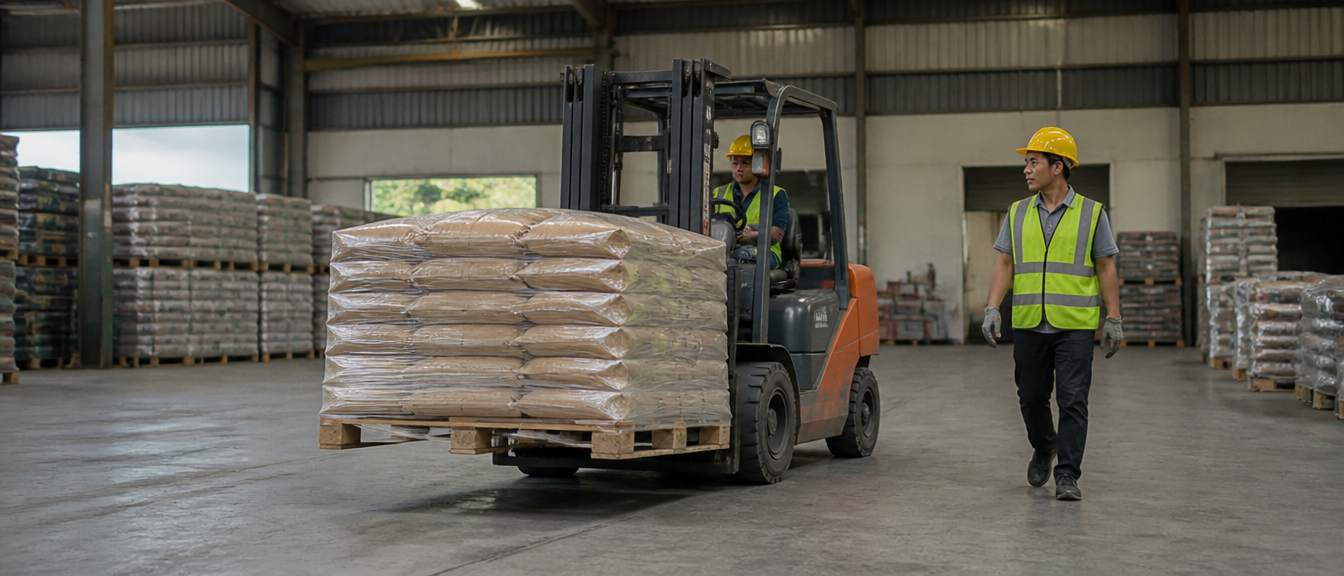
Whether the layer count is sufficient ultimately needs to be confirmed through actual testing after filling. ISO 7965-1:2024 "Packaging — Drop test — Part 1: Paper sacks" specifies the method for vertical drop impact testing of filled paper sacks—it can be conducted as a standalone test or as part of a series of tests, used to measure a paper sack's ability to withstand vertical impact risks during distribution. The content is based on ISO 2248 but specifically tailored for paper sacks (see official ISO page). If your QA team or downstream customers require drop testing, we recommend raising this when requesting a quote, so the specification can be discussed against the verification method from the outset.
Layer count and coating are two separate controls to adjust independently
Lamination involves coating the paper surface with a layer of PE or PP film, forming a waterproof barrier layer—this is the main defense against moisture. Layer count, on the other hand, distributes external force across more sheets of paper, primarily addressing load-bearing capacity and burst resistance. Chia Huang's materials also note that for moisture-absorbing content, lamination can be optionally added to a multi-wall structure, or the layer count can be increased—the two can be combined, but they serve different purposes.
In practice, we recommend separating the two questions: how much weight the bag needs to bear and how far it might drop is a question of layers and paper material; whether the content is moisture-sensitive and whether the warehouse experiences humidity return is a question of lamination. For film material options and processing conditions for lamination, see our Lamination Processing page. Mixing these two questions together often leads to relying solely on adding layers to address moisture resistance—raising costs without necessarily meeting the actual need. When content is sensitive to moisture absorption, layers and lamination need to be evaluated together.
Prepare these details before inquiring—it's more accurate than guessing layer count
Rather than guessing the paper bag layer count upfront, it's better to clearly describe the use case. We recommend preparing: the content name and weight per bag, whether it's powder or granular; the filling method—manual filling, semi-automatic, or high-speed automatic filling machine; storage and transport environment, including whether it's outdoors, exported overseas, and how many layers are stacked on a pallet; whether lamination is needed; and whether printing is needed. The minimum order quantity for customization is about 5,000 units—the more complete the information, the more likely we can provide structural recommendations in one go. For various options in layers, lamination, sealing, and functional processing, you can first refer to the specifications for Heavy-Duty Industrial Paper Bags.
If printing is needed, note that printing colors affect pricing: the number of colors, print area, number of plates, and quantity all affect plate-making and printing costs. Chia Huang can recommend printing configurations based on budget and requirements, balancing brand presentation with cost.
Multi-Layer Paper Bag FAQs
Are multi-layer paper bags always more durable than single-layer ones?
Not necessarily. The layer count simply reflects how many sheets are stacked, while durability also depends on paper quality, sealing method, and use case. At the same layer count, long-fiber kraft paper typically performs better in load-bearing capacity and tear resistance, so comparisons should consider both paper material and layer count together, rather than just the number of layers.
Why is tri-ply kraft paper usually only 2 layers?
Three-ply kraft paper is a composite material made of kraft paper laminated with woven fabric. Since the material itself has better strength, 2 layers can usually meet most needs; the method of counting layers may vary depending on the composite structure, so please confirm this with sales when requesting a quote. It's suitable for applications requiring more durability than plain paper bags but not the highest specification—the actual structure is still evaluated based on content and handling conditions.
Can the number of layers be reduced with coating?
The two serve different purposes and are not recommended as direct substitutes for one another. Lamination primarily addresses moisture resistance, while layer count primarily affects load-bearing capacity and burst resistance. Whether to adjust the layer count should be evaluated based on content weight, moisture absorption level, and filling and stacking conditions together. Let us know the intended use when requesting a quote, and we'll recommend a suitable overall structure.
Does a higher number of layers increase the price?
Usually yes, since each additional layer uses one more sheet of paper. However, price is also affected by paper material, lamination, printing, and quantity—it can't be calculated from layer count alone, and the actual amount is subject to the quote. Blindly increasing the layer count only drives up costs; the right structural design is what matters.
Can the outer layer of multi-ply paper bags be printed? Does printing color affect the price?
Yes, Chia Huang offers 4-color printing. Printing colors affect pricing—the number of colors, print area, number of plates, and quantity all affect plate-making and printing costs. We can recommend printing configurations based on budget and requirements, balancing brand presentation with cost.
Conclusion: The number of layers in multi-ply paper bags is a result of assessment, not a starting point
Back to the opening question: for the same 25kg bag, which is right—3 layers or 4 layers? The answer depends on the paper material, lamination, sealing, and the filling, stacking, and transport conditions the bag will face. More layers in a multi-wall paper bag isn't always better—it's about finding the right combination of load-bearing capacity, moisture resistance, and cost. Since 1973, what we've valued most is clarifying these conditions first, before deciding on the structure.
If you're evaluating a new heavy-duty packaging solution, feel free to visit our Contact Us page and tell us about your content, weight per bag, filling method, storage and transport environment, and whether lamination or printing is needed. Our sales team will respond with structural recommendations and quote direction within one business day.