The term "moisture-proof bag" sounds like a single product, but at our Chia Huang Paper factory, it's actually shorthand for a set of design choices: whether to coat the paper, how to layer the plies, whether to add an inner plastic layer, and how to handle the bag opening and vent holes. Paper bags that are all labeled "moisture-proof" can require very different combinations depending on whether they're used for cement, chemical powders, or feed.
Chia Huang was founded in 1973 in Shanhua, Tainan, making industrial kraft paper bags. This article breaks down moisture-proof paper bags piece by piece: where moisture actually comes from, what roles coating and multi-ply structures each play, what situations suit an inner plastic layer, and when it's actually unnecessary to stack protection to the maximum. After reading, you'll be able to describe your needs during a quote request using actual on-site conditions, rather than just saying "needs to be moisture-proof."
What does a moisture-proof bag need to block? Start by understanding where moisture enters
Paper is a fiber-based material that absorbs or releases moisture depending on ambient humidity. The "Paper Sack Handling Recommendations" (June 2017) jointly published by European paper sack industry organizations EUROSAC and CEPI Eurokraft notes that excessively high or low atmospheric humidity or temperature in storage areas can affect the properties of paper sacks, and recommends confirming the required storage conditions for a given sack with the manufacturer (see EUROSAC Paper Sack Handling Recommendations Part 2). In other words, humidity isn't only a problem when it rains—high-humidity air itself can act on paper sacks.
So when we discuss moisture protection, we first break down the paths moisture can take: penetrating through the paper surface, entering through the bag closure, entering through the micro-perforations used for filling, and moisture absorbed from the contents themselves. The table below lists these paths alongside common design approaches, so you can check them off one by one when discussing your requirements internally.
| Moisture pathway | Common locations | Corresponding design approach |
|---|---|---|
| Paper layer moisture absorption | Kraft paper on bag surface and body | PE or PP coating forms a physical water-resistant barrier; multi-layer structure provides multiple shields |
| Entry through sealing | Bag opening stitching or heat seal | Sewn, heat-sealed OverTape, or a combination of both; OverTape offers better sealing performance for preventing powder leakage, and should be considered when high moisture resistance is required |
| Entry through ventilation holes | Micro-pore vents designed for high-speed filling | When contents are also moisture-sensitive, add moisture-resistant layer and specify content fineness |
| Contents moisture absorption | Hygroscopic contents like cement and chemical powders that easily clump | Adjust protection level based on moisture sensitivity; add plastic layer inside when necessary |
| Storage environment | Humid warehouses, rainy season, outdoor stacking | Evaluate together with storage conditions and confirm storage requirements with bag supplier |
If your internal specifications require expressing "degree of moisture resistance" as a number, the commonly used metric is water vapor transmission rate. The 2017 edition of ISO 2528 specifies the gravimetric (dish) method for determining water vapor transmission rate of sheet materials, and the standard's page specifically notes that this value is often mistakenly referred to as "permeability"; the ISO website also lists a new edition currently being published (see ISO 2528:2017). However, this standard applies to sheet materials, not finished bags, and it cautions that this method is not recommended for materials with an expected transmission rate below 1 gram per square meter per day. Therefore, our view is: the value can be used to compare materials, but the moisture-proof performance of a complete bag still needs to be assessed together with the closure, perforations, and actual storage conditions.
Coating: The first direct barrier in moisture-proof paper bags
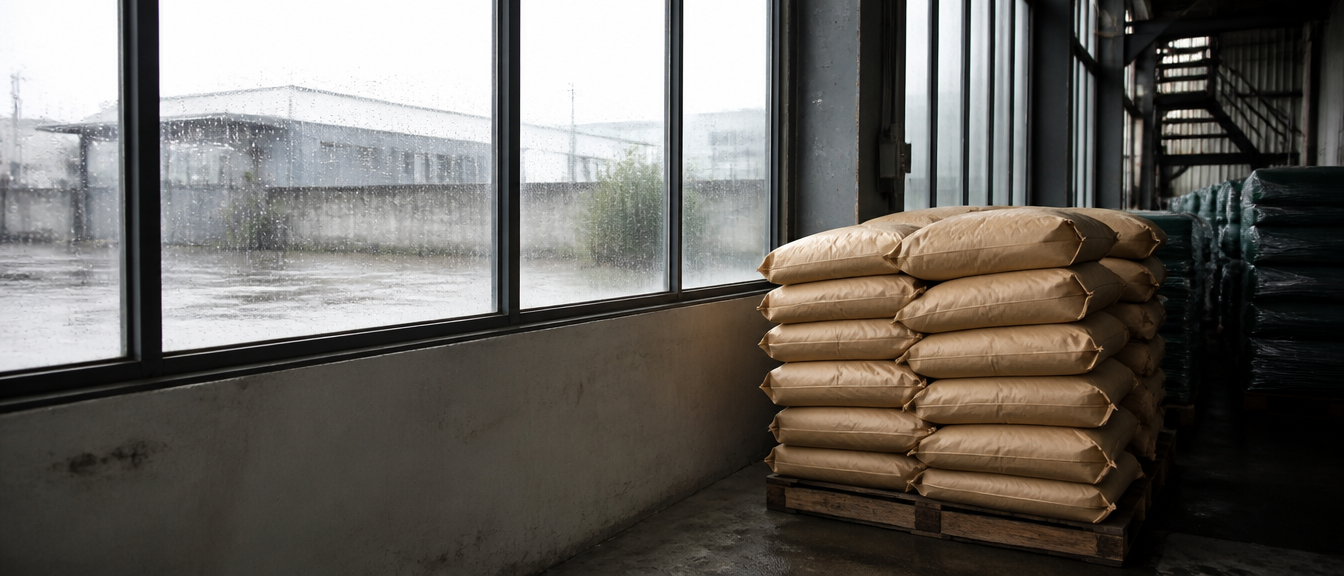
Coating involves applying a layer of PE or PP plastic film onto the surface of a base material. Chia Huang's approach is to apply the film to kraft paper, woven fabric, and other base materials using a hot-melt process, forming a physical waterproof barrier. It's suitable for contents like cement and chemical powders that are prone to caking when exposed to moisture, as well as for humid storage environments and rainy seasons. A wide range of base materials can be coated, including kraft paper, white kraft paper, and recycled kraft paper, as well as PE and PP woven fabric and non-woven fabric; aluminum foil and BOPP film require an equipment feasibility assessment first.
One thing should be clarified up front: coating is a single-layer process—it adds a film to the surface of the base material—and is a separate matter from the 1-to-5-ply kraft paper structure of the bag. The paper ply structure determines load capacity and tear resistance, while coating handles moisture resistance and barrier protection. The two can be combined, or when moisture resistance requirements aren't high, the paper ply structure alone can handle protection. As for whether to choose PE or PP, and how thick the film should be, this depends on the humidity and temperature of the storage environment, the moisture sensitivity of the contents, and the strength required for transport and handling. Coating thickness can be adjusted according to need—thicker isn't always better, as excessive thickness only drives up cost. For details on film materials and base materials, see our Coating Services.
Another approach is composite bag material. Laminating PE or PP woven fabric onto coated kraft paper creates Chia Huang's composite bag material; our three-in-one kraft paper is a composite material made by laminating coated kraft paper with woven fabric, and typically 2 plies are enough to meet most needs. This type of structure combines moisture resistance and strength in a single material, making it suitable for heavy, moisture-sensitive contents. However, its structure differs from pure paper bags, so whether to adopt it should be evaluated together with the filling method and storage/transport conditions.
Multi-layer structure and inner layer: When to add another layer
The main function of a multi-ply structure is to bear load. As a common practice, 25 kg packaging typically uses 3 plies of plain kraft paper, while 40 kg packaging typically uses 4 plies; three-in-one kraft paper composite material usually uses 2 plies. A multi-ply structure also provides multiple barriers, so it can be considered a supplementary form of moisture protection. However, each additional ply adds cost, so when moisture resistance requirements are higher, we tend to recommend evaluating coating or an inner layer first, rather than simply adding more plies.
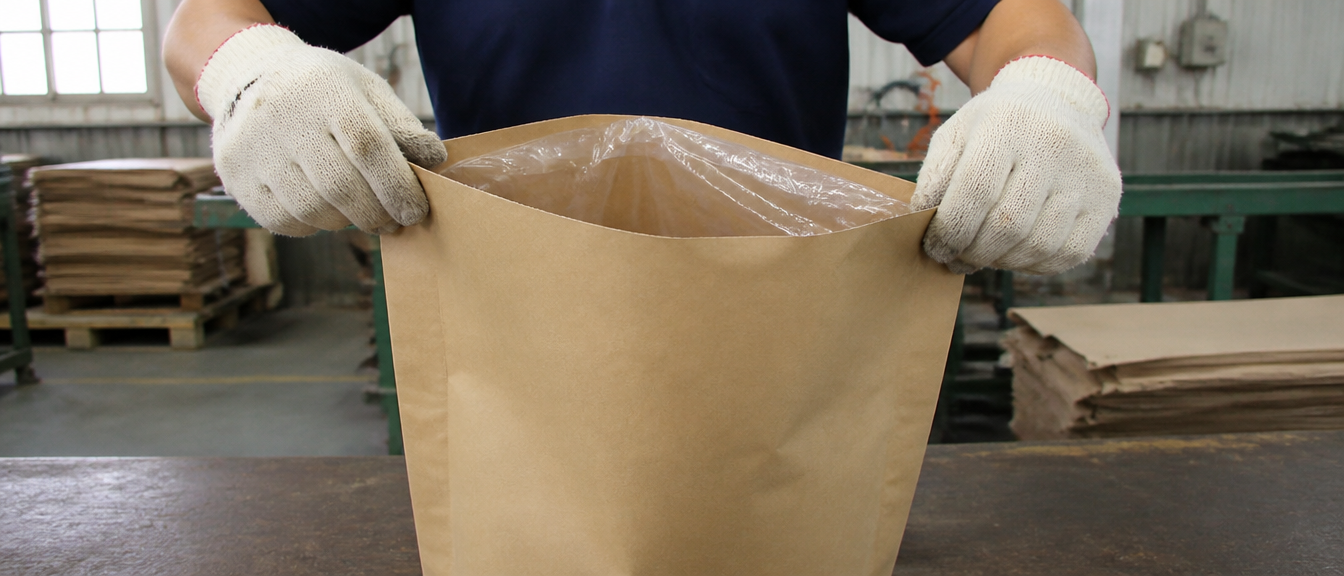
An inner plastic layer takes a different approach: instead of placing protection on the outside of the bag, a plastic layer is added inside the paper bag to directly enclose the contents. Chia Huang can pair an inner plastic layer with the product based on its characteristics, planning the material, thickness, and dimensions according to requirements and integrating the design with the bag structure. The goal is to enhance moisture resistance, leak prevention, and hygienic protection, giving powder and granular products an extra layer of protection during storage and transport. Applications span chemicals, building materials, feed, and other industrial packaging.
There are a few trade-offs to consider with inner layers. First, since it directly contacts the contents, if the contents are food ingredients, food contact regulations and certification requirements should be confirmed separately—having an inner layer alone doesn't guarantee compliance. Second, the inner layer, micro-perforation venting, and bag type form a single system, so it's best to describe the filling method when requesting a quote so our sales team can plan it holistically. Third, adding an inner layer means adding material and cost—if coating plus the paper ply structure is already sufficient, there's no need to add one; for chemical materials that specifically need leak prevention, start by evaluating coating-based leak prevention.
The table below compares four common moisture-proof configurations. The point isn't which one is "better," but which conditions each one suits and what trade-offs come with it.
| Configuration | Primary function | Most suitable scenarios | Trade-offs |
|---|---|---|---|
| Multi-layer kraft paper, no coating | Load bearing, tear resistance, and multiple paper layer barriers | Non-hygroscopic contents, dry indoor storage, short turnover periods | When facing rainy season or outdoor stacking, evaluate need for reinforcement |
| Multi-layer kraft paper with PE or PP coating | Forms a physical water-resistant barrier on paper surface | Hygroscopic contents, humid storage, rainy season | Increases film material cost; must select correct film type and thickness |
| Kraft paper coating bonded to woven fabric (composite bag material, three-ply kraft paper) | Achieves both moisture resistance and tear strength | Heavy-duty and moisture-sensitive contents | Structure differs from pure paper bags; must evaluate with filling and storage conditions |
| Plastic layer added inside paper bag | Provides additional moisture resistance, leak prevention, and hygiene protection around contents | Powder and granule materials, feed, and other contents requiring extra protection | Adds extra material and cost; food-grade materials require separate verification of food contact requirements |
Openings beyond bag body: micro-pore vents and sealing
One of the most easily overlooked aspects of moisture protection is the openings beyond the bag body itself. Micro-perforation venting, designed for high-speed automatic filling, has carefully engineered pore sizes that let air escape while blocking particles of the contents from leaking out. If the contents are also moisture-sensitive, this can be paired with moisture-resistant treatment. We recommend adding micro-perforation venting for production lines using high-speed automatic filling (valve bag method); for manual filling or slower semi-automatic equipment, whether it's needed can be assessed case by case. When requesting a quote, please specify the fineness of the contents and your moisture resistance requirements, and our sales team will recommend a suitable configuration.
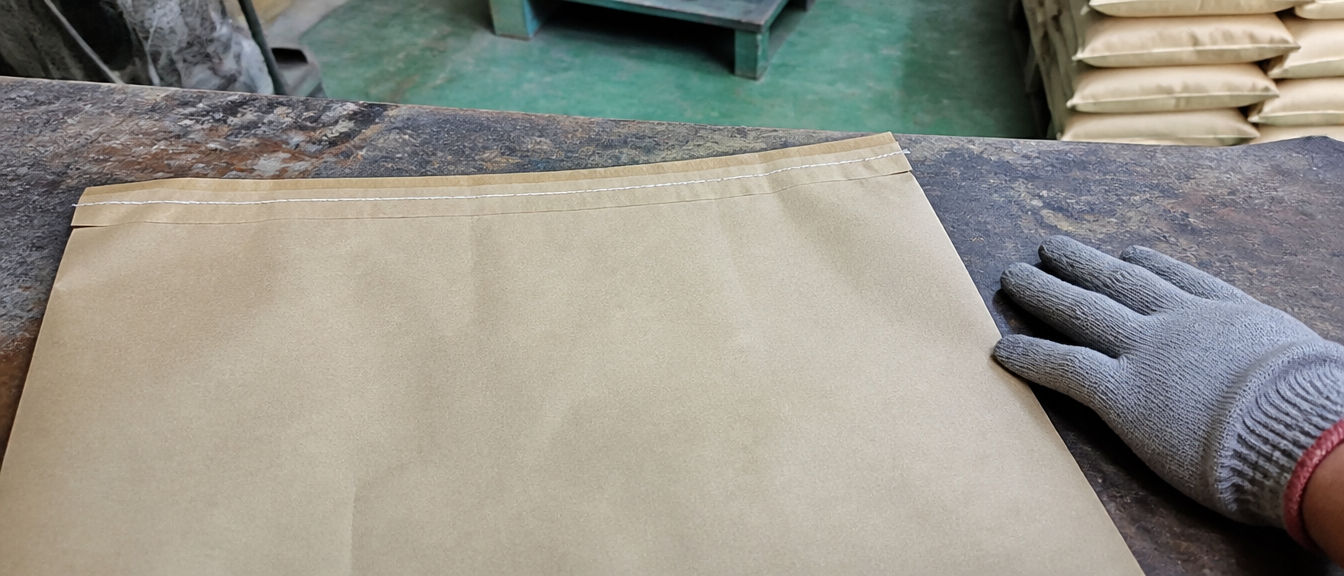
As for sealing, Kahuang offers both stitching and heat-sealed OverTape, which can also be combined. Stitching offers high strength, suitable for heavy loads and drop impacts, while heat-sealed OverTape provides better sealing performance. From a structural standpoint, for contents requiring high moisture resistance, the seal is another area on the bag worth discussing separately—so we recommend evaluating the sealing method, lamination, and inner layer together, rather than deciding on each in isolation.
Storage and stacking are also part of moisture-proof design
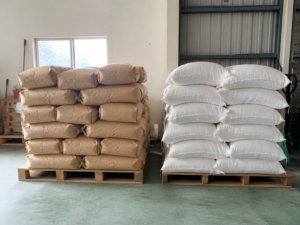
No matter how moisture-resistant a bag is, it's still just one part of the overall storage and transport system. As mentioned earlier, the EUROSAC guidelines recommend confirming storage conditions with the bag manufacturer—a reminder that the storage environment affects how the paper bag performs. The same bag stored in a covered, dry warehouse faces very different humidity conditions than one stored outdoors. That's why, when recommending specifications, we consider questions such as: Is the warehouse indoor or outdoor? Will the bag go through the rainy season or long-distance sea freight? How many layers will be stacked on the pallet? How long will the contents be stored? These factors determine the level of moisture protection needed, and whether an anti-slip agent should also be considered. Cement bags, for example, often require both moisture resistance and anti-slip properties—two treatments that can be combined on the same bag. The principles behind each are detailed in Functional Treatments.
Higher moisture resistance is not always better: situations where you can simplify
The cost of moisture-proof design is real: coating adds a layer of film material, an inner layer adds another material, and composite structures also carry their own processing costs. If the contents aren't moisture-sensitive, the storage is a dry indoor environment, and turnover is quick, it may be worth discussing with us whether a multi-ply paper structure alone can handle protection. On the other hand, rainy seasons, outdoor stacking, overseas export, or highly moisture-sensitive contents are situations worth seriously evaluating coating or an inner layer for. Our position is not to pile on extra layers "just in case"—we first identify where problems are actually likely to occur, then decide how far protection needs to go, rather than reinforcing everything across the board.
Prepare this information before requesting a quote
The more specific the information, the more useful the moisture-proof recommendation our sales team can provide in one pass. We suggest preparing: the name and moisture sensitivity of the contents, weight per bag (25 kg, 40 kg, etc.), filling method and speed, storage environment (indoor or outdoor, whether it goes through the rainy season), expected storage duration and transport method, and whether an inner layer, micro-perforation venting, or anti-slip agent is needed. If the contents require both moisture resistance and leak prevention, please mention that too, since the coating plan will differ. With these conditions, we can determine how to combine coating, ply count, and inner layer—rather than offering a generic answer upfront.
Moisture-proof bag FAQs
Is a moisture-proof bag the same as a waterproof bag?
Not entirely. The key to moisture resistance is blocking moisture penetration—coating forms a physical waterproof barrier, but the performance of the whole bag also depends on the closure, perforations, and storage conditions. If a higher level of protection is needed, please describe the contents and usage environment when requesting a quote.
Does a moisture-proof paper bag always need coating?
Not necessarily. If the contents aren't moisture-sensitive, storage is a dry indoor environment, and turnover is quick, a multi-ply paper structure may be sufficient for protection. Rainy seasons, outdoor stacking, or highly moisture-sensitive contents are more likely to require coating. We recommend describing your usage scenario when requesting a quote so we can evaluate it together.
Does coating count as one layer of the paper bag?
Not quite. Coating is a single-layer process that applies a film to the surface of the base material; the 1-to-5-ply count of a paper bag refers to the number of kraft paper layers. The two serve different purposes—coating handles moisture resistance and barrier protection, while the paper ply structure handles load capacity and tear resistance.
Can a paper bag with plastic inner layer be used for food ingredients?
The inner layer is mainly used to enhance moisture resistance, leak prevention, and hygienic protection, but it does not by itself guarantee compliance with food contact regulations. If the contents are food ingredients, please confirm relevant food contact regulations and certification requirements separately, and inform us of the intended use and sales market when requesting a quote.
What moisture-related information should be prepared when requesting a quote?
Please prepare information on the contents and their moisture sensitivity, weight per bag, filling method and speed, storage and transport environment, and whether an inner layer or micro-perforation venting is needed. The more complete the information, the more likely you'll receive a suitable specification recommendation in one pass—our sales team typically responds within one business day.
Conclusion: Moisture-proof bag design should start with understanding moisture pathways
Back to the original question: how do you choose a moisture-proof bag? The answer isn't to pick the thickest option, but to first understand where moisture comes from, then decide how coating, multi-ply structure, inner layer, and closure should work together. If you're evaluating a new moisture-proof paper bag, feel free to visit Contact Us and tell us about your contents, weight per bag, filling method, and storage environment—Chia Huang will respond with specification recommendations within one business day.