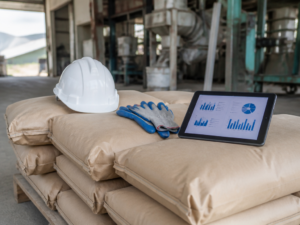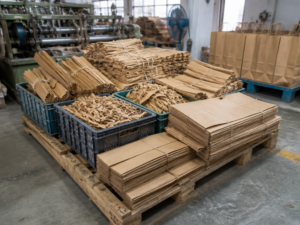
Filled paper bags need to be moved, stacked, and transported, and the journey inevitably involves vibration and drops. Paper bag closure may look like just the final step, but it directly affects the reliability of the whole package: whether the structure is stable enough, whether powder leaks through pinholes, and whether the filling line runs smoothly all depend on it.
Chia Huang offers two closure methods: sewing and heat-sealed OverTape, which can also be combined. This article compares the problems each of the three methods solves, explains why fine powder contents need special attention to pinholes, and summarizes the information to prepare when evaluating closures. For industry-wide conventions, we reference the paper bag industry organization PSSMA and the international standard ISO 6590-1; for Chia Huang's own practices, our company pages are the authoritative source.
Paper Bag Closures: Stitching vs. Heat Sealing with OverTape—Which to Choose
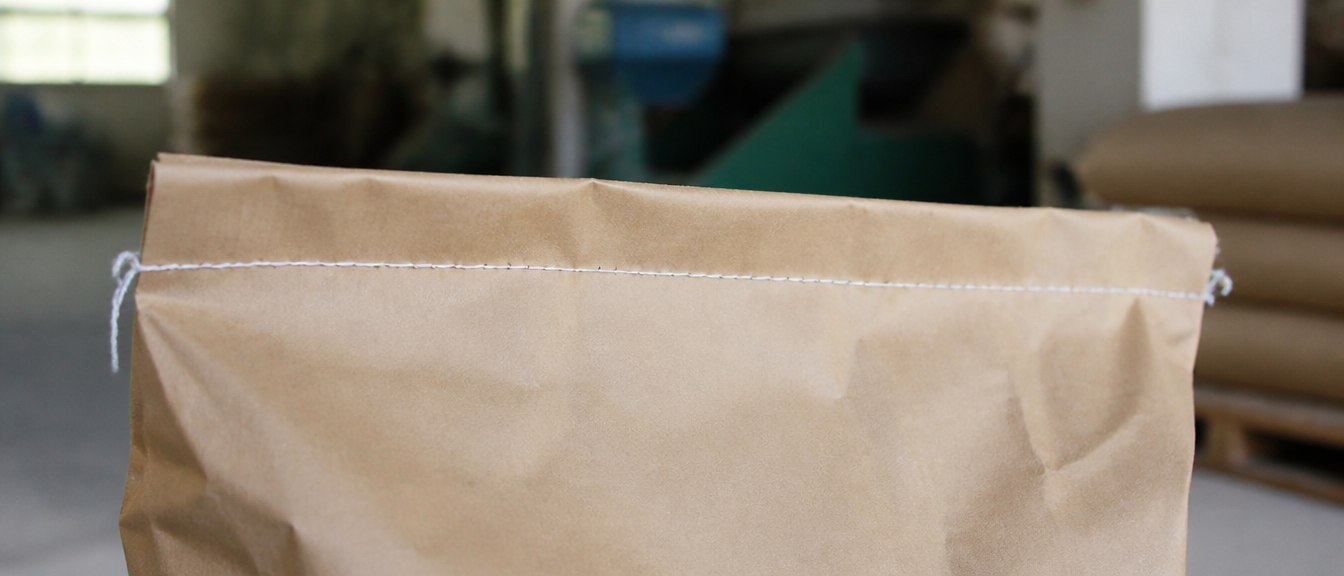
Sewn closure seals the bag opening with stitching. It's the most common closure method for heavy-duty paper bags, offering a stable structure and easy opening, suitable for most industrial contents. The industry organization PSSMA describes open-mouth bags consistently: after filling, the bag mouth is closed by sewing, and its glossary refers to the practice of closing a filled paper bag with a dedicated bag-sewing machine as sewn closure.
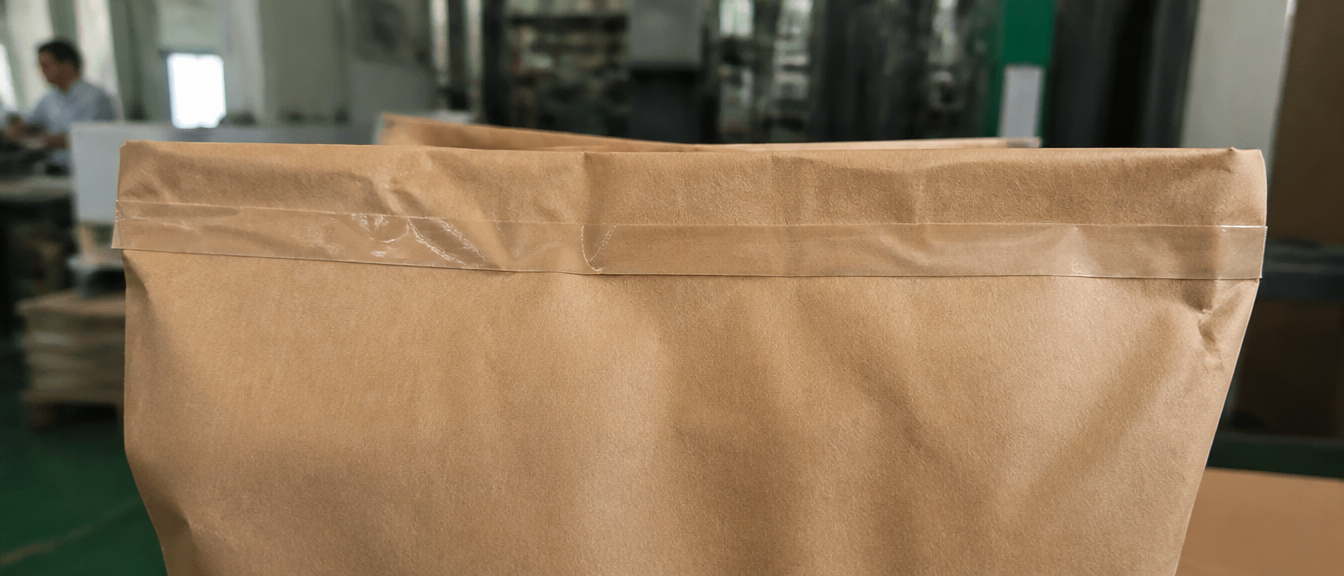
Heat-sealed OverTape adds a heat-sealed tape strip over the sewing line, covering the pinholes to effectively prevent fine powder particles from leaking—suitable for fine powder chemical and powder contents. The PSSMA glossary refers to a similar practice as tape over stitching: after the bag is sewn, a strip of tape is applied over the stitching to prevent sifting of contents and improve barrier properties. The tape can be wet-glue, hot-melt, or heat-sealed thermoplastic-coated tape. This differs from bound over tape, where the tape is sewn into the bag mouth together with the stitching.
The two methods can also be combined: sewing first, then adding OverTape. Chia Huang's cement and building materials packaging page explains that sewing offers higher strength, suitable for heavy loads and applications that must withstand drop impact; OverTape offers superior sealing, suitable for applications with extremely strict requirements against dust leakage; when combined, OverTape is added after sewing to reinforce the seal.
| Closure Method | Process | Main Advantages | Important Considerations |
|---|---|---|---|
| Stitched Closure | Bag opening sealed with stitching thread | Most common, sturdy structure, easy to open, high strength | Needle holes from stitching alone may allow fine powder particles to escape |
| Heat-Sealed OverTape | An additional heat-sealed tape layer is applied over the stitching line to cover needle holes | Superior sealing performance, effectively prevents powder particles from escaping | Requires additional tape material and process steps; cost and production line pace need to be evaluated together (this is our assessment based on manufacturing process) |
| Stitching Plus OverTape | Both methods used on the same bag: stitching provides strength, OverTape reinforces sealing | Combines stitching strength with OverTape sealing performance | Suitable for heavy-load applications with strict dust containment requirements; necessity should be evaluated based on contents and usage environment |
None of the three methods is inherently better or worse—the difference lies in the contents and conditions of use. Chia Huang's approach is to plan the closure based on product characteristics, bag design, and usage environment, rather than applying a single process to all products.
To understand why pinholes are unavoidable, it helps to look at how the stitch line is formed. The PSSMA glossary explains that the needle thread passes completely through the bag wall at the seam, while the bobbin thread interlocks with the needle thread mechanically, forming a lock stitch. Each time the needle passes through the paper, it leaves a hole—this is a characteristic of the sewn structure, not a manufacturing defect. True defects have their own terms: the glossary refers to a bag end that hasn't been sewn correctly as a loose end, and a bag end where the tape wasn't pulled tight, or sewn too close to the bag end, as soft ends. These issues need to be prevented and detected through process control and inspection.
Needle Holes and Fine Powder: When Simple Stitching Isn't Enough
Where there are pinholes, there's a path for leakage. According to Chia Huang, pinholes from sewing alone may allow fine powder particles to leak out, so for fine powder contents, we recommend heat-sealed OverTape, which adds a sealing strip over the stitch line to cover the pinholes.
The industry also uses other methods to address the same issue. The PSSMA glossary mentions that a filler cord—usually soft yarn, cotton thread, or twisted paper—can be inserted into the seam and sewn through the pinholes to seal them, prevent sifting, and cushion the stitching. PSSMA's manufacturing overview also notes that sewn bag mouths are sometimes impregnated with a sealant that penetrates the tape, stitching, and filler cord, giving the closure both moisture resistance and flexibility.
So whether fine powder will leak can't be judged by the bag body alone—the closure matters too. From a manufacturing perspective, the fineness of the powder, along with handling and stacking after filling, can cause particles to gradually seep out through pinholes. That's why, when requesting a quote, please tell us the fineness of your contents so our sales team can recommend a suitable closure method. It's also worth distinguishing this from micro-perforated venting, which is designed to let air escape during high-speed filling—the hole size is engineered to let air out while blocking particles. This is a separate matter from closure pinholes, though both need to be assessed based on the fineness of the contents.
| Content Characteristics | Recommended Initial Closure Choice | Decision Rationale |
|---|---|---|
| General heavy-duty contents, such as granules or chunks | Stitched Closure | For general heavy-duty applications, stitching alone is sufficient—sturdy structure and easy to open |
| Fine powder, microparticles, such as fine chemical powder materials | Heat-sealed OverTape, or stitching plus OverTape | Needle holes may allow microparticles to escape; OverTape covers the holes |
| Heavy load with risk of impact from drops, such as cement | Stitching as primary method | Stitching offers higher strength and is the most common choice for cement bags |
| Extremely strict dust containment requirements | Stitching Plus OverTape | Stitching provides strength, OverTape reinforces sealing |
| Contents are food ingredients | In addition to closure method, separately verify food contact regulations and certification requirements | Closure method cannot replace food contact compliance verification |
This table is a starting point for evaluation, not a final decision. The actual choice also depends on bag type, filling equipment, and usage environment, so we recommend providing this information together so our sales team can assess it as a whole.
On the other hand, more OverTape isn't always better. If the contents are granular or lumpy, the risk of leakage through pinholes is lower (in our assessment), and sewing alone can meet the requirement—adding an extra sealing strip would only increase material and process steps. Chia Huang's page also notes: sewing alone is generally sufficient for standard heavy-duty packaging, while heat-sealed OverTape is recommended for fine powders or contents requiring protection against particle leakage.
Heavy Load, Drop Impact, and Stacking: Closure Design Must Be Coordinated with Other Processing
Open-mouth paper bags actually have two areas that need closing: the bottom and the mouth. According to PSSMA, the bottom of an open-mouth bag is completed at the bag-making factory, and the bag mouth is closed after the bag is filled. So when evaluating closures, it's best to consider the bottom and the mouth separately: the bottom must withstand filling and drops, while the mouth must balance sealing after filling with ease of opening.
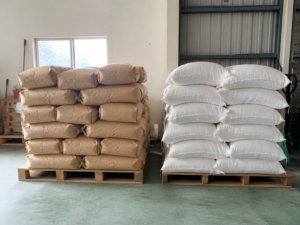
Cement bags face a fairly harsh usage environment: a single bag can weigh 25 to 40 kg, bags are stacked in multiple layers on pallets, and they're subject to repeated vibration during transport. Chia Huang's cement and building materials page notes that cement bag bottoms use sewn closure, with high stitch strength to prevent the bottom from splitting when dropped under heavy load.
Closure isn't an isolated design element. Anti-slip agents increase surface friction to reduce the risk of bags sliding and collapsing when stacked on pallets; film lamination and multi-layer structures provide moisture protection; micro-perforated venting handles air release during high-speed filling. These functions can all be combined on the same paper bag, so closure needs to be planned as part of the whole: for contents requiring moisture protection, the choice of film lamination and the closure method should be discussed together, rather than handled separately.
Quality Control for Paper Bag Closures: From Standard Operating Procedures to Final Inspection
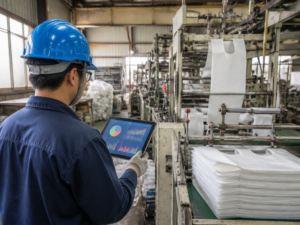
Closure stability depends not only on choosing the right method, but also on process control. Chia Huang has established standard operating procedures (SOPs), in-process inspections, and finished product inspection systems. Every step—from materials and bag-making to sewn closure and finished product shipment—follows standardized procedures, and the company is also ISO 9001 quality management system certified.
Using consistent terminology in communication also helps avoid unnecessary back-and-forth. ISO 6590-1:2025 is the terminology standard for the paper bag field, defining common terms used in paper bag manufacturing. Its scope covers single- and multi-wall bags made primarily of paper, excluding retail bags. To avoid misunderstandings over terminology, we recommend using descriptions rather than colloquial terms when requesting a quote—for example, "add a heat-sealed tape strip over the stitching"—along with photos or samples.
If the closure is completed on-site after filling, the closure equipment, stitching, and tape specifications also need to match the bag type. Simply provide your filling method and equipment information, and our sales team will assess compatibility with the bag type and closure.
Information to Prepare Before Requesting a Quotation for Paper Bag Closures
Choosing a closure method is difficult to determine from a spec sheet alone—it usually needs to be worked out from the contents and usage scenario. When requesting a quote, we recommend preparing the information below first so our sales team can determine whether to start evaluating sewing, heat-sealed OverTape, or a combination of both.
| Information to Prepare | Why needed |
|---|---|
| Content type and fineness | Determines whether needle holes will be a problem and whether OverTape is needed |
| Bag weight and stacking conditions | Determines the impact, drop, and stacking pressure the closure must withstand |
| Filling method and equipment | Manual or automatic, speed considerations affect bag design and closure compatibility |
| Storage and transportation environment | Humid, outdoor, or overseas export conditions affect moisture protection and closure combinations |
| Tolerance for dust leakage | Stricter requirements necessitate stronger closure sealing performance |
If you already have a sample bag or photos, please include them too—they make it much easier to align on expectations than a text description alone. To learn more about Chia Huang's approach first, see our sewing and closure page; the minimum order quantity for custom orders is about 5,000 bags, and our sales team will respond within one business day.
Frequently Asked Questions About Paper Bag Closures
What closure methods are available for paper bags?
Chia Huang offers both sewn closure and heat-sealed OverTape, which can also be combined—sewing first, then adding OverTape to reinforce the seal. The actual choice depends on the characteristics of the contents, bag type, and usage environment.
Will fine powder leak through a stitched closure?
Pinholes from sewing alone may allow fine powder particles to leak out. For fine powder contents, we recommend heat-sealed OverTape, which adds a sealing strip over the stitch line to cover the pinholes. When requesting a quote, let us know the fineness of your contents so our sales team can recommend a suitable closure method.
Can stitching and heat-sealed OverTape be used together?
Yes. Sewing provides strength while OverTape reinforces the seal, so combining the two can address both heavy loads and dust leakage protection. Whether it's needed still depends on the contents and usage environment.
Should cement bag closures use stitching or OverTape?
Sewing offers higher strength, suitable for heavy loads and applications requiring drop-impact resistance, making it the most common choice for cement bags. OverTape offers superior sealing, suitable for applications with extremely strict requirements against dust leakage. The two can also be combined, with OverTape added after sewing.
What information should be provided about closure when requesting a quotation?
Please provide the type and fineness of the contents, bag weight, filling method and equipment, storage and transport environment, and any requirements regarding dust leakage. Having a sample bag or photos is even better. Our sales team will respond within one business day.
How is quality controlled for paper bag closures?
Chia Huang has established standard operating procedures (SOPs), in-process inspections, and finished product inspection systems. Every step—from materials and bag-making to sewn closure and finished product shipment—follows standardized procedures, ensuring consistent closure quality.
Conclusion: Choose Paper Bag Closure Based on Contents, Not Habit
No single closure method suits every product: sewing offers high strength and easy opening, making it the starting point for most heavy-duty packaging; fine powder contents need pinhole attention, where heat-sealed OverTape can cover pinholes and reinforce the seal; for heavy loads with concerns about dust leakage, the two can be combined. When choosing, start by asking yourself three questions: How fine are the contents? How much weight and drop impact must the bag withstand? What filling and closure equipment is available on-site? These three answers will largely determine which closure method to start evaluating. If you're evaluating paper bag closures, feel free to tell us about your contents, bag weight, filling method, and usage environment—leave your requirements via Contact Us, and our sales team will respond within one business day with a recommended closure method.