When you see "50 lb kraft paper" on a quote, can you immediately tell how many g/m² that is? Paper weight is a measurement convention carried over from the papermaking and paper trading industries. It doesn't measure a single sheet, but the weight of a "ream" of paper—so before converting to grams per square meter, you first need to know how large that ream actually is. With different basis sizes, the same pound weight can translate to GSM values that differ by as much as about 1.5x (see the three common basis sizes in the table below).
This article explains, from a manufacturing perspective, the relationship between paper weight, ream weight and basis weight (g/m²), with formulas and a conversion table. We then return to the paper bag itself: does a higher kraft paper weight always mean a sturdier bag? The answer isn't that simple—load capacity also depends on the number of plies, paper strength and moisture-proofing design. Finally, we'll cover how to describe paper weight clearly when requesting quotes, to avoid misunderstandings.
What is Paper Pound Weight? Understanding Basis Weight, Ream Weight, and Pound Weight
There are three common units for measuring paper weight. According to Da Ye Enterprise's summary, basis weight is the paper's weight per square meter, usually written as g/m² or gsm—for example, 250gsm means 250 grams per square meter. Ream weight is the weight of one ream of paper (typically 500 sheets), usually expressed in pounds (lb). Pound weight, meanwhile, was a term commonly used in Taiwan's paper industry in the past, referring to the weight of one ream of full-size sheets. The problem is that "full size" has no single fixed dimension: the same source notes that pound weight doesn't distinguish between 46-size (31 × 43 inches) and Ju-size full sheets (25 × 35 inches), which often causes confusion and disputes. As a result, the industry has gradually moved away from this term, now favoring g/m² as the standard.
The convention used for industrial paper bag stock is yet another system. The paper bag industry association PSSMA's glossary defines the basis weight of kraft paper for shipping sacks as the weight of 3,000 square feet of paper, traditionally based on a ream of 500 sheets at 24 × 36 inches. The international standard ISO 536, meanwhile, adopts the metric system directly, specifying methods for determining the grammage of paper and board, treating grammage as mass per unit area.
| Name | Unit | What It Measures | Common Misunderstandings |
|---|---|---|---|
| Basis Weight (Grammage) | g/m², gsm | Weight of paper per square meter | Many think higher grammage always means thicker paper, but thickness is also affected by bulk (caliper) |
| Ream Weight | Pounds (lb) | Weight of one ream (500 sheets) of paper, varies by paper size | Without knowing paper size, you cannot convert to grammage |
| Pound Weight | lb or P | Weight of one ream of full-size paper | Both 4×6 and Kiku size standards coexist; the same pound weight corresponds to different grammages |
| Paper Thickness | 点、μm、mm | The thinness or thickness of paper | This is a different measurement from basis weight |
Da Ye Enterprise also points out that for paper with the same basis weight, higher bulk means greater thickness—just as 1 kilogram of cotton and 1 kilogram of sheet metal won't have the same thickness. So GSM and thickness are two different measurements, and strength is another matter entirely. When evaluating paper for bags, you can't rely on just one number.
How to Convert Paper Pound Weight to g/m²? Formulas and Conversion Table
The core conversion formula, as given by Da Ye Enterprise, is: Ream weight (lb) = Basis weight × Paper dimensions (inches) × 0.00071117, where paper dimensions means length times width in inches. Their example uses 250-gram paper at 25 × 35 inches, giving a ream weight of about 155.6 lb. Reversing the formula lets you work backward from pound weight to GSM: GSM = Pound weight ÷ (Length × Width × 0.00071117). The same source then uses "Ream weight × price per pound = ream price" to calculate the price of a ream of paper—showing that in traditional paper trading, paper weight isn't just about weight, it's tied directly to pricing as well.
Using this same formula, we calculated 1 lb, 40 lb and 60 lb across three commonly referenced basis sizes. The figures in the table are rounded for comparison purposes only, and are not official standard values.
| Reference Size (One Ream of 500 Sheets) | 1 lb equals approximately | 40 lb equals approximately | 60 lb equals approximately |
|---|---|---|---|
| 24 × 36 inches (3,000 square feet, the PSSMA historical standard for kraft paper bags) | 1.63 g/m² | 65 g/m² | 98 g/m² |
| 25 × 35 inches (Kiku size) | 1.61 g/m² | 64 g/m² | 96 g/m² |
| 31 × 43 inches (4×6 size) | 1.05 g/m² | 42 g/m² | 63 g/m² |
The most notable thing in this table is the gap between the first and third rows: the same 60 lb rating comes out to about 63 g/m² under the 46-size basis, but about 98 g/m² under the 24 × 36 inch basis. The first two rows differ in area by only about 1%, so their converted values are close; but once you bring in the 46-size basis, the numbers diverge significantly. We therefore recommend treating pound weight as "a figure that requires a stated basis"—if the other party hasn't specified the dimensions, ask first, or switch directly to communicating in g/m².
Consider a hypothetical scenario: Quote A states 50 lb, which under the 24 × 36 inch basis is about 81 g/m²; Quote B states 80 g/m², which is actually quite close. But if Quote A is based on the 46-size basis instead, 50 lb would only be about 53 g/m²—in which case comparing it to 80 g/m² means comparing two papers of genuinely different weights. This example is purely an arithmetic illustration, not an actual quote.
What Pound Weight Range Do Kraft Papers Usually Fall Into?
How heavy is kraft paper typically used for industrial paper bags? The PSSMA glossary offers two descriptions: kraft paper for shipping sacks is usually 40 to 60 lb (what PSSMA calls "basis weight," expressed in pounds); and kraft paper used for shipping sacks and general bags most commonly falls in the range of 25 to 80 lb (also in pounds). Based on PSSMA's own 3,000 square foot basis, 40 to 60 lb works out to roughly 65 to 98 g/m², and 25 to 80 lb to roughly 41 to 130 g/m².
This describes the industry association's general view of paper used for shipping sacks—it is not the specification for any particular Chia Huang paper bag. Chia Huang's Paper Materials & Raw Materials page lists sizes and specifications as "customized to requirements," without publishing a single fixed GSM figure; the actual g/m² paper used and the number of plies are configured based on the weight of the contents, filling method and usage environment. In other words, the ranges above can help you judge whether a quote seems reasonable, but they shouldn't be used directly as an ordering specification.
Does Higher Pound Weight Mean Better Load Capacity? Considering Grammage, Ply Count, and Strength Together
Not necessarily. A paper bag's wall is made up of several layers of paper stacked together, and the total weight is roughly the sum of each layer's GSM—but load-bearing performance depends on the paper's strength and overall structure, not total weight alone. Chia Huang's Multi-Wall Kraft Paper Bags are built on long-fiber kraft paper, with a structure of 1 to 5 plies (depending on requirements). The page also states clearly: more plies doesn't necessarily mean greater durability—durability depends on paper quality and structural design, and blindly adding plies only drives up cost.
When using plain kraft paper alone, 25 kg packaging typically uses 3 plies, and 40 kg packaging typically uses 4 plies; with three-ply composite kraft laminate, because the material is stronger, 2 plies is often enough to meet most needs. These are common practices, not fixed rules—the actual number of plies still needs to be assessed based on package weight, the nature of the contents, and transport and stacking conditions. For overseas export, extra-heavy loads, or highly hygroscopic contents, additional plies or a coating/lamination layer may be needed. Note that coating/lamination is an additional single-layer treatment and is not counted within the 1-to-5-ply kraft paper count; when comparing two specifications, also confirm whether the stated paper weight or GSM refers to plain kraft paper alone or already includes the coating.
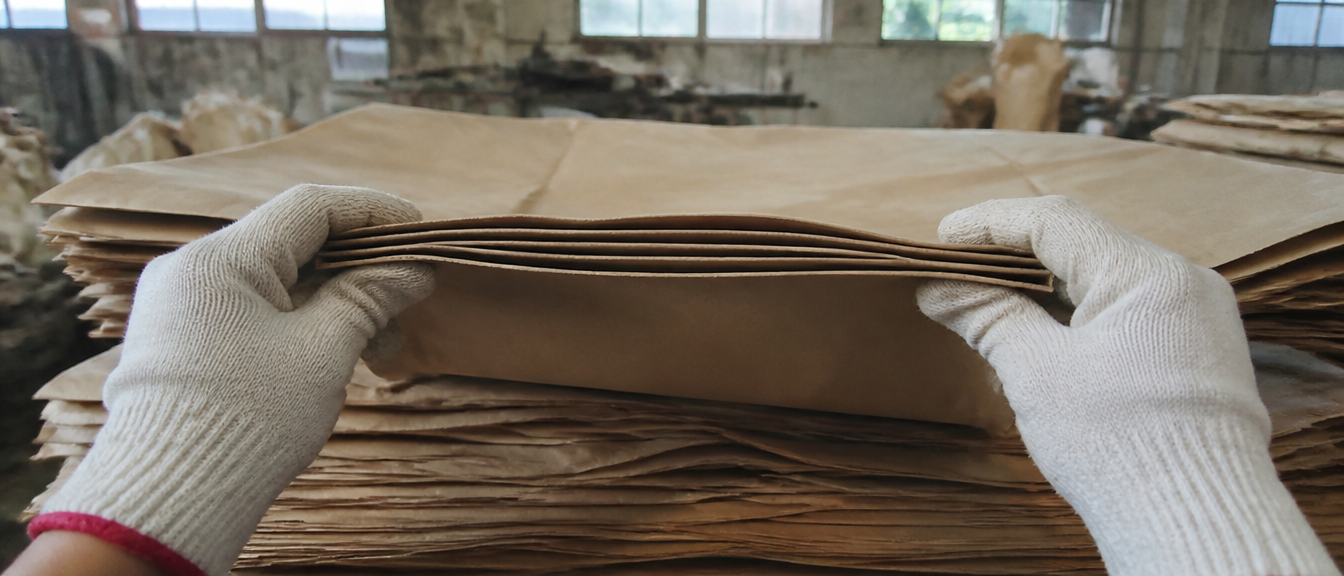
How is strength quantified? The dust-proof paper bag guideline co-published by the European paper sack industry federation Eurosac and CEPI Eurokraft (May 2016 edition) recommends using high-strength paper for valve sacks used with cement and similar building materials, and expresses strength using TEA (Tensile Energy Absorption): this combines the paper's elongation and tensile strength, reflecting the paper's ability to absorb energy in a drop test. The reference ranges for geometric mean TEA listed in the guideline are as follows.
| Bag Load Weight | Normal Handling (J/m²) | Severe Handling (J/m²) |
|---|---|---|
| 25 kg | 330 to 390 | 400 to 450 |
| 35 kg | 370 to 430 | 440 to 490 |
| 50 kg | 430 to 490 | 500 to 550 |
This table can be read two ways. First, the heavier the bag and the rougher the handling, the higher the required paper strength. Second, TEA measures the paper's energy-absorbing capacity, not its GSM—so two papers with similar GSM can still differ in strength. This is a conclusion we've drawn from the definition of TEA, not something stated directly in the guideline. Also note that the guideline applies specifically to cement-type valve sacks; the figures cannot be directly applied to feed, fertilizer or chemical sacks, and the table does not include a value for 40 kg.
How to Describe Paper Weight When Requesting a Quote to Avoid Misunderstanding
If you already have a sample bag or spec sheet on hand, please express the paper weight in g/m², and note whether that refers to a single ply or the combined total of the entire bag wall. If the other party typically uses pound weight, be sure to confirm the basis size along with it. Where necessary, you can also agree on a measurement standard, such as referencing a grammage determination standard like ISO 536, to avoid both sides getting different results from different measurement methods. The appendix of that standard also explains that grammage can be calculated on either an oven-dry basis or an as-sampled basis, since paper absorbs moisture and differing moisture content can affect the measured GSM.
| How It Appears on the Quote | What It Represents | Recommended Follow-up Questions |
|---|---|---|
| Only states "50 lbs" | Ream weight or pound weight, base size unclear | 500 sheets of which size? What is the conversion to g/m²? |
| Only states "80 g/m²" | Basis weight, unit clearly specified | Single-ply paper or total bag wall thickness? What paper type? |
| States "3-ply" | Number of kraft paper plies, not laminate coating | What are the paper type and weight of each ply? Any additional laminate coating? |
| Only states "Load capacity 25 kg" | Bag capacity, not paper specifications | What are the contents, filling method and stacking conditions? |
For most buyers, though, there's no need to determine the GSM yourself in advance. Chia Huang's approach is to work backward from the contents to determine the structure: once you describe the weight and nature of the contents, whether filling is manual or automated, whether storage is indoor, outdoor or for overseas export, and whether moisture protection is needed, our sales team can recommend a suitable ply count and paper configuration accordingly. This approach is far more aligned with actual needs than simply comparing quotes based on pound weight alone.
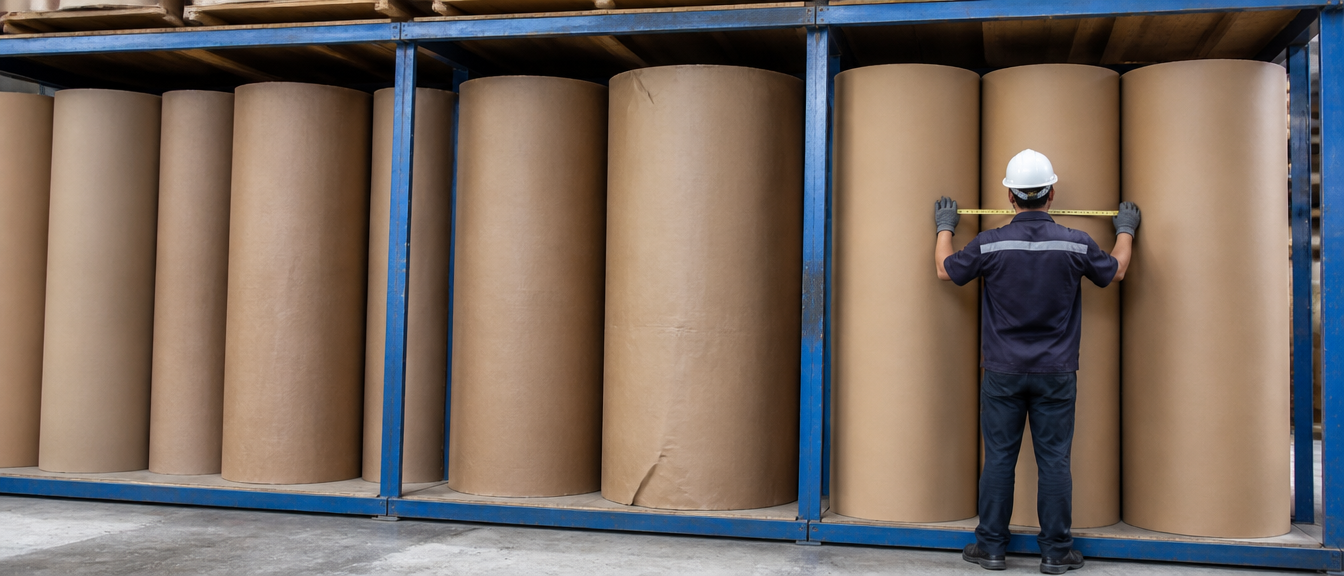
Supply of the paper material itself can also be discussed together. Chia Huang supplies recycled kraft paper, virgin kraft paper and custom roll stock, with rolls available in specified widths combined with slitting, rewinding and cutting services. If what you need is raw paper rather than finished bags, please specify the width, intended use and quantity when requesting a quote, and our sales team will respond within one business day.
Common questions about paper weight
How many g/m² equals 1 lb?
There's no single answer—it depends on the basis size. Using PSSMA's paper bag basis (500 sheets, 24 × 36 inches), 1 lb is about 1.63 g/m²; using the 46-size basis (31 × 43 inches), it's about 1.05 g/m². So paper marked 50 lb could be roughly 53 g/m², or roughly 81 g/m², depending on the basis.
Does higher kraft paper weight always mean a more load-bearing paper bag?
Not necessarily. A paper bag's load capacity is determined jointly by the paper's strength, the number of plies and the overall structure—GSM is just one factor among these. Chia Huang configures the ply count based on the weight of the contents, moisture protection needs and transport method, rather than looking at paper weight alone.
How many plies are typically used for 25 kg and 40 kg paper bags?
With plain kraft paper, 25 kg typically uses 3 plies and 40 kg typically uses 4 plies; three-ply composite kraft laminate usually meets most needs with just 2 plies. The actual ply count still needs to be assessed based on the product's intended use, filling method, and transport and stacking conditions.
Do papers with the same basis weight always have the same thickness?
Not necessarily. Da Ye Enterprise notes that at the same basis weight, paper with higher bulk will be thicker—so thickness and basis weight are different measurements, and both should be considered separately when choosing paper.
Does laminate coating count toward the number of plies in a paper bag?
No, it doesn't. Coating/lamination is a single-layer treatment that forms a moisture-proof layer on the paper using PE or PP; the 1-to-5-ply count refers specifically to the kraft paper layers. When comparing specifications, be sure to confirm whether the stated GSM already includes the coating.
Can I request a quote with only the pound weight?
Yes, you can. Please provide the basis size for the pound weight along with the intended use, content weight and filling method, and our sales team will recommend suitable paper materials and ply count based on this information, responding within one business day.
Conclusion: Paper weight is a communication reference number, not a quality guarantee
Back to the original question: paper weight is simply a measurement convention that requires a stated basis—once converted to g/m², it becomes easier to compare, though what you're comparing is still only how heavy the paper is. A higher or lower kraft paper weight doesn't directly indicate how durable a bag is; load capacity also depends on the paper's strength, ply count and moisture-proofing design. If you're currently evaluating paper bags or paper materials, feel free to tell us about your content weight, filling method and usage environment. Visit Contact Us to share your requirements, and our sales team will respond within one business day with recommendations on suitable ply count and paper configuration.