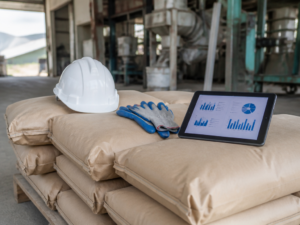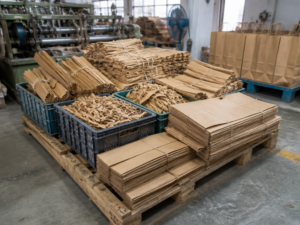
The English term for kraft paper comes from the German word "kraft," meaning "strength." The name already tells you the single most important trait of this paper. Yet under the same name "kraft paper," some is made from 100% virgin wood pulp, some from recycled pulp, some is bleached into white kraft paper, and when used for heavy-duty packaging, fiber length matters too. These terms are often used interchangeably, which makes material selection confusing when everyone means something different.
Chia Hwang Paper has been making industrial kraft paper bags since 1973, and we also supply materials such as recycled kraft paper and virgin pulp kraft paper. This article clarifies four commonly used terms—virgin pulp, recycled, white kraft, and long-fiber—from a material perspective, and explains what use case each one corresponds to. The conclusion up front: there's no single "best" kraft paper, only the kraft paper that matches your application.
What is Kraft Paper: The Difference Starts with Pulping Methods
According to Britannica, the kraft process (also called the sulfate process) is a chemical method for producing wood pulp, using a cooking liquor of sodium hydroxide and sodium sulfide to break down wood fibers. Compared with pulp cooked using sodium hydroxide alone, pulp made via the kraft process is stronger (see Britannica, "kraft process"). In other words, the "strength" of kraft paper comes largely from the pulping method itself, not from something added afterward.
Also according to Britannica's entry on "paper pulp," chemical pulps are classified into unbleached and bleached sulfite pulp, and bleached and unbleached sulfate pulp (i.e., kraft pulp); several types of pine are among the woods used for sulfate pulp. The entry also notes that recovered fibers from old paper, rags, and cardboard are one of the most important sources of pulp (see Britannica, "paper pulp"). These two points map directly onto the two dimensions of kraft paper types: kraft pulp itself can be bleached or unbleached, and the raw material for pulp can come from either wood or recovered fiber.
Kraft Paper Types at a Glance: Virgin Fiber, Recycled, White Kraft, and Long Fiber
The table below lines up virgin pulp, recycled, white kraft, and long-fiber side by side. It's worth noting upfront that these four terms don't sit on the same axis, and they aren't mutually exclusive.
| Type | Raw Materials & Appearance | Characteristics | Common Uses | Jia Huang's Offering |
|---|---|---|---|---|
| All-Wood Pulp Kraft Paper | Made from virgin fiber pulp | Robust fibers and stable quality | Heavy-duty packaging and various industrial applications | Supply virgin fiber kraft paper |
| Recycled Kraft Paper | Made from recycled pulp reprocessing | Supports circular economy; actual suitability depends on application; samples available for evaluation | Bag manufacturing or secondary processing | Supply recycled kraft paper |
| White Kraft Paper | Kraft pulp bleached to a clean white surface | Suitable for high-quality printing | Brand or retail packaging | Can serve as a base material for coating applications |
| Long Fiber Kraft Paper | Differentiated by fiber length | Better load-bearing and tear resistance | Industrial heavy-duty packaging bags | Bags using long fiber kraft paper |
Virgin pulp vs. recycled is about where the fiber comes from; brown vs. white is about whether it's bleached; long-fiber is about fiber length. So the same sheet of paper can be "virgin pulp, unbleached, long-fiber" at once, or it can be "recycled pulp, unbleached." Before selecting a material, first clarify which dimension you're actually comparing—otherwise you might end up comparing recycled kraft paper against white kraft paper for strength, when the two aren't even on the same scale.
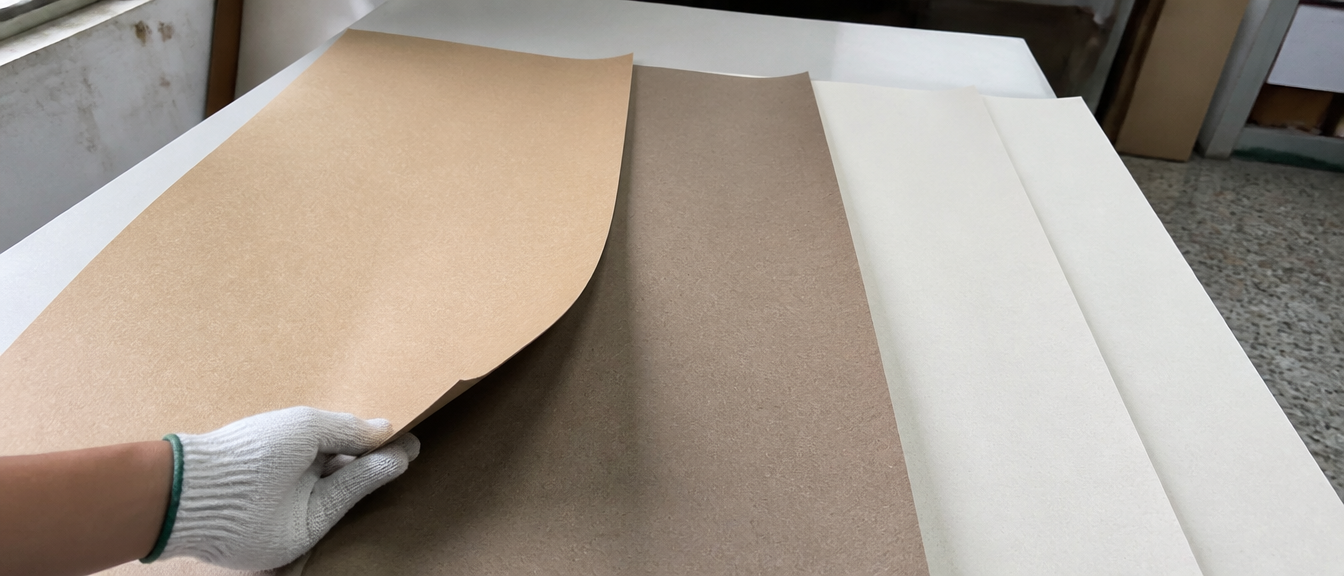
Choosing Between Virgin Fiber and Recycled Kraft Paper: Fibers Shorten with Multiple Recyclings
Recycled kraft paper is made by reprocessing recovered pulp, and Chia Hwang supplies this material under strict quality control to ensure consistency. Before choosing it, though, it's worth understanding one limitation of recycled fiber. According to CEPI's (the European paper industry association) sustainability platform, paper cannot be recycled indefinitely, because fibers eventually become too short and too worn to be used for papermaking again—so virgin fiber from trees needs to keep entering the cycle. The same source notes that in Europe in 2024, each fiber completed an average of 4 recycling-and-use cycles, with nearly 50% of raw material coming from recycled paper (see CEPI circular economy page).
This limitation has a direct implication for material selection: recycled vs. virgin pulp isn't a question of right or wrong, but one of division of labor. Recycled fiber keeps material in circulation, while virgin fiber keeps that circulation going. Applied to packaging, our view is: don't judge by name alone—verify with samples and actual specifications. Samples of our recycled kraft paper are available for evaluation, with actual suitability depending on the application; for heavy-duty packaging with high load-bearing and tear-resistance requirements, virgin pulp kraft paper can also be evaluated first and then verified with samples.
| Use Case | Paper Type to Consider First | Reasons & Notes |
|---|---|---|
| Heavy-load bags weighing 25 to 40 kg | Virgin fiber kraft paper or long fiber kraft paper; verify with samples first | Load-bearing and tear resistance are the top priority; number of plies determined separately based on weight and structural design |
| Procurement specifications prioritize recycled materials | Recycled kraft paper; verify with samples first | Suitability depends on application; trial use with actual specifications recommended |
| Brand and retail packaging | White kraft paper, then coated as needed | Clean white surface ideal for high-quality printing |
| Moisture and water resistance required | Any kraft paper base material combined with PE coating or PP coating | Coating is a single-layer process, separate from paper type and bag ply considerations |
When requesting samples for evaluation, don't just look at the surface of the paper. Test the sample under your actual conditions: for bag-making, check whether the load-bearing capacity and tear resistance of the finished bag meet your packaging weight requirements; for secondary processing, check whether the paper surface stays stable through cutting, slitting, and rewinding; if printing or laminating is needed, check whether the paper surface performs as expected. Once all three checks pass, you can move on to discussing order quantity with lower risk.
Long Fiber and Plies: What to Look for in Heavy-Duty Packaging Bags
For industrial paper bags, the paper type is rarely considered on its own—it's usually assessed together with the number of plies. Chia Hwang's bag structures range from 1 to 5 plies, using long-fiber kraft paper, which offers better load-bearing and tear resistance. A common correspondence: plain kraft paper 25 kg packaging is typically 3-ply, 40 kg is typically 4-ply, while three-in-one kraft composite material is usually 2-ply. These are starting points, not fixed rules—actual specifications still need to be adjusted based on the contents, filling method, and transport conditions.
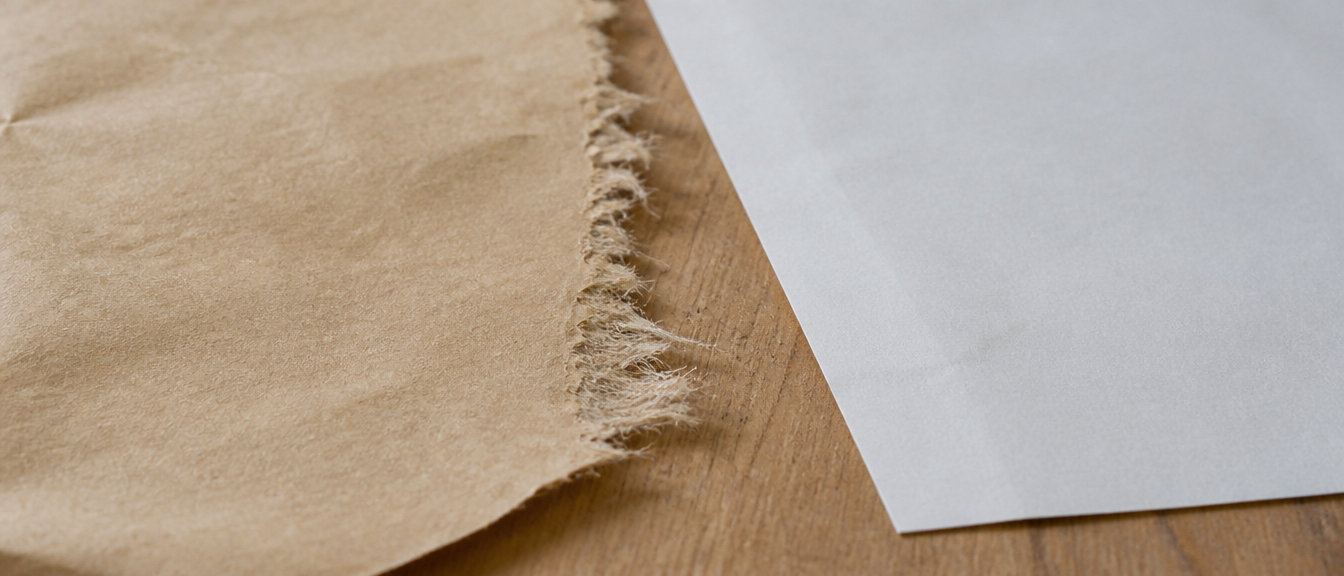
More plies isn't always better—each additional ply adds to material and processing costs. Another common point of confusion is treating lamination and ply count as the same thing: lamination is a single-layer process that coats the paper surface with a plastic film, mainly for moisture resistance; the 1 to 5 plies of a paper bag are mainly for load-bearing strength. The two work together, but they don't substitute for each other. If you'd like guidance on choosing lamination, let our sales team know your moisture-resistance needs when requesting a quote, and they'll help assess the options.
White Kraft Paper and Printing: Appearance Matters, but So Does Cost
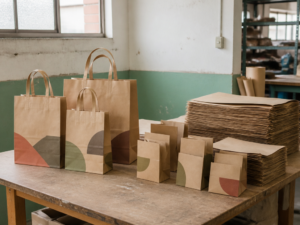
White kraft paper has a clean white surface, well suited to high-quality printing, which is why brand and retail packaging often choose it. Chia Hwang uses four-color printing and follows a print-first, process-later workflow, so the printed surface is protected during subsequent bag-making and laminating steps and is less prone to abrasion. That said, a white, colorful surface doesn't mean you need full-coverage printing: print color affects price, and the number of colors, print area, number of plates, and production quantity all influence plate-making and printing costs. Chia Hwang can recommend a suitable printing configuration based on your budget and needs, balancing brand presentation with cost.
New designs require plate-making; if cumulative orders reach 50,000 units within one year, the plate fee can be deducted from the order value. The minimum order quantity for customized production is about 5,000 units. The natural brown color of kraft paper itself can also be used as part of the design—fewer colors generally means lower cost too, which is worth considering when choosing paper.
Kraft Paper Supply Forms and Secondary Processing
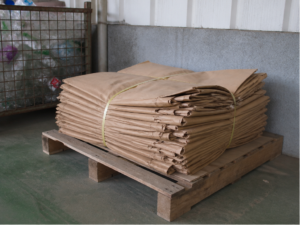
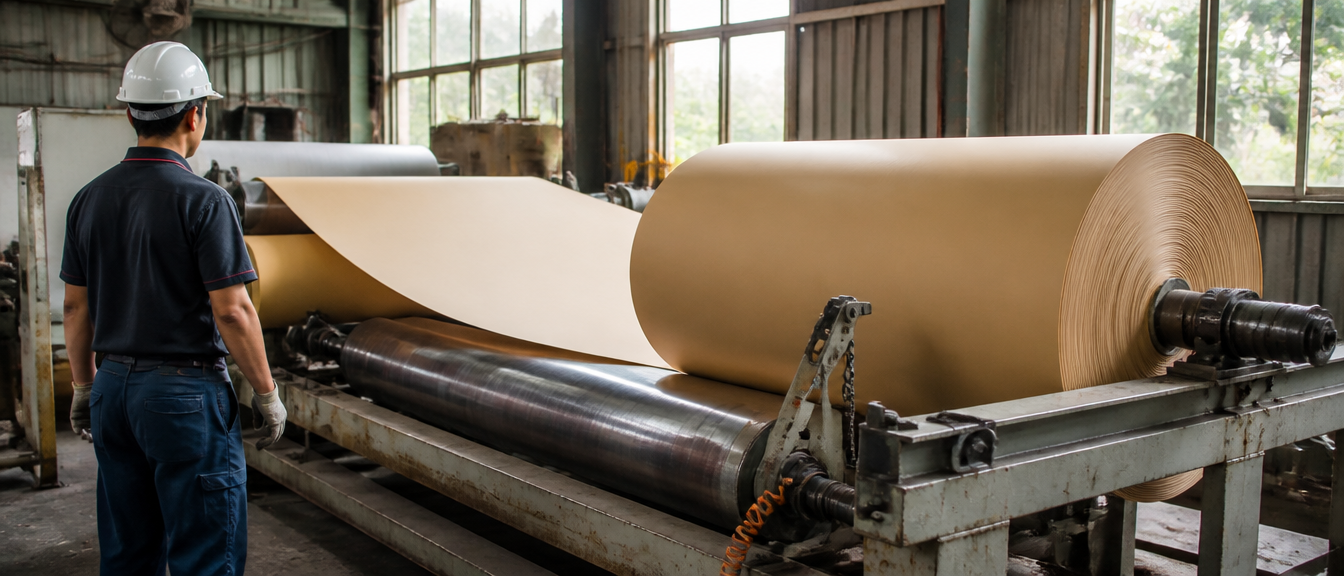
Besides finished bags, kraft paper material itself can also be supplied directly as raw material. Chia Hwang's paper materials and raw material items include recycled kraft paper, virgin pulp kraft paper, kraft paper plates and strips, crepe paper, and custom roll stock. Supply format varies by item—base paper, roll stock, paper plates, or paper strips—with sizes and specifications customized to your needs. The full range of items is listed on the Paper Materials & Raw Materials page.
| Supply Form | Description | Suitable Applications |
|---|---|---|
| Parent rolls and custom coils | Kraft paper rolls supplied in specified widths and specifications; can be paired with slitting, rewinding, and cutting for semi-finished products | Automatic packaging lines and in-house secondary processing |
| Kraft paper discs and strips | Cut to various specifications and supplied in designated sizes | Various industrial linings and packaging |
| Crinkle kraft paper | Extensible | Protective cushioning, filling, and various industrial applications |
If you have a large roll but need a narrower specification, slitting, rewinding, and cutting can process the base paper into the dimensions your production line needs. When moisture resistance is required, kraft paper, white kraft paper, and recycled kraft paper can all serve as a base substrate for lamination.
The circular economy isn't just about material selection—it's also built into our processes. Offcuts from bag-making and printing, as well as bag materials that don't meet specifications, are repurposed into circular, creative products. Chia Hwang's kraft paper raw materials can also be specified as FSC-certified, with certification documents provided. More on these practices is available on the Sustainability & Circular Economy page.
Before requesting a quote, prepare these items
The clearer your information, the faster we can respond to your kraft paper inquiry. We recommend preparing the following in advance: first, the intended use—bag-making, lining, cushioning, or secondary processing; second, your preferred paper type—virgin pulp, recycled, or white kraft—if undecided, you can simply describe your load-bearing and printing needs; third, specifications, including width, dimensions, and supply format; fourth, quantity; fifth, whether you need lamination, slitting, or FSC certification documents. If you're considering recycled kraft paper, you can request samples for evaluation first and confirm suitability before moving to formal procurement.
Frequently asked questions about kraft paper
How is kraft paper different from regular paper?
Kraft paper comes from the kraft process, a chemical pulping method that cooks wood using sodium hydroxide and sodium sulfide, producing pulp that is stronger than pulp cooked with sodium hydroxide alone—echoing the German meaning of "kraft," which is "strength." Unbleached kraft paper has a brownish color, while bleaching it produces white kraft paper.
How do I choose between recycled kraft paper and virgin kraft paper?
Start by considering the application and load-bearing needs. Virgin pulp kraft paper has strong, stable fibers, making it suitable for heavy-duty packaging; recycled kraft paper is made by reprocessing recovered pulp, supporting the circular economy, with actual suitability depending on the application—we recommend requesting samples for evaluation first. Choosing between the two is a matter of division of labor, not right or wrong.
What's the difference between white kraft paper and regular kraft paper?
The main differences lie in appearance and print performance: white kraft paper has a bright white surface, making it ideal for high-quality printing and commonly used in branded or retail packaging; standard kraft paper has a brownish-yellow tone and is suited for industrial packaging, chemical packaging, and building material packaging. Both can serve as base materials for laminating.
Can kraft paper be recycled infinitely?
No. According to CEPI, paper cannot be recycled indefinitely, because fibers eventually become too short and too worn, requiring virgin fiber to replenish the cycle. This is also why recycled and virgin paper materials coexist.
What kraft paper materials does Chia Huang offer?
Chia Hwang supplies recycled kraft paper, virgin pulp kraft paper, kraft paper plates and strips, crepe paper, and custom roll stock, along with slitting, rewinding, and cutting services. Raw materials can be specified as FSC-certified with certification documents provided. See the Paper Materials & Raw Materials page for the full range.
I only need kraft paper rolls—can I specify the width?
Yes. Chia Hwang offers slitting services, cutting large kraft paper rolls into narrower rolls at specified widths for automated packaging lines or secondary processing. Please specify the paper type, width, and quantity when requesting a quote.
Conclusion: Choosing kraft paper starts with matching your application
Kraft paper may seem to come in many types, but at its core there are really just three questions: where the fiber comes from, whether it's bleached, and whether the fiber is long enough. Match these three questions to your load-bearing, printing, and moisture-resistance needs, and choosing between virgin pulp, recycled, white kraft, and long-fiber kraft becomes straightforward. Once you've worked out your application, specifications, and quantity, feel free to reach out via Contact Us—our sales team will respond within one business day and recommend the right kraft paper material and supply format for you.