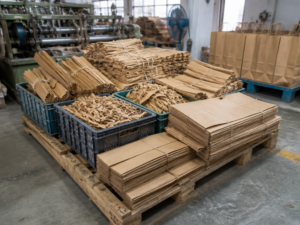
The idea behind toll processing is simple: you provide the substrate, and the factory handles one specific step. With Chia Huang Paper's lamination service, this means customers bring in rolls of kraft paper or woven fabric, and we handle lamination, slitting, rewinding, or cutting before returning the finished rolls. When discussing toll processing, you need to clarify more than just the lamination itself—who needs to prepare what information, whether the substrate's condition might affect the outcome, and exactly which items should be compared when evaluating quotes.
Founded in 1973 in Shanhua, Tainan, Chia Huang has always had lamination as part of its in-house process, and it's also offered as a standalone toll processing service. For details on film materials and equipment specs, see Lamination Processing Service; this article instead focuses on the process and procurement practicalities: first determining whether toll processing is the right fit, then gathering the information needed before sending samples, and finally, when comparing quotes and suppliers, what else to ask besides unit price.
When is toll lamination suitable, and when is it not?
According to Chia Huang's website, this service suits customers who already have substrate on hand and just need lamination for moisture protection, or slitting and cutting. It also suits customers whose current toll processors have inconsistent quality or lead times and who need a backup source, as well as customers who want to validate new specifications first. As for how much volume can be accommodated, the website doesn't set a fixed threshold—it depends on the type of processing and current production schedule, so please specify your needs directly when inquiring.
| Scenario | Why toll lamination works | Things to consider first |
|---|---|---|
| Already have substrate, only need coating lamination | No need to establish a new supply chain just for one process | Substrate surface condition and moisture content affect coating results—see details below |
| Need a backup supplier | When existing subcontractors have quality or delivery issues, add another source | Confirm specs with samples before using as backup; don't wait until you're out of stock |
| Want to evaluate if specs are feasible first | Send samples and evaluate equipment feasibility, then decide on formal processing | Feasibility assessment takes about one working day to respond; formal lead time depends on schedule |
| Still need slitting or cutting after coating lamination | Can be completed at the same location, saving one transfer | Final roll width and dimensions should be specified in your first inquiry |
| Substrate outside normal range | Aluminum foil and BOPP film are marked on our site; equipment feasibility can be evaluated upon request | For substrates with widths outside 500–2,000 mm, please contact us first—don't assume yes or no |
On the other hand, there are two situations where this approach may not be the most efficient path. One is when what you actually need is finished paper bags rather than laminated roll stock—in that case, it's more efficient to discuss full bag manufacturing directly. The other is when the substrate itself hasn't been decided yet—in that case, you should start by discussing substrate specifications. Chia Huang also supplies recycled kraft paper, virgin kraft paper, and custom roll stock, which can be discussed at the same time.
Four steps: what each party needs to prepare at each stage
The toll processing workflow on the website has four steps: provide substrate samples and requirements, assess equipment feasibility, confirm specifications and quote, and proceed with processing. The process itself isn't complicated—what tends to cause delays is the preparation needed from your side at each step. The table below separates what each party needs to do at each stage.
| Step | What you do | What Chia Huang does |
|---|---|---|
| 1. Provide substrate sample and requirements | Send substrate sample and specify moisture barrier needs and dimensions | Use the sample and requirements as assessment basis |
| 2. Equipment feasibility assessment | Answer the sales team's questions about substrate and specs | Assess equipment feasibility and respond within about one working day on whether processing is possible |
| 3. Confirm specs and quotation | Confirm film material, processing specs, and quotation details | Confirm each processing specification and quotation item with you |
| 4. Formal processing | Prepare substrate and coordinate with input and delivery schedule | Once confirmed, proceed with formal coating lamination and schedule delivery |
If what you need is slitting, rewinding, or cutting, the steps differ slightly: first provide the master roll specifications along with target dimensions and quantity; our sales team assesses equipment feasibility and scheduling before responding with a quote; once confirmed, materials are scheduled to arrive and specifications are verified; after verification, processing is scheduled; and finally, the finished product goes through quality inspection before shipping. What both processes have in common is that specifications are always confirmed before processing begins—this step cannot be skipped.
How is coating lamination done, and why does substrate condition affect results?
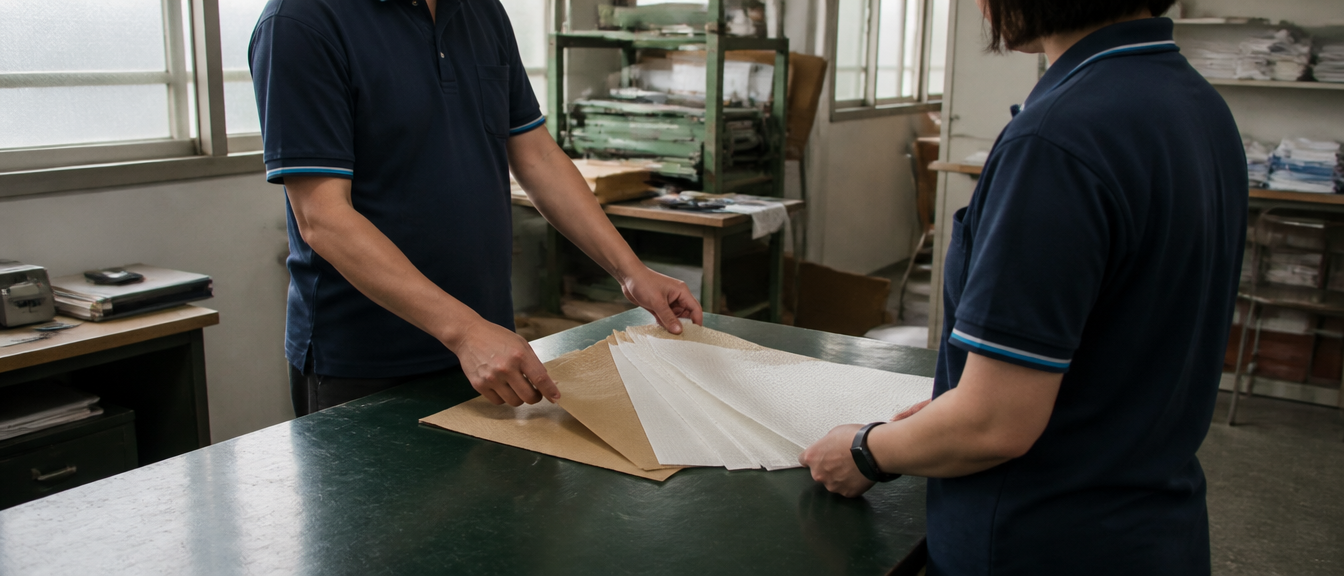
Paperboard manufacturer Iggesund explains in its Paperboard Reference Manual that extrusion coating involves applying molten plastic onto paperboard, which is then immediately cooled to form an extremely thin, flat, and evenly thick layer. The process includes unwinding, corona surface treatment, extruding molten plastic through a narrow die onto the substrate surface, pressing it against a cooling roller, and finally rewinding (see Iggesund's explanation of extrusion coating and laminating). Chia Huang's website describes its own lamination process as applying PE or PP via hot-melt coating, then cooling it into a film—the basic concept is the same, though the website doesn't go into details such as corona treatment.
What's most useful to buyers in this reference is that it clearly identifies the factors affecting results. Adhesion between the plastic and substrate is mainly determined by the substrate's surface properties, substrate pretreatment (corona and ozone treatment), and the heat of the molten plastic at the time of coating. Pinholes—tiny holes—are mainly caused by substrate unevenness (surface too rough, loose fibers, etc.), uneven coating thickness, or too little plastic being applied. When listing the substrate properties needed for coating, it also mentions surface smoothness and strength, moisture content, flatness and dimensional stability, and clean edges and surfaces.
It's worth noting that Iggesund's reference is about paperboard, not kraft paper or woven fabric, so we treat it only as a reference for underlying principles. By extension, the flatter, cleaner, and more stable the moisture content of the substrate, the more consistent the lamination results tend to be. If you're trying to reduce film thickness to save costs, you should also evaluate substrate flatness together, since overly thin film is one cause of pinholes. This is our inference based on principle, not a guarantee for any specific substrate—actual feasibility still needs to be confirmed through sample evaluation.
There's also a term worth distinguishing clearly: lamination is a single-layer process that adds a film to the substrate surface, which is different from the layered structure of paper bags made from 1 to 5 layers of kraft paper. What toll processing delivers is laminated roll stock—how many layers it becomes as a paper bag, and what contents it's used for, is a separate design stage. As for how to choose film material and thickness, the website suggests three factors: the humidity and temperature of the storage environment, the moisture sensitivity of the contents, and the strength required for transport and handling.
Prepare these materials before sending samples
The reason samples are needed for evaluation is that the factors above are difficult to assess from written description alone. The table below outlines the information recommended when sending samples and making inquiries, with the first few items being the substrate information we recommend preparing first.
| Data item | Why needed | Notes |
|---|---|---|
| Substrate type and material | Confirm if within processing range | Kraft paper, white kraft paper, recycled kraft paper, PE or PP woven fabric, and PE or PP non-woven fabric can be processed; aluminum foil and BOPP require prior evaluation |
| Substrate basis weight and thickness | Basic specification data for paper-based substrates | For paper, provide basis weight; for woven and non-woven fabrics, provide supplier spec sheet |
| Roll width and core diameter | Confirm if width is within processing range, if core specs match, and whether mid-slitting is needed | Processing width is 500–2,000 mm; can slit into two rolls simultaneously |
| Use case and moisture barrier requirements | Determine film material and thickness direction | Storage humidity and temperature, product moisture sensitivity, and handling/transport intensity |
| Film material preference | PE or PP choice | No problem if not decided yet—can discuss during assessment; thickness can be adjusted per requirements |
| Quantity and desired lead time | Enter production schedule | Feasible quantities depend on processing type and schedule |
| Follow-up processing | Determine workflow after coating lamination | Whether slitting, rewinding, or cutting is needed, and the final dimensions |
Basis weight is one of the most fundamental pieces of substrate information. ISO 536:2019, "Paper and board — Determination of grammage," specifies the method for determining the basis weight of paper and board. The ISO page shows it as the 4th edition, published in November 2019, and confirmed as still current following a 2025 review (see ISO 536:2019). If your paper substrate supplier uses this type of measurement, providing the values along with the sample will be helpful for evaluation. This standard applies to paper and board; for woven and non-woven fabrics, please provide the supplier's specification sheet instead.
After lamination, slitting, rewinding, or cutting may be required
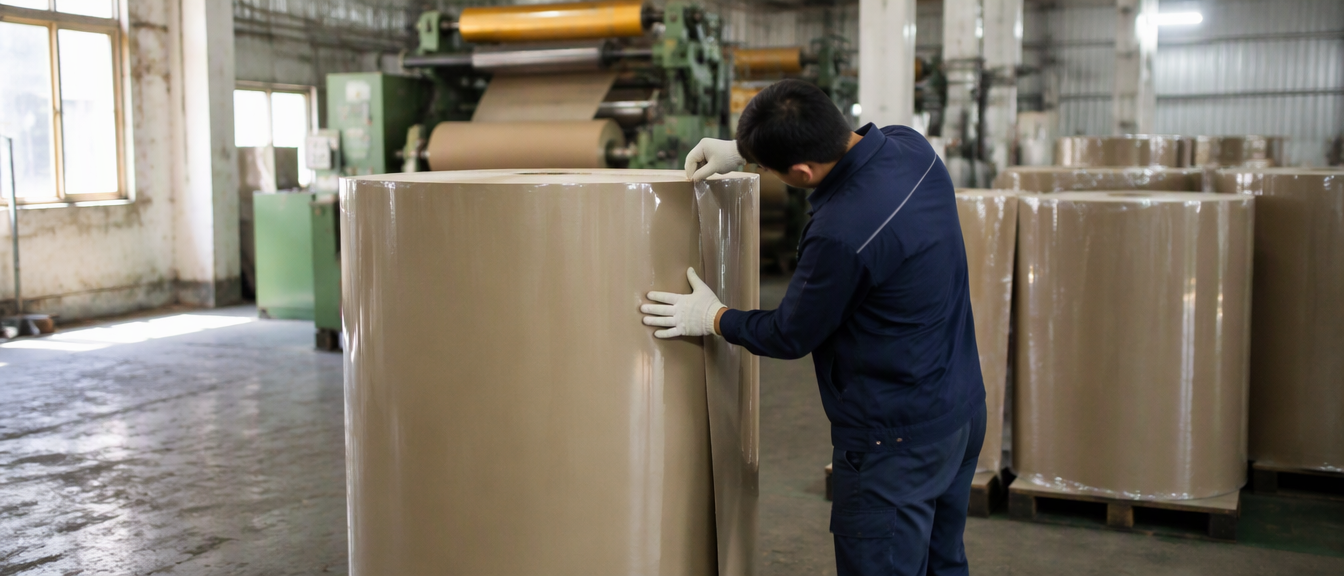
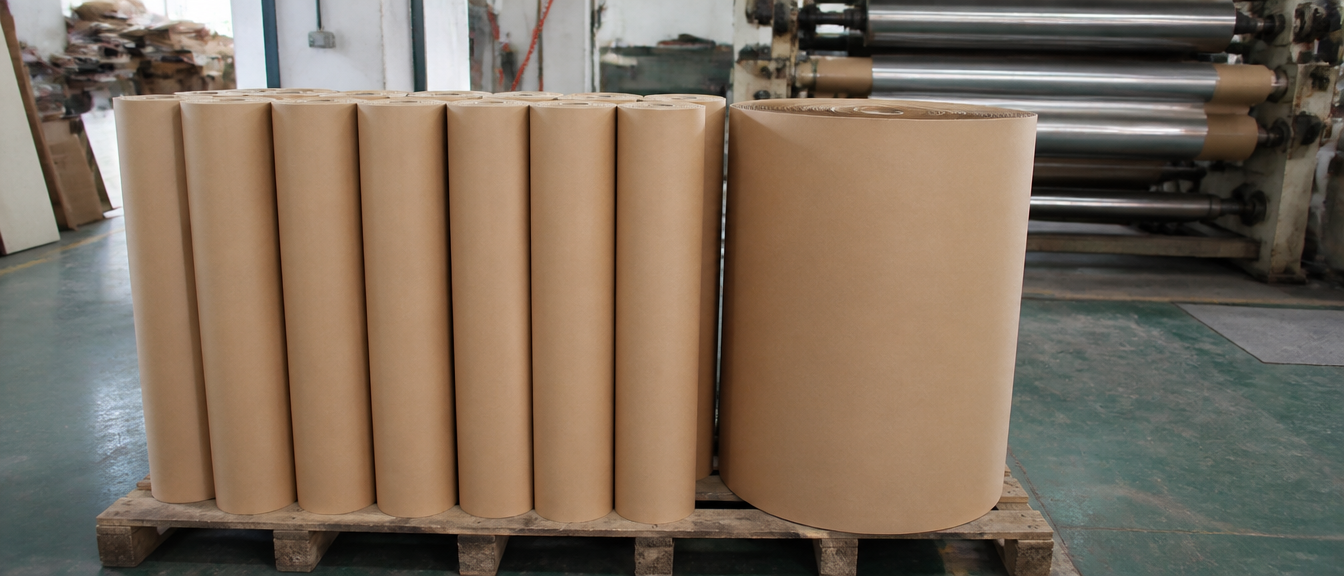
Lamination processing is often not the final step. According to the website, once lamination is complete, it can be followed directly by cutting, slitting, and rewinding—all in one location, saving the time and cost of transporting materials between different factories. Details of these follow-up processes are covered in Other Processing Services. Slitting involves cutting a wide master roll lengthwise into multiple narrower rolls of specified width; rewinding re-adjusts the tension and roll diameter of roll stock and removes defective sections; cutting involves cutting material to size into flat sheets or pieces.
There's a sequencing issue that's easy to overlook: the width of the narrow rolls you ultimately need determines what width should be used when feeding material and laminating. If your downstream production line requires a specific width, we recommend mentioning the final roll width and cutting dimensions in your initial inquiry, so our sales team can work backward from your final requirements to determine the material feed and processing sequence—rather than discovering after lamination is complete that another round of processing is needed.
How to compare quotes and suppliers
When comparing toll processing quotes, our view is that you shouldn't look at unit price alone, because costs beyond unit price tend to surface later: an extra transport run, rework due to mismatched specifications, or waiting time. We'd suggest buyers ask the following: whether the equipment range can accommodate your substrate and roll width; what processes are included in the quote—lamination only, or also slitting and cutting; whether processing specifications will be confirmed with you before production begins; and how quality is managed and documented.
In Chia Huang's case, the website states that the company is ISO 9001 certified for quality management, with digitized and traceable processing data, retrievable batch records, and specification confirmation with the customer before processing begins—production only proceeds once everything is confirmed. As for how responsibility is determined if there's an issue with the substrate itself, the website doesn't provide further detail; we recommend confirming this in writing with the supplier at the quoting stage—this applies to any toll processing supplier.
There's another cost that's easy to overlook: communication. We recommend compiling substrate type, roll width, film material, thickness, and final dimensions into a single written specification sheet, so both parties work from the same document when confirming specifications and quotes in step three. If specifications need to be adjusted later, starting from this document also makes it less likely for discrepancies to arise before or after processing.
Frequently Asked Questions about Toll Processing
What does toll processing mean?
Toll processing means you provide the substrate—such as rolls of kraft paper or woven fabric—and Chia Huang uses its equipment to perform lamination, slitting, rewinding, or cutting, then returns the finished product to you. You don't need to build an entire supply chain; you simply hand off the missing process step to the factory.
What is the toll processing workflow?
Toll lamination processing follows four steps: providing substrate samples and requirements, equipment feasibility assessment, confirming specifications and quote, and formal processing. Our sales team assesses equipment feasibility and responds on whether processing is possible within about one business day.
Is there a minimum order quantity for toll processing?
The actual volume that can be accommodated depends on the type of processing and the current production schedule. When inquiring, please specify the substrate, processing details, and expected quantity, and our sales team will provide a specific response.
What substrates can be laminated?
We can process kraft paper, white kraft paper, recycled kraft paper, PE or PP woven fabric, and PE or PP non-woven fabric. Aluminum foil and BOPP film can be evaluated upon request—feel free to inquire about equipment feasibility first.
What materials should be prepared before sending samples?
Please prepare the substrate type and basis weight, roll width and core inner diameter, intended use and moisture protection requirements, quantity and lead time expectations, and whether slitting, rewinding, or cutting is needed after lamination. The more complete the information, the more specific a response we can provide.
Conclusion: Clarify the substrate and specifications before toll processing
Back to the original question: how do you arrange toll processing? The answer is to first determine which scenario applies to you, then clearly communicate the substrate, dimensions, moisture protection needs, and any follow-up processing all at once, and finally factor in transport and rework costs when comparing quotes. If you already have substrate on hand and want to evaluate whether lamination processing is feasible, feel free to reach out via Contact Us with the substrate type, roll width, intended use, and expected quantity—our sales team will respond within one business day.