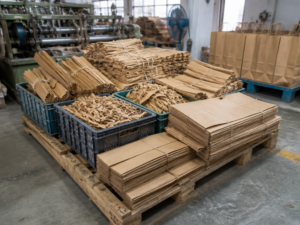
If the roll you have doesn't match the width your production line needs, or the width is fine but the roll diameter and tension don't work, these two situations actually call for different solutions. The first usually requires slitting, the second requires rewinding, and if your machine runs on flat sheets instead, it's cutting. But when you simply ask for quote with "please process this for me," it's hard for a processor to tell whether you need to change the width, the roll diameter, or the length.
Chia Huang Paper has been dedicated to industrial paper bags since 1973, and we also take on toll processing where customers supply their own base materials, covering lamination, slitting, rewinding and cutting. This article starts from process logic to explain what each of these three secondary roll-processing methods actually changes, when to choose which one, and the toll processing workflow along with what to prepare before requesting a quote. The short answer first: figure out whether you need to change width, roll diameter, or length, then talk about quantity and lead time.
What is slitting and rewinding: cutting wide parent rolls lengthwise into narrow rolls
The industry definition of slitting is simple: cutting a large roll of material into several narrower rolls. According to the Wikipedia entry on Roll slitting, this is a type of shearing operation carried out in two ways: one treats the whole roll as a single "log," cutting it into sections with a circular saw or band saw without unwinding and rewinding; the other unwinds the material, passes it through blades or a laser, then rewinds it onto one or more shafts—commonly known as a slitter rewinder. The same source notes that "slitting" refers specifically to cutting along the length, while "cutting" covers both lengthwise and crosswise cuts, which is why this type of machine is called a slitter, not a cutter. In this article's table, "cutting" follows the usage on Chia Huang's website, referring to crosswise cuts into specified lengths.
Why does paper need this step? The Taiwan Paper Industry Association divides the paper industry into upstream, midstream and downstream segments: upstream is virgin or recycled pulp, midstream is paper production of various kinds, and downstream covers cutting, forming, binding, printing, packaging and other processing (see the Taiwan Paper Industry Association's introduction to paper types). After paper leaves the mill and before it connects to upstream or downstream production lines, it often needs to be resized to fit what the next process requires. This matches what's described on Chia Huang's website: parent rolls are typically wide-format, while downstream lines often need narrow rolls of a specific width or pre-cut sheets—and slitting is what bridges that gap.
| Processing | Cutting direction | What changes | Application description on website |
|---|---|---|---|
| Slitting | Lengthwise, along the length direction | Width: one wide roll becomes multiple narrow rolls | Supplied to automatic packaging lines or secondary processing |
| Rewinding | No cutting required, just rewind | Roll diameter and winding tension; defects can be inspected and removed during the process | Standardized specifications to improve stability in downstream processing |
| Cutting | Crosswise | Length: roll material becomes flat sheets or pieces of specified length | Supplied for paper tubes, paper strips, padding packaging and other applications |
The third column is the key one to look at in this table. Slitting changes width, rewinding changes roll diameter and tension, and cutting changes length; the three can be combined as needed, and our sales team will recommend the right process based on your application. So instead of simply asking for "some processing," it's more effective to specify directly: the current width of the parent roll, how many strips and what width you need, whether there's a roll diameter limit, and whether your downstream machine runs on rolls or sheets.
What rewinding does: more than just rolling the paper again
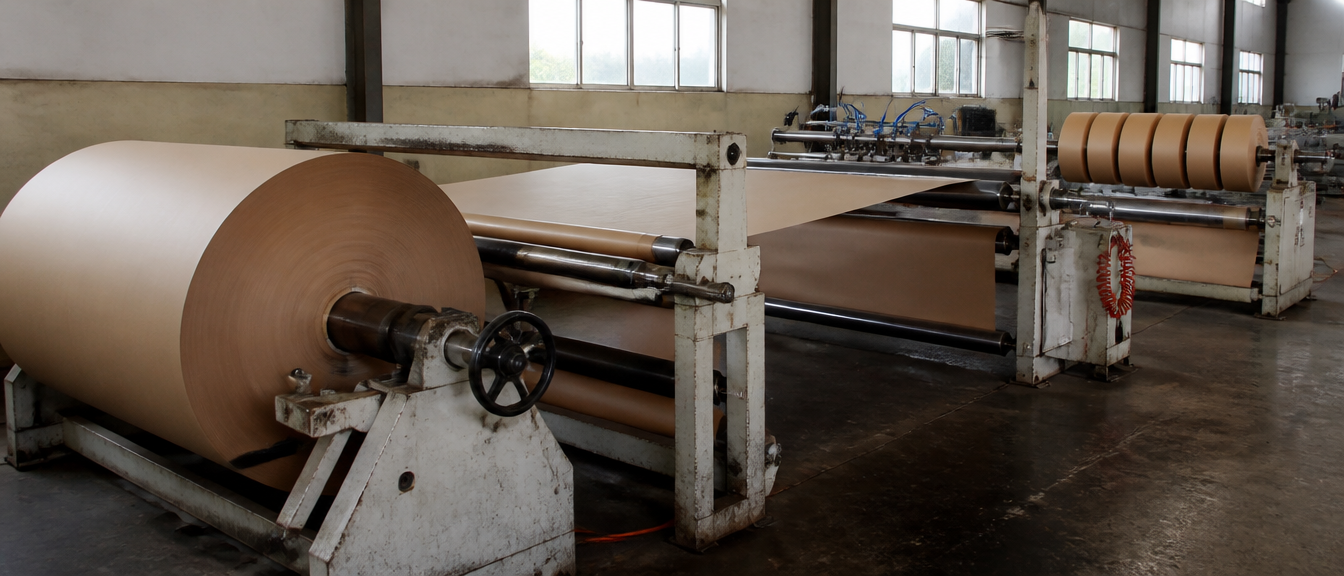
Rewinding literally means re-winding onto a new core, but the purpose goes beyond just switching shafts. According to Chia Huang's website, rewinding re-winds the roll to adjust diameter and winding tension, and can also inspect and remove defective sections along the way, ensuring consistent specifications for more stable downstream processing. In other words, if the width is already correct but the roll diameter is too large to fit the machine, the tension is uneven, or you want to remove a known defective section, what you need is rewinding, not slitting.
In practice, these two processes are often combined on the same machine. A slitter rewinder works by unwinding, cutting, then rewinding—so every narrow roll that comes out has already been rewound once in the process. The Wikipedia entry mentioned earlier also notes that tension control is key to slitting quality, and differential rewind shafts are commonly used to keep tension even across the full width. These are general industry practices, not a description of any specific factory's equipment; we mention this because tension is exactly the parameter that needs the clearest communication between rewinding and slitting—the more tension-sensitive your material, the more important it is to clearly explain the application when requesting a quote.
When to slit, when not to
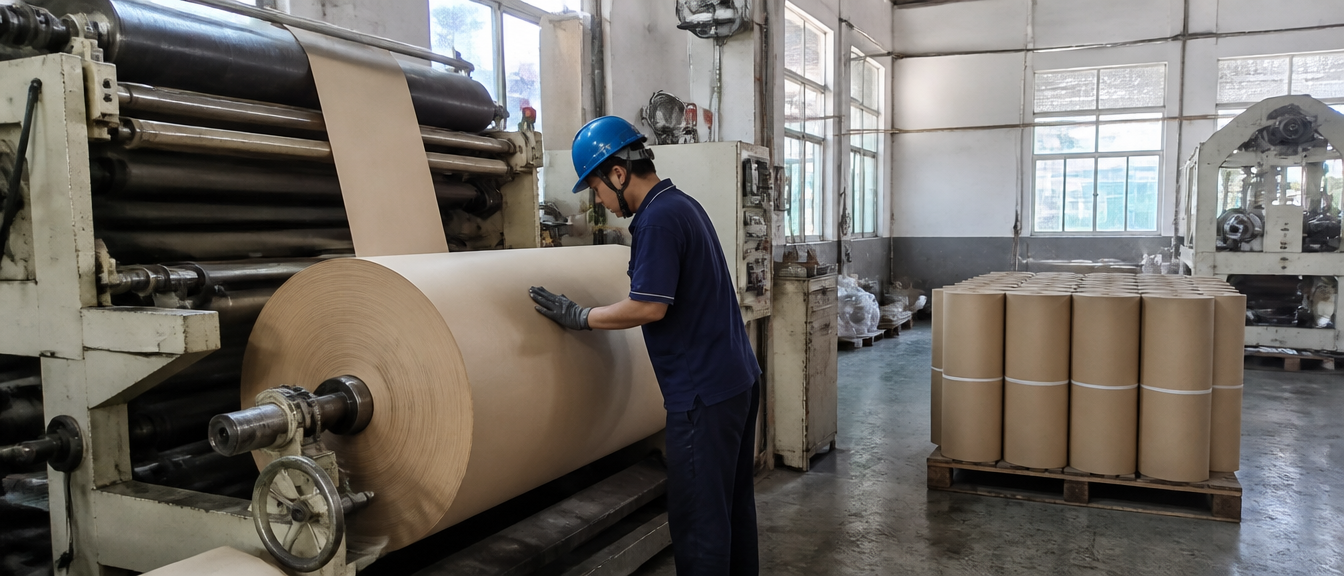
The logic for deciding is straightforward: identify which dimension your downstream machine and application are constrained by. The table below maps common scenarios to the process you should consider first, along with the information to clarify when requesting a quote.
| Your situation | Processing to consider first | What to clarify when inquiring |
|---|---|---|
| Parent roll is much wider than what the production line needs | Slitting | Parent roll width, target width and number of rolls, substrate type |
| Width is correct, but roll diameter is too large or tension is uneven | Rewinding | Current roll diameter, maximum roll diameter allowed by the machine, whether to remove defective sections |
| Machine requires flat sheets or pieces of material | Cutting | Target length and width, quantity, stacking or packaging method |
| Moisture protection needed, and final width is very narrow | Assess the sequence of coating and slitting | Substrate, coating material (PE or PP), final width |
The last row deserves a bit more explanation. Chia Huang's lamination processing handles widths from 500 mm up to 2,000 mm, and is equipped with center-slitting equipment that can split a roll into two simultaneously; after lamination, the material can go straight into cutting, slitting and rewinding without transporting it between different factories. From these figures, you can infer that if the narrow roll width you ultimately want is narrower than 500 mm, feeding a narrow roll directly into lamination may exceed the equipment's processing range—a more practical route is to laminate at a wider width first, then slit down to the target width. This is process logic derived from the specifications, not a guarantee; whether it can actually be arranged this way depends on your base material and film, and should be assessed by our sales team.
Another detail worth confirming in advance is width layout. Suppose the parent roll is 1,000 mm wide and you need 300 mm narrow rolls—arithmetically, that only yields 3 strips with 100 mm left over as scrap; if you adjust the target width to 250 mm, it divides evenly into 4 strips, changing the material utilization rate (this is a hypothetical example, not Chia Huang's actual specifications). The lamination page also mentions that processing dimensions can be planned according to customer needs, with the goal of improving material utilization. So before deciding on the narrow roll width, letting the processor know the parent roll width in advance helps reduce leftover scrap.
How to discuss toll processing: four steps and required documents
If you already have kraft paper rolls or other base materials on hand and just need slitting, rewinding or cutting done, toll processing is the way to go. According to Chia Huang's website, the process has four steps: first, provide the parent roll specifications and the target slitting or cutting dimensions and quantity; our sales team assesses equipment feasibility and scheduling and replies with a quote, with feasibility assessment typically taking about one business day; once confirmed, the material is received and checked against specifications before processing is scheduled; finally, the processing is completed to spec, inspected, and shipped. For a full overview of all processing services, see the Other Processing page.
As for quantity, the website states that the actual quantity we can accommodate depends on the type of processing and the production schedule at the time, and we ask that you describe your needs so our sales team can respond specifically. The public pages don't list minimum slitting widths, tolerances or capacity figures, so this article won't invent numbers either. Information worth preparing in advance includes: the type of base material (such as kraft paper rolls or woven fabric rolls—for other materials, please mention them when requesting a quote for our sales team to assess), the parent roll width and current roll diameter, the target width and number of strips, the required quantity, the downstream application and machine constraints, and whether lamination is also needed. If lamination is also required, the first step is to provide a base material sample along with your moisture-barrier requirements as a basis for assessment.
What situations are suited to toll processing? The website lists customers who already have base materials on hand, need a backup supplier, or want to evaluate specifications first. From a process-logic standpoint, another scenario also fits well: if your base material is purchased from an existing supplier but you're only missing the final processing step, it may make more sense to outsource just that step rather than replace the entire batch of material. Conversely, if the parent roll's specifications haven't been finalized yet—say, the width or roll diameter is still being adjusted—it's best to discuss the target dimensions with our sales team first before deciding whether to send samples, to avoid finding out after processing that the dimensions don't match the downstream machine.
Quality standards from industry practice: tension, blades and incoming material condition
When it comes to slitting quality, the intuitive first thought is "how smooth is the cut edge"—but according to general principles summarized on Wikipedia, more than just the blade affects the result. Blade type depends on the material: razor-style blades suit very thin plastic films but need frequent replacement; rotary shear-style blades use upper and lower circular blades that mesh like scissors, commonly used for paper, film and foil, and last longer, though positioning takes more time; crush-cut blades suit nonwovens and foam materials. On the winding end, tension control is key—precise tension control is essential to producing good rolls. Buyers don't need to dig into these details, but it's worth remembering: different materials call for different processing methods, so always be clear about your base material.
The condition of the incoming material itself also affects the result. In Chia Huang's toll processing workflow, one step involves checking the material against specifications once it arrives before scheduling processing. From a process-logic standpoint, if the parent roll gets damp, crushed, or wound unevenly during transport or storage, slitting won't make those problems disappear. We therefore recommend checking the roll's appearance and labeling before shipping it to us, and letting the processor know the location of any known defective sections so they can be removed during rewinding.
One final suggestion is to work backward from the downstream end when determining dimensions. Rather than deciding on the parent roll first and then figuring out how wide the narrow rolls should be, it's better to first measure the width and maximum roll diameter your downstream machine can accept, then check whether the parent roll divides evenly and whether rewinding is needed to adjust the roll diameter. Reversing the order not only reduces scrap but also avoids discovering after slitting that the narrow rolls won't fit the machine. This doesn't require special tools—just include the machine specifications, target width and quantity in the same quote request.
Frequently asked questions about slitting
What's the difference between slitting, rewinding and cutting?
Slitting cuts a wide roll lengthwise into multiple narrow rolls; rewinding re-winds the roll to adjust diameter and winding tension, and can also inspect and remove defective sections along the way; cutting cuts crosswise into flat sheets or pieces of specified length. The three can be combined as needed—if you're unsure, just describe the downstream application and our sales team will advise.
Can we request slitting only if we have ready-made rolls?
Yes, that's toll processing. You supply the base material, and Chia Huang performs slitting, rewinding or cutting to spec and returns it to you. The process has four steps: providing specifications, feasibility assessment, material receiving, and processing and shipping—see the Other Processing page for details.
Are there minimum width or quantity limits for slitting?
Width range and quantity depend on equipment specifications, parent roll material, processing type and the production schedule at the time; public materials don't list fixed figures. We recommend providing the parent roll specifications and target dimensions so our sales team can assess and respond.
Can we slit right after coating?
Yes, after lamination we can follow up with cutting, slitting and rewinding for a one-stop process. The minimum lamination width is 500 mm, with center-slitting equipment available to split a roll into two simultaneously; narrower finished widths require an assessment of processing sequence—see Lamination Processing for details.
Can rewinding handle rolls with defects?
Defective sections can be inspected and removed during rewinding to ensure consistent specifications; but whether this is possible, and how much can be removed, depends on the location and number of defects. We recommend sending a sample and describing the situation for our sales team to assess.
Can narrow rolls from slitting go directly to automatic packaging lines?
The website describes slitting as supplying rolls for automated packaging lines or secondary processing; whether a roll can go straight onto your machine depends on whether the narrow roll's width, diameter and tension match your equipment. We recommend providing your machine specifications along with your requirements for our sales team to assess.
Conclusion: slitting starts with clarifying 'what needs to change'
Back to the question we started with: slitting changes width, rewinding changes roll diameter and tension, and cutting changes length. Get these three things clear first, and your quote request won't go off track. Chia Huang's toll processing doesn't require you to rebuild your entire supply chain—just hand over the missing step to us. Prepare the type of base material, parent roll width and diameter, target dimensions, quantity and downstream application, then leave your requirements at Contact Us. Our sales team will respond within one business day and assess equipment feasibility and pricing based on your specifications.