If you open a bag of feed and smell a musty odor, then pour it out to find clumps of caking, your first question is probably: has the feed gone bad? Feed storage problems are usually caused by three factors together—humidity, temperature and time—with packaging being just one piece of the puzzle. At Chiahuang Paper, we've been making industrial paper bags since 1973. This article explains, from a manufacturing perspective, why feed is vulnerable to moisture, what bags can and can't protect against, and what else needs to be handled on the warehouse floor.
Let's be clear about the limits of this article first: the data cited below concerns feed raw materials, grains and household pet food—it does not refer to any specific type of feed bag, nor does it represent a feed storage standard. The purpose of citing this data is to help you see clearly where the bag fits in the overall preservation chain, which issues fall to packaging, and which issues need to be addressed in the warehouse.
Why Feed Storage Fears Moisture: Humidity, Temperature and Time
Let's look at three public sources. The UN Food and Agriculture Organization's (FAO) chapter on feed storage problems discusses feed raw materials in tropical feed mills (the page is undated and cites relatively early literature); the Ministry of Agriculture's knowledge base article on mycotoxin management in grain, translated from Pig International, covers grain and pig feed; and the US FDA's pet food storage guidelines address pet food in the home. These three sources target different subjects, as summarized below.
| Reference | Information Related to Humidity and Temperature | Applicable Scope |
|---|---|---|
| FAO | Mold forms once relative humidity exceeds 70%; storage fungi grow at moisture content of 15–20% and do not grow below 65% relative humidity; Aspergillus and Penicillium are most destructive above 25°C and 85% relative humidity | Feed raw materials from tropical feed mills, not finished packaged products |
| Ministry of Agriculture | Grain moisture should be maintained at 11–12%; mold growth begins once equilibrium moisture exceeds 13%; temperature drops during transport can cause condensation, dampening the grain | Grains and Pig Feed |
| FDA | Store dry pet food in a cool, dry place at temperatures below 80°F (about 27°C); excessive heat or moisture may degrade nutrients | Pet Feed |
These figures can't be directly applied to any specific feed bag, but the direction is consistent: higher humidity, higher temperature and longer storage time all increase risk. The Ministry of Agriculture's data also notes that killing mold does not remove toxins already produced, so prevention is key; caking and mold in grain are clear warning signs, but the actual degree of harm can only be confirmed through quantitative testing. We are a paper bag manufacturer, not a feed quality control body, so we cannot determine whether your feed has a problem—and this section is not a feed storage standard.
The table actually contains two different types of figures: one is the feed's own moisture content, and the other is the relative humidity of the surrounding air. Feed gradually reaches equilibrium with the surrounding air—the more humid the air, the higher the feed's moisture content becomes. So a bag that blocks moisture is essentially delaying this equilibrium process. The longer the bag can hold off moisture, the longer the feed stays in the dry state it had when it left the factory—which is why moisture-proofing design needs to be evaluated together with storage duration.
What Feed Bags Can and Cannot Do
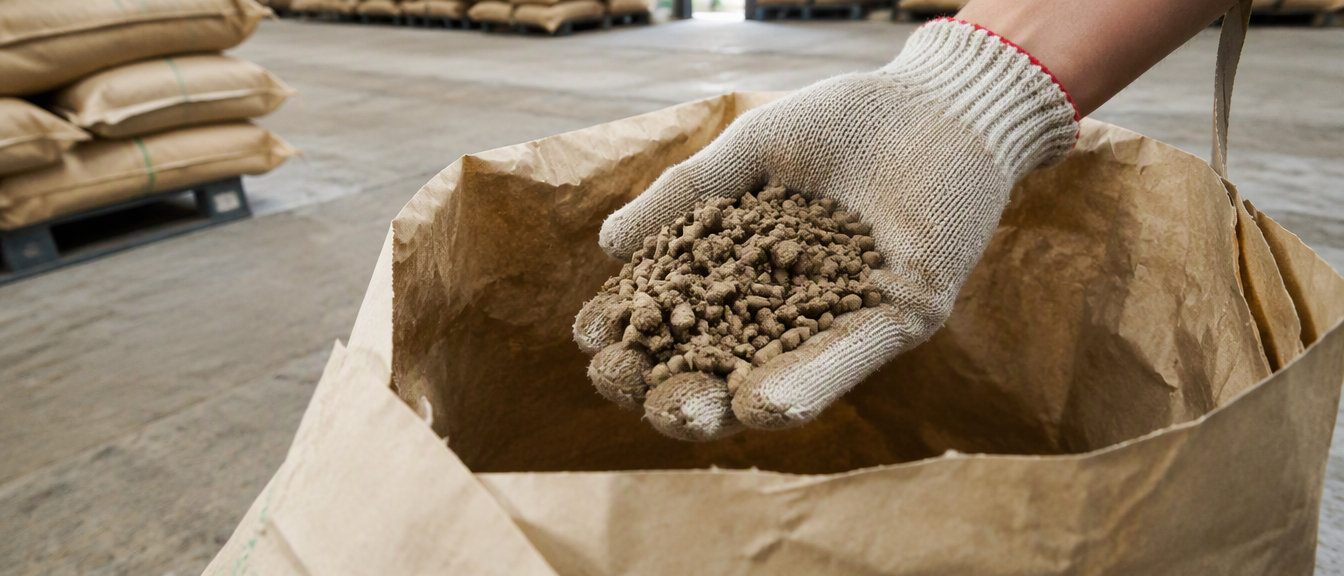
Chiahuang's feed bags are primarily made of multi-layer kraft paper, paired with PE or PP laminating for moisture protection. Laminating applies a plastic film coating to the bag material's surface to form a barrier layer, with thickness adjustable to the warehouse environment; it's a single-layer process, separate from the 1-to-5-layer paper structure of the bag itself. Feed bag closures use sewn seams, which provide sufficient strength, but the needle holes left by stitching can also be a spot where fine powder may leak out; if the contents are fine powdered additives, heat-sealed overtape can be considered to cover the needle holes outside the stitch line. To be honest, the bag can only block moisture from outside—it can't counteract moisture already present in the feed when bagged, nor can it replace a dry warehouse. The table below compares what the bag side and the warehouse side are each responsible for.
| Risk | What the Bag Can Handle | What the Bag Cannot Handle |
|---|---|---|
| External moisture seeping in | Multiple layers of kraft paper combined with PE/PP coating; thickness adjusted based on storage environment | Warehouse itself is too humid, leaking or exposed to rain |
| Air trapped during filling | Micro-pore ventilation; moisture-sensitive contents can be paired with moisture-proof design | Filling line speed and settings |
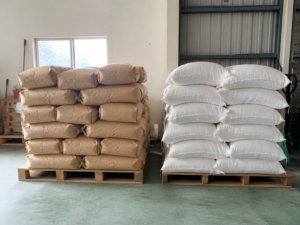
| Pallet shifting during stacking | Design layer count based on weight, and increase friction with anti-slip agents | Stacking Height and Pallet Management |
| Moisture content in the feed itself | Cannot be handled | Moisture management before shipment |
The principle for micro-perforation venting is this: we recommend adding it for high-speed automated filling lines, with pore size designed to let air escape from inside the bag while keeping feed powder/granules from leaking out; for manual filling or slower equipment, it should be evaluated case by case. For details on each type of processing, see Functional Processing.
Large bags for aquaculture feed are commonly 25 kg, and layer count needs to be considered together. For 25 kg pure kraft paper bags, 3 layers is the common approach; switching to a three-in-one kraft paper composite material typically uses 2 layers. Chiahuang's paper layer structures range from 1 to 5 layers, using long-fiber kraft paper. Each additional layer adds cost, but doesn't necessarily improve storage performance—so it should be evaluated together with laminating and stacking height, not layer count alone.
Warehouse Best Practices: Inventory Turnover, Stacking and After Opening
FAO data notes that the degree of loss caused by pest infestation during storage relates to warehouse hygiene, turnover time, how swept-up material and scattered batches are handled, and the size and tightness of stacking. Larger stacks can reduce pest damage but trap harmful heat within the pile—a tradeoff. The simplest approach is to shorten storage time and rotate old stock out first, which has nothing to do with bag design but is just as important as moisture-proofing. Since temperature sensors can't be placed inside stacks of bagged goods, FAO points out that bags "sweating" in large stacks, with warm surfaces to the touch, are evidence of serious fungal damage to the grain. This refers to a tropical context; Taiwan's humid, sweltering summers are similarly relevant and can be borrowed as an inspection perspective—but not as a standard.
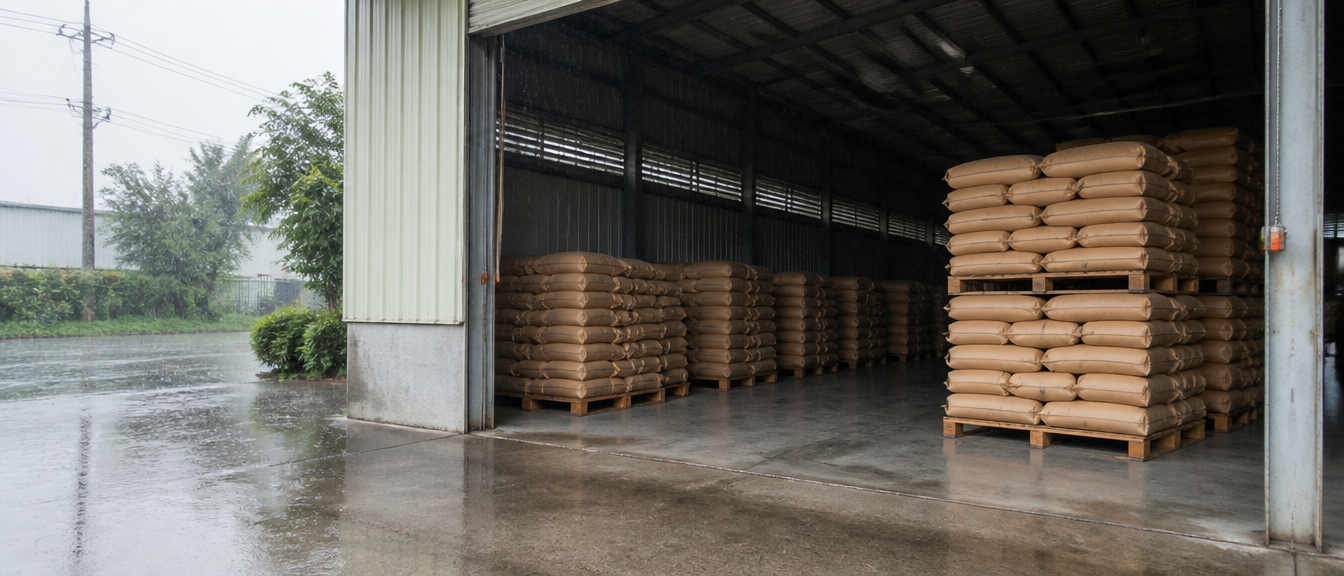
Transport is also a factor worth noting. The Ministry of Agriculture's data mentions that temperature drops during transport can cause moisture in the air to condense, dampening the grain and creating an opportunity for mold growth. For feed being transported long distances or exported, we recommend specifying the route and season when requesting a quote—we'll factor these conditions into the moisture-proofing design evaluation. The table below compares the warning signs mentioned earlier with steps that can be taken in advance.
| Symptoms | What Industry Data Says | What You Can Do First |
|---|---|---|
| Moldy smell or clumping when opening the bag | Ministry of Agriculture: Grain clumping and mold are obvious signs of fungal growth | Stop using that batch and have the quality control or inspection unit make a determination |
| Bag heats up and "sweats" | FAO: Bag sweating and warm-to-touch surface are signs of fungal damage | Inspect other bags in the same stack and assess inventory turnover |
| Moisture inside the bag after transport | Ministry of Agriculture: Temperature drop during transport causes water vapor to condense | Specify the transport route and season when requesting a quote |
FDA's advice for household pet food is also practical: keep the original packaging, since it carries the batch number and best-by date; if switching to another container, place the entire bag inside rather than just pouring the food in; if you must pour it in, the container should be clean, dry and tightly sealed. This is also a reminder that space for batch numbers and expiration date fields should be reserved on the bag surface during design. For packaging, the original bag itself is part of preservation: a tightly sealed bag opening and clearly printed information on the bag surface make it easier for users to store the whole bag as-is, without having to transfer the contents—reducing one more chance of exposure to air and moisture.
Bulk Packaging vs. Retail Packaging: Different Storage Priorities
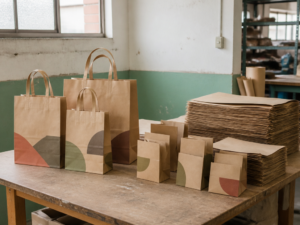
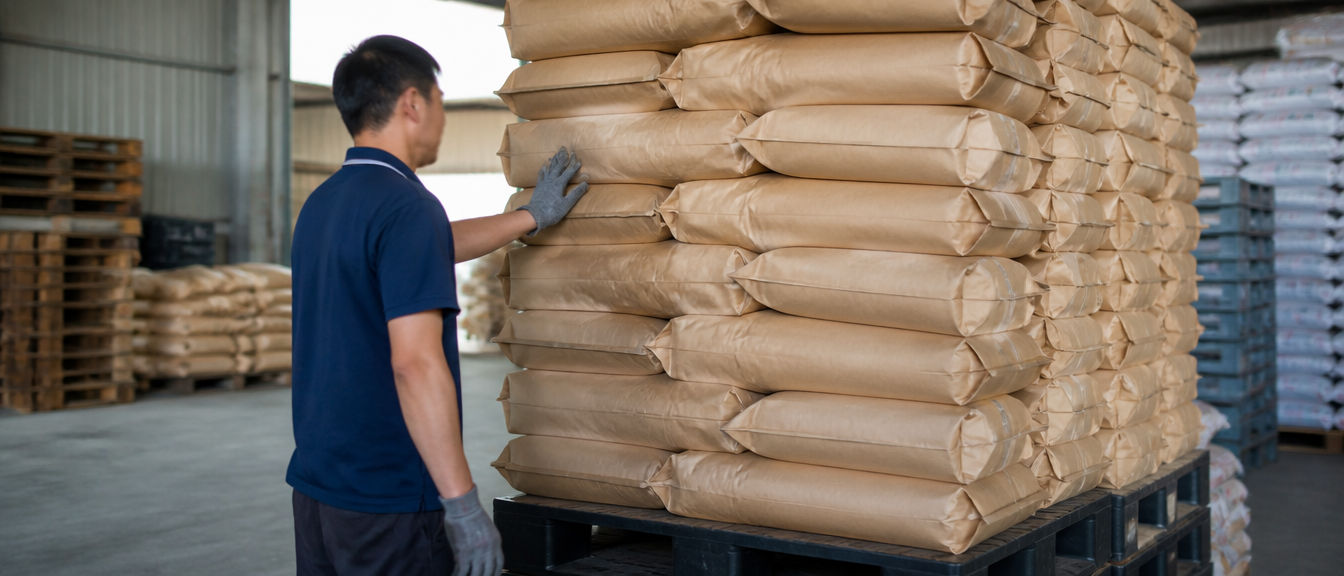
Aquaculture feed is mostly packed in large bags, such as 25 kg, where the focus is load-bearing capacity and moisture protection; pet food retail packaging is smaller, and besides moisture protection, it also needs to address brand presentation on shelves. Large bags need to account for handling and stacking: when 25 kg bags are stacked high on pallets, a bag surface that's too slippery can cause shifting—anti-slip additives can increase friction between bags, suitable for high stacking and long-distance transport. Retail packaging needs to focus on appearance: the layout, number of print colors and brand recognition on the bag surface directly determine the consumer's first impression. Chiahuang offers four-color printing, with brand and ingredient labeling printed on the bag surface, and we recommend reserving a field for batch numbers. Printing costs vary with the number of print colors, print area, number of plates and production quantity—more colors generally means higher plate-making and printing costs. We can recommend a printing configuration that balances brand presentation and cost based on your budget and product needs. Please provide design files before printing; we can supply layout digital files and use a similar bag style as a sample reference, then proceed to formal production once confirmed. Please verify separately whether there are additional regulations or customer requirements for feed or feed-contact packaging—we do not provide food safety guarantees for packaging.
Before requesting a quote, prepare these items
The more complete the information, the closer our specification recommendations will be to your actual needs. We recommend preparing the following five items first: feed type and form (e.g., aquaculture feed, pet kibble or additives; granular or powdered); bag weight; storage and transport conditions, including how long it will be stored and whether it will pass through the rainy season; filling method, automated or manual; and printing requirements. The minimum order quantity for custom production is about 5,000 bags; brand-new designs require plate-making, and if annual cumulative orders reach 50,000 bags, the plate-making fee can be deducted from the order amount. Among these, "storage duration" and "whether it will pass through a humid season" affect the recommended laminating thickness, so please be sure to specify these.
Common Feed Storage Questions
Does Feed Clumping Mean It's Moldy?
It can't be determined by appearance alone, but it should be treated as a warning sign. The Ministry of Agriculture's data lists grain caking and mold as clear signs of mold growth, but the actual degree of harm can only be confirmed through quantitative testing—not by visual judgment. Please have this assessed by feed quality control or testing personnel.
Is Thicker Coating on Feed Bags Always Better?
No. Laminating thickness should be adjusted based on the warehouse environment and the moisture-absorbing tendency of the contents, and can be chosen as PE or PP. More thickness means more cost, so we recommend specifying storage duration and whether it will pass through a humid season when requesting a quote.
Do Feed Bags Need Micro-Pore Ventilation?
For high-speed automated filling lines, we recommend adding micro-perforation venting to let air escape while keeping powder/granules contained; for manual filling or slower equipment, it should be evaluated case by case. Moisture-sensitive contents can also be paired with moisture-proofing design. The pore size is engineered so air can escape while powder/granules are retained—the actual configuration will be evaluated based on your filling speed and feed form.
How Should Opened Feed Be Stored?
For household dry pet food, FDA recommends keeping the original packaging and storing it in a cool, dry place below 80°F; when switching containers, place the entire bag inside, or use a clean, dry, tightly sealed container. This is guidance for pet food specifically—for other types of feed, please follow the manufacturer's instructions.
Can Feed Bags Be Printed On? Does Print Color Affect Price?
Yes, Chiahuang offers four-color printing. Print colors affect pricing—the number of print colors, print area, number of plates and production quantity all influence cost. We can recommend a suitable printing configuration based on your budget and product needs.
Is There a Difference in Storage Between Aquaculture Feed Bulk Packaging and Pet Feed Retail Packaging?
Yes. Aquaculture feed is mostly in large bags, where the focus is load-bearing capacity and moisture protection; pet food retail packaging is smaller, and besides moisture protection, it also needs to address brand presentation and batch labeling on shelves. Chiahuang can accommodate both, planning bag types based on sales channel and purpose.
Conclusion: Feed Storage Requires Both Proper Bags and Warehouse Management
Of the three factors—humidity, temperature and time—the bag mainly addresses humidity, and indirectly buys extra time; temperature and turnover depend on the warehouse. There's no single number that solves all feed storage problems: the bag is responsible for blocking outside moisture and supporting stacking weight, while the warehouse is responsible for dryness, turnover and ventilation—both sides need to work together for complete protection. If you're currently dealing with caking, moisture damage or torn bags, feel free to simply describe the symptoms and storage conditions, and we'll work backward together from what can be adjusted on the bag side. To learn about the range of feed bag specifications first, see the Feed Bags & Pet Food Packaging page; once you have your feed type, bag weight, storage conditions and printing requirements ready, feel free to reach out via Contact Us—our Chiahuang sales team will respond within one business day.